Grist List
-
![]()
![]()
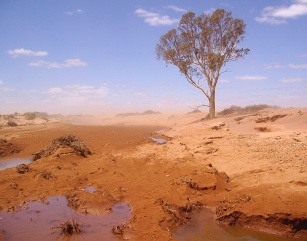
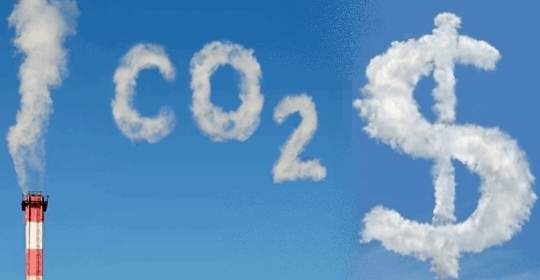
Company wants to turn world’s biggest coal field into world’s biggest coal plant
 A 250 mile long coal seam discovered deep in the interior desert of Australia's Northern Territory appears to be the most gigantic coal deposit on planet Earth, and Central Petroleum Limited wants to burn it all. They project it will take them at least a century to go through the entire reserve, or right about until they’ve turned Australia’s notoriously harsh desert into an incomprehensibly lifeless hellscape populated by miners in climate controlled space-suits.
 -
![]()
![]()
Got First World problems? This is your jam.
Bougie concerns about comfort and convenience are sort of the bane of the environmental movement … and the social justice movement … and the general not-being-an-annoying-brat movement. But hey, we all have days when we know people are starving in Africa but also WHY IS THE INTERNET SO SLOW I AM TRYING TO UPDATE MY […]
-
![]()
![]()
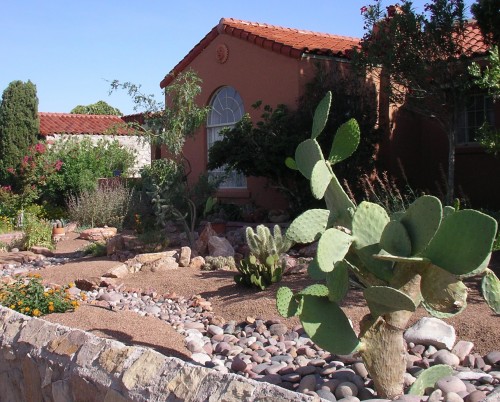
What we can learn from drought-proof El Paso
 It hasn't rained in El Paso in 119 days, and its water manager says it doesn't much matter if it doesn't rain next year, either. "We're basically drought-proof," he told the Guardian.
 -
![]()
![]()
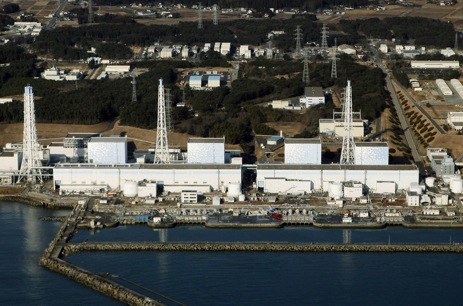
More radioactive water leaks at Fukushima
Japan's damaged Fukushima plant is now holding oceans of contaminated, radioactive water in its storage tanks, and that water keeps leaking out. Today, the country's Nuclear Industrial Safety Agency said that fifteen tons or so of water had leaked.
-
Critical List: Wildfire threatens Los Alamos; a sweet electric bike
In Arizona, the wildfire is at the edge of Los Alamos National Laboratory, which has radioactive materials and other nasty stuff on the premises. It’s all safety stored, the government says. We’re also being told that everything’s cool at that nuclear plant in Nebraska that’s knee-deep in the flooded Mississippi.
China's going to run out of water within 30 years at current rates of consumption.
More people want their own personal wind turbine, but it's not a status symbol. Yet. -
![]()
![]()
Half of the Bay Area's litter comes from fast food
Fast food is already a lot like pollution -- it's bad for you, but it's more convenient than the alternative, so it's really really hard to get rid of. Also it shows up frequently on the sides of highways. Now, environmental nonprofit Clean Water Action has found that, at least in the San Francisco Bay area, these two dirty birds flock together. More than half of the litter in the four cities the group studied came from convenience foods at McDonald's, Burger King, Wendy's, Starbucks, and 7-11.
-
![]()
![]()
Over 1,000 new species discovered in New Guinea
Researchers found more than 1,000 new species in New Guinea over the ten years from 1998 to 2008, according to a new report from the World Wildlife Fund. Previously unknown species -- including an 8-foot river shark, a frog with fangs, and pink dolphin -- were discovered at a rate of two a week. But New Guinea could lose half its forest to logging by 2020, and already some of these new species are so rare that they went onto the endangered list as soon as they were discovered.
-
![]()
![]()
Flow batteries store electricity in giant tanks of goop
Even if we do manage to set up a shiny futuristic renewable smart grid made of glitter and staffed by zebra unicorns, there are still going to be times when it poops out. Maybe the wind isn’t blowing; maybe a mean old cloud got in the way. And when that happens, there aren't enough boat batteries in the world to store all the electricity we're going to need to keep everything running.
-
![]()
![]()
How rainforests can produce biofuel sustainably
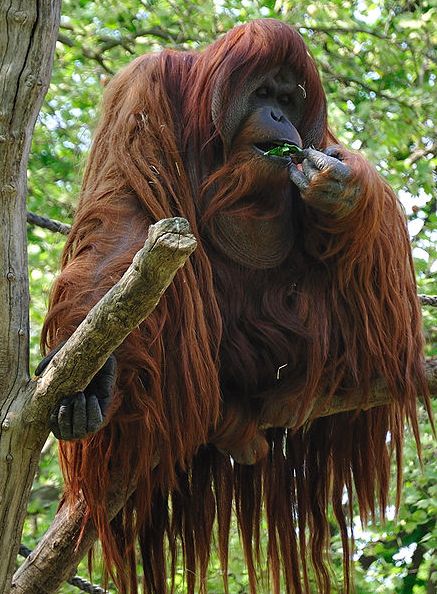
Production of biofuel from palm oil has been an unmitigated disaster for the rainforest, leading to clear-cutting throughout Indonesia and propelling that country to the top ranks of the world's largest greenhouse gas emitters. That's why it's so strange that biologist Willie Smits, last seen cooking up a plan to save orangutans, thinks that biofuels could actually save the rainforest.