landfills
-
![]()
![]()
Trash trucks powered by trash gas reduce emissions by 80-90 percent
Waste Management Inc. owns 1,000 trash trucks that run on natural gas, plus a bunch of landfills that are constantly pumping out natural gas as a natural product of the decomposition of organic waste. Closing the loop on this cycle is a no-brainer, but it took Waste Management a decade to perfect the technology required. Now they’ve got trash trucks that run on gas from the trash they carry.
-
![]()
![]()
America's first no-packaging grocery store coming to Austin
Within the next year, Austin, Texas, could be home to In.gredients, a grocery store that eliminates the paper and plastic containers that most food comes in. Instead, the zero-packaging store will offer most of its wares in bulk bins. (Some products will be “packaging-light” instead, with recyclable containers.) Customers can bring their own boxes and bottles or borrow compostable ones from the store, weigh them, and fill them with goodies. This includes beer (bring your own growler!) and cleaning products.
-
![]()
![]()
Too good to be true: biodegradable forks
Methane spoils everything. Natural gas drilling would be less risky if it didn't have the potential to release clouds of methane into the atmosphere. Methane cow farts make even grass-fed beef a less-green option than no beef at all. And now it turns out that those biodegradable plastic utensils we've been telling ourselves are soooo […]
-
![]()
![]()
San Francisco watches its waste line
Most cities send thousands of tons of unwanted flotsam and jetsam to landfills every day. But in San Francisco, garbage is treated like a resource that shouldn't be wasted. And that means formulating a plan to reduce the city's garbage output to zero. Yes, that's right: zero.
-
![]()
![]()
When recycling goes bad
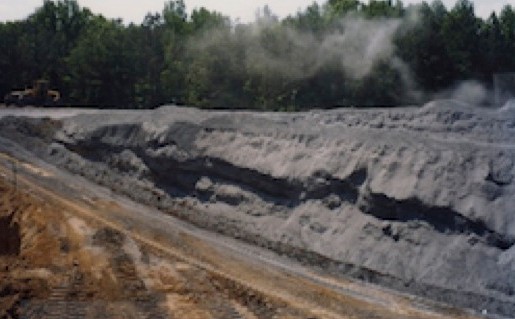
A coal ash fill under construction at the site of a former Coca-Cola plant in Weldon, N.C.Photo: N.C. Division of Waste ManagementA special Facing South investigation. After coal is burned at power plants, leaving massive heaps of ash, not all of the waste ends up in landfills and impoundments like the one that failed catastrophically […]
-
The hazards of using toxic coal ash for land development
Following the disastrous spill of a billion gallons of coal ash waste from the Tennessee Valley Authority’s Kingston plant in December 2008, poorly regulated coal ash impoundments like the one that failed have landed in the public spotlight. But other methods of disposing of coal ash waste have gotten less attention — even though they […]
-
![]()
![]()
China to de-stink landfill problem with giant deodorant guns
Residents of Beijing are making a stink about the excessive odors residing around the city’s many landfills, which are rising in number nearly as quickly as the Chinese population. (Maybe the government should institute a “one landfill per couple” policy?) But instead of cleaning up this mess of problems for those down in the dumps, […]
-
New cases of water pollution documented at U.S. coal ash dumps
Environmental groups have identified serious water contamination problems caused by coal ash dumps at 31 locations in 14 states, bringing to over 100 the number of U.S. sites where damages from coal ash have been confirmed — and strengthening the case for the release of delayed federal regulations. The latest coal ash damage cases are […]
-
Complaint cites health threats at Alabama dump taking TVA’s spilled coal ash
An Alabama creekkeeper has filed a complaint with the Environmental Protection Agency citing health threats including runoff containing alarmingly high arsenic levels at a bankrupt landfill that’s taking hundreds of millions of gallons of coal ash spilled from the Tennessee Valley Authority’s Kingston coal plant. The Arrowhead Landfill — owned by Perry County Associates and […]