Seattle
-
Fear of traffic snarls led to easier commutes in Seattle
We tend to think of traffic as an immutable -- that there's literally nothing we can do in our day-to-day lives to drive less.
But Seattle's continued and mostly unexpected free-flowing traffic -- in the midst of a major construction project that some feared would trigger a morass of congestion throughout Puget Sound -- shows that this is simply false. Far from being rigid and incompressible, traffic and travel patterns are surprisingly fluid. Seattle's experience demonstrates that, when drivers are given good travel choices and the right kinds of information and incentives, they can get out of their cars. And in Seattle's case, when lots of people got out of their cars, it made getting to work a relative breeze.
-
15 Green Cities
These metropolises aren’t literally the greenest places on earth — they’re not necessarily dense with foliage, for one, and some still have a long way to go down the path to sustainability. But all of the cities on this list deserve recognition for making impressive strides toward eco-friendliness, helping their many millions of residents live […]
-
![]()
![]()
Music festivals across the country aim to lessen their footprint
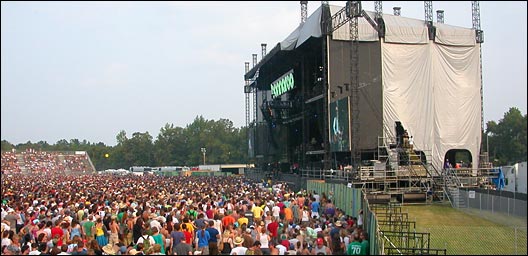
Bonnaroo 2006. Photo: Sarah van Schagen. I’m sitting in the middle of a field in rural Tennessee, and it feels like it’s got to be 110 degrees out. Somehow I’ve forgotten about my sweat-lined brow and muddy shoes; instead, I’m focused on listening to Bonnaroo’s head press guy, Ken Weinstein of Big Hassle Media, talk […]
-
More rockin’ for the planet
Seattleites, take note:
For anyone not willing to stand on an ice floe in subzero temperatures or pony up the cash to make it out to one of the other Live Earth concerts, you have another option. Local public-radio darling KEXP is hosting a benefit concert on July 7, 2007, to raise funds for the Shoreline Solar Project. The project promotes the use of solar energy and has installed solar photovoltaic systems in a couple of local schools. Part of the show will be streamed live on the KEXP website.
What about other cities? Anybody know of other enviro-shows happening on July 7?
-
Blue lanes, cage locks, and cyclibraries
Separate bikeways are the lead actors in bike-friendly cities, but many supporting actors complete the cast: bikes on transit facilities, good traffic law enforcement, even bike "lifts" on steep hills. Three more worth mentioning are blue lanes, parking cages, and cyclibraries.
Blue lanes.
-
Is your town?
What if cities had no sidewalks and everyone walked on the road? Or, for urban recreation, they walked on a few scenic trails? What if the occasional street had a three-foot-wide "walking lane" painted on the asphalt, between the moving cars and the parked ones?
Well, for starters, no one would walk much. A hardy few might brave the streets, but most would stop at "walk?! in traffic?!"
Fortunately, this car-head vision is fiction for most pedestrians, but it's not far from nonfiction for bicyclists. Regular bikers are those too brave or foolish to be dissuaded by the prospect of playing chicken with two-ton behemoths. Other, less-ardent cyclists stick to bike paths; they ride for exercise, not transportation. Bike lanes, in communities where they exist, are simply painted beside the horsepower lanes.
People react reasonably: "bike?! in traffic?!" And they don't. "It's not safe" is what the overwhelming majority say when asked why they bike so little. (As it turns out, it's safer than most assume -- on which, more another day.)
So what would cities look like if we provided the infrastructure for safe cycling? What does "bike friendly" actually look like?
-
What would you like to ask him?
Tomorrow, I’m sitting down for a chat with Paul Hawken, author, entrepreneur, and environmental legend. We’ll be discussing, among other things, his new book Blessed Unrest: How the Largest Movement in the World Came into Being and Why No One Saw It Coming. (If you’re in Seattle tomorrow, you can see Hawken at a Grist-sponsored […]
-
Making public transit work
 Greater Vancouver leads the Northwest in transit ridership, with somewhere between two and three times as many annual bus and train rides per person as Portland and Seattle.
So the obvious question: How come? Why does Vancouver do so much better in transit statistics than its southern neighbors?
-
Critical Mass Seattle style
 I participated in my first Critical Mass ride a few Fridays ago. I thought I'd better post on it and get this photo out of my cell phone. Can you spot the guy with no pants on?
There was also a dude with a drum on his handlebars and someone else with a nice sound system on a trailer. I'm guessing that there were about 300 riders.