It’s no secret that Arizona is worried about its water. The Colorado River is drying up, in part due to climate change, and groundwater aquifers are running dry. Some of the state’s biggest industries are suffering as a result: Many farmers have been forced to rip up their cotton and alfalfa fields, and some home developers have been blocked from building new subdivisions.
A state with hydrologic woes of this magnitude would seem an unlikely place to attract new factory-scale industries, which often have substantial water appetites themselves, but over the past year that’s exactly what’s happened. So-called hyperscaler tech companies like Microsoft and Meta have swarmed in to build the data centers fuelling the artificial-intelligence boom, and the Taiwan Semiconductor Manufacturing Company has spent billions of dollars on a factory complex outside Phoenix. This rapid development has triggered fears that the industry will suck up the finite water supplies available to residents of Phoenix and Tucson.
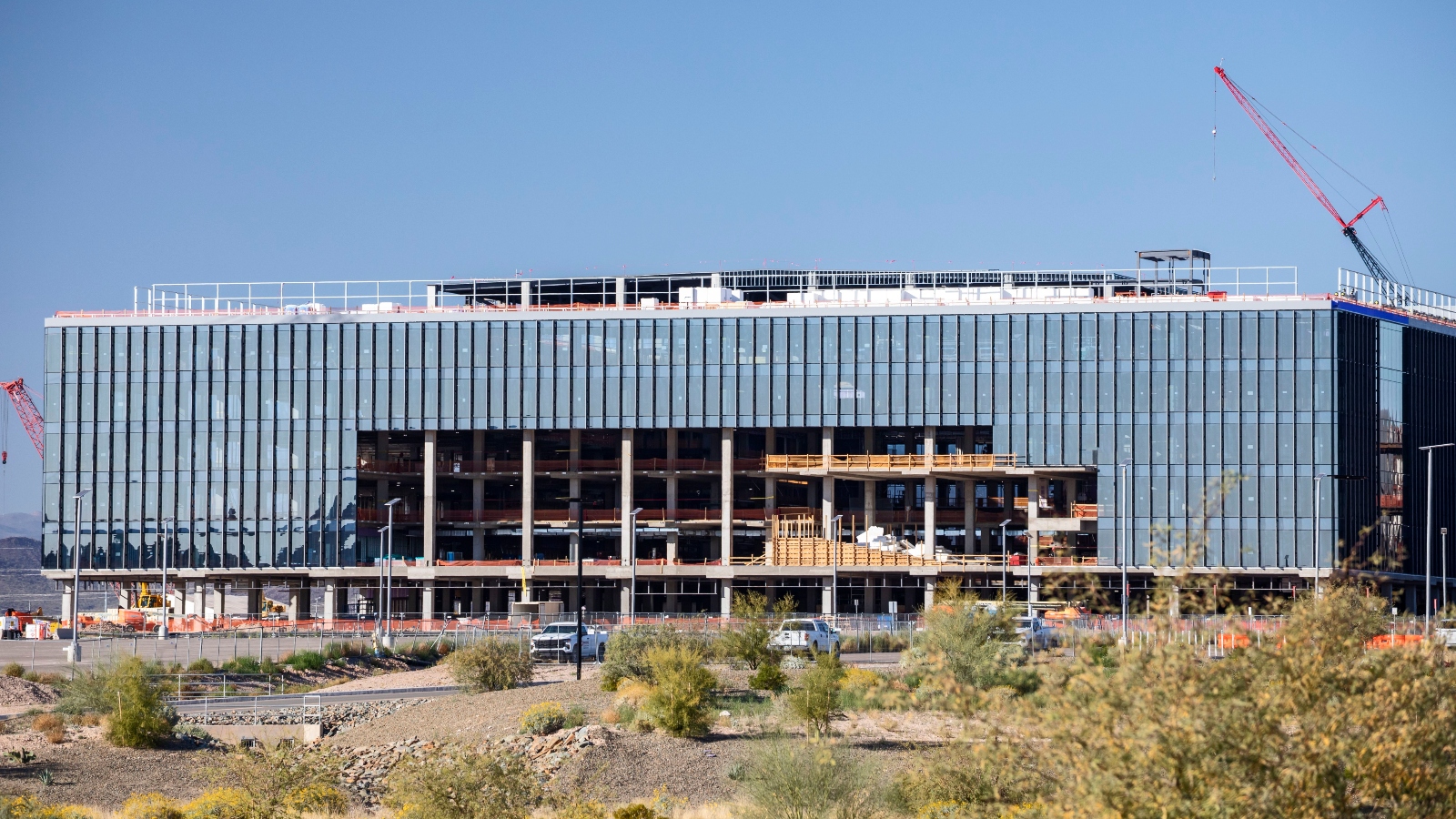
So far, however, these predictions have not come true. Even though Arizona will soon be home to nearly 200 data centers and chip factories, these facilities have not yet caused a major bump in the state’s water consumption. The companies’ precise effects on water supply are hard to discern due to their own secrecy about their water usage, but the aggregate picture suggests they have found ways to minimize their impact, whether through new cooling technologies or by recycling water on-site. And despite local backlash, water experts and many local officials appear to have largely made their peace with the industry’s arrival — and with the Phoenix region’s emergence as one of the nation’s largest AI infrastructure clusters.
“There’s not a hair-on-fire context right now,” said Sarah Porter, a fellow at Arizona State University’s Kyl Center for Water Policy. “We just don’t see it.”
Arizona is home to more than 150 data centers, according to an analysis from the Data Center Map, an industry resource. Each of these buildings contains thousands of servers that need to stay cool in the desert heat as they process computational queries. This cooling can be done with air conditioners, but it’s more efficient to surround them with pipes full of cold water, or to use evaporating mists to draw out hot air.
Cooling systems like these can consume a huge amount of water, but no one knows how much they are consuming. Independent estimates suggest that an average data center can use anywhere from 50,000 to 5 million gallons of water per day. An analysis from the sustainability advocacy organization Ceres estimated that the data centers active in Phoenix last summer used around 385 million gallons of water per year. Ceres projected that the metropolitan’s data center water consumption could grow tenfold to around 3.8 billion gallons per year.
But even that worst-case-scenario would make data center usage equivalent to just around 1 percent of total residential water consumption in the Phoenix area — and less than half a percent of the region’s total 2024 water usage. (A comparison with agricultural usage is even more stark: Agriculture uses more than 70 percent of the state’s water, and still accounts for around 35 percent of water consumption even in the Phoenix metro, the state’s most urban region.)
Furthermore, there’s some evidence that Ceres’ estimates may be too high. State data show that industrial water usage in the Phoenix metro area has remained level for several years, with the thirstiest users being golf courses, power plants, and metal mines. Even in Mesa, where both Apple and Meta own clusters of data centers, industrial water usage only accounted for around 6 percent of the city’s total potable usage in 2024.
Shifts in technology could account for part of that flat line: While many hyperscalers used evaporative cooling systems in their first data centers in the region, they have since pivoted to newer technologies that either recycle water on site or cool servers with air-conditioning. Further specificity is difficult, because hyperscalers tend to report only their global water usage. Even so, it seems almost certain that most data centers in Arizona are primarily using air-based cooling systems, since their water usage does not seem to be stressing the Phoenix system even as operations expand.
It’s also possible that newer facilities are using experimental technologies such as Microsoft’s zero-water cooling system, which recycles water through a closed loop without consuming it, or a similar system like that used by the Utah provider Joule. And while cooling often presents a tradeoff between energy intensity and water intensity, new startups are promising unconventional technologies that reduce both power and water usage.
Grist sent questions about water usage to several hyperscalers and developers with data center projects in the Phoenix region. None provided facility-level water usage estimates, but several companies stressed their commitments to use low- or zero-water cooling systems when possible. A spokesperson for Amazon said that “we use water only when we need to,” while a press release from Meta said that the company uses zero-water systems “depending on local conditions” like climate and power access. A spokesperson for Microsoft said that the company’s water-cooled data centers in Arizona only consume water on net when the temperature exceeds 85 degrees Fahrenheit, and that the company will only build zero-water data centers in Arizona going forward.
“The technology has greatly evolved,” said Arizona State University’s Porter, who is leading a project to analyze data center water usage. “Cities know it, and data centers know it.” She also noted that state regulations prevent Phoenix-area municipalities from taking on more development than they can supply with water over the next century.
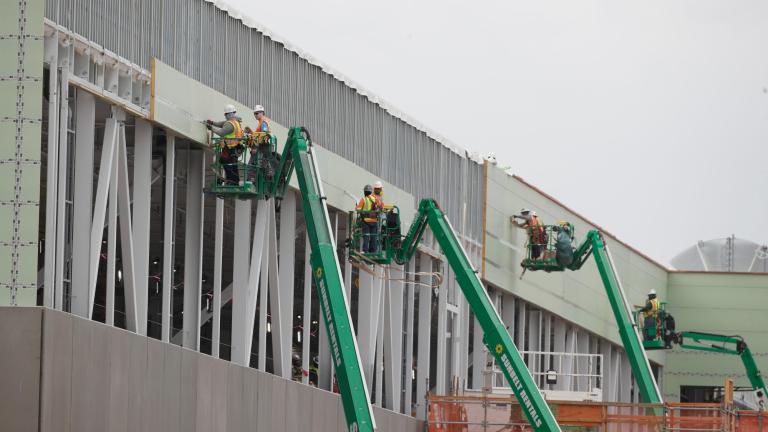
Innovation is also helping manage the water needs of the Taiwan Semiconductor Manufacturing Company, or TSMC, which is spending $165 billion to build out a “gigafab” factory complex in north Phoenix. Each fabrication plant in the complex demands around 10,000 homes’ worth of water right now, but the company says it will soon be able to slash its consumption with reclamation plants that will recycle 90 percent of its cooling water. Even now, the complex hasn’t made much of a dent in Phoenix’s city water system: Non-residential water usage is currently about 24 percent of the city’s total consumption, up only 2 percent from 2021, before TSMC came to town.
Tech critics counter that most of data centers’ water consumption is “indirect” — it doesn’t happen in the facilities themselves, but at the natural gas and nuclear power plants that produce the energy that data centers use. The report from Ceres estimates that power-plant water usage in Arizona could quadruple in years to come to meet data center demand, primarily as a result of new power plants coming online. That total could reach 14.5 billion gallons annually, enough to supply at least 50,000 homes — an especially concerning figure given that power plants are often located in rural areas where they may rely on groundwater aquifers.
“There can be risks from the cooling within the four walls of the data center, but there are also risks from all the data centers coming online in the same area, and from the electricity generation,” said Kristen James, the senior program director for water issues at Ceres. “You have to look at the full picture to really understand what the water risks are.”
In the fast-growing suburb of Buckeye, west of Phoenix, local leaders have embraced the AI boom. In 2024, a data center builder called Tract took over a stalled residential development, turning it into a $20 billion data center complex stretching across 2,000 acres. The complex will help the bedroom community diversify its narrow economy, adding new jobs and millions of dollars of much-needed tax revenue.
“This wasn’t really a controversial issue for us,” said Buckeye mayor Eric Orsborn in an interview with Grist. “There’s already several others that are looking our way. The water is really on them to bring, and the trick now isn’t water — the trick now is getting enough power.”
The mayor says that Tract will use less water than the scuttled subdivision would have used for around 2,000 homes, and the developer has promised to help purchase other water supplies to make up for the groundwater it drains. That could entail purchasing extra Colorado River water from other cities and letting that water seep into the local aquifer, offsetting withdrawals from the data center. (The state government has blocked Buckeye and neighboring Pinal County from permitting new development that relies on groundwater.)
Other cities in Arizona have tried to limit data centers from cannibalizing local supplies. Water utilities for Mesa, Avondale, and the city of Phoenix have all passed ordinances that cap usage for industrial facilities and require developers to purchase supplemental water supplies if they want to exceed those caps. A spokesperson for Mesa told Grist that large water users have provided the city with about 7,800 acre-feet of additional water supplies, though the city wouldn’t say which companies chipped in. (One acre-foot of water is equal to about 326,000 gallons, or enough to supply two or three average homes for about a year.)
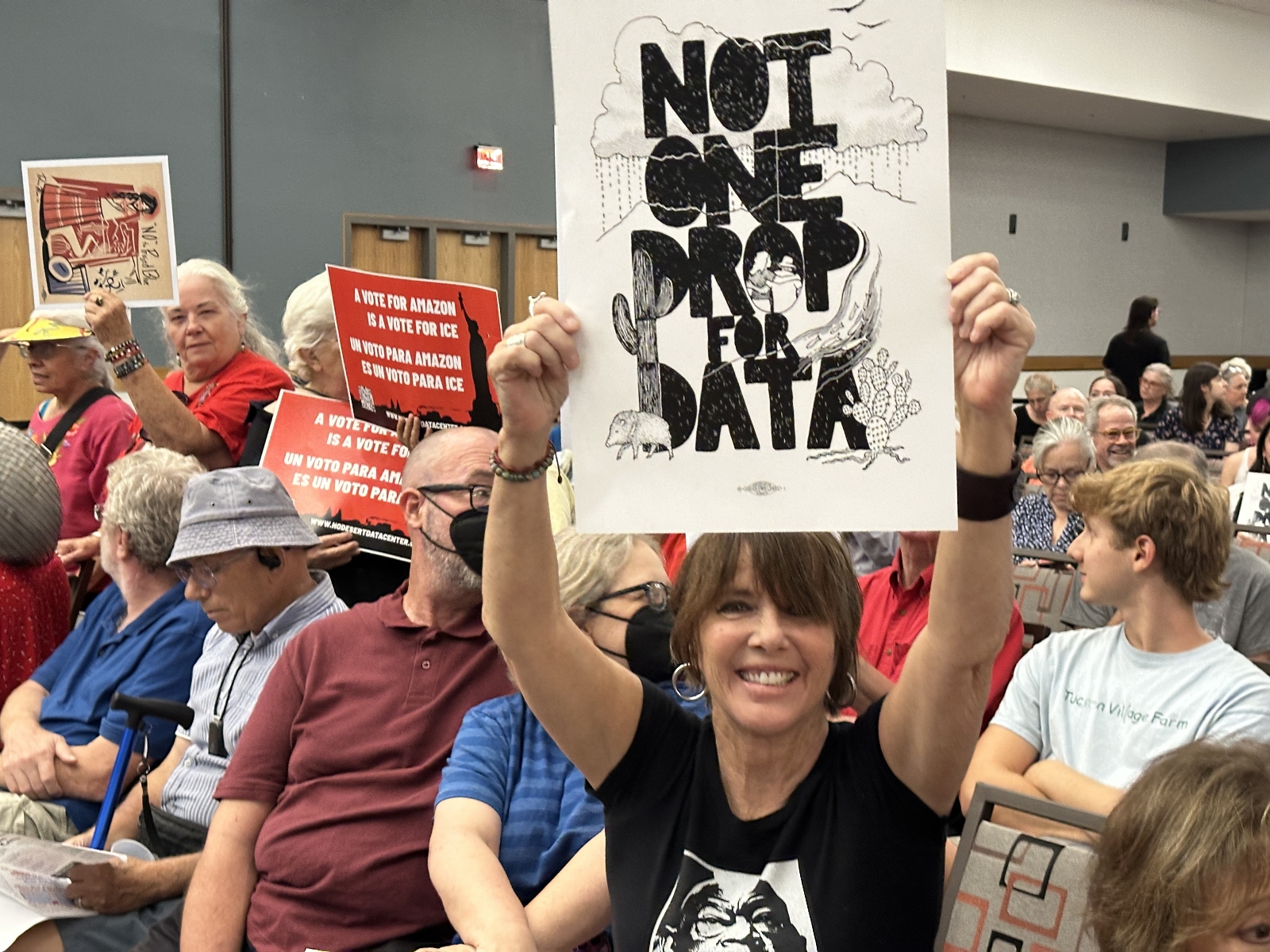
Local opposition has also been a factor in pushing developers to either cut their water usage or move away from evaporative cooling. After a wave of resident protest caused the Tucson city council to nix a proposed data center called Project Blue, the developer for that project committed to a zero-water cooling system. It sought regulatory clearance instead from Pima County, where it secured county approval. It has since unveiled a similar project in nearby Marana.
Municipalities in the Phoenix and Tucson regions still face a critical threat from the looming shortage on the Colorado River. In the worst-case scenarios, the federal Department of the Interior could cut almost all water deliveries from the canal that serves central Arizona. That would cut off water supplies equivalent to about a quarter of the region’s water usage, forcing a massive economic contraction for homes, businesses, farms — and, of course, for the data centers as well.
But unless that doomsday scenario comes to pass, the water situation in Phoenix and Tucson is nowhere near as critical as it is in rural areas, where massive alfalfa and dairy farms compete with residential wells for fast-depleting groundwater. Experts believe the urban water picture won’t get that dire even as more data centers arrive. The issue is not so much that the tech industry will deprive anyone of water now, but that it will foreclose future growth in other areas, says Porter.
“The risk is that the provider has allocated a chunk of its portfolio to a data center at the cost of opportunity to use that part of the portfolio for some new demand,” she told Grist. “What if, down the road, we decide that that shouldn’t be a data center, it should be a craft-beer factory?”
What to know about data centers
Data centers are warehouse-like facilities housing the servers needed to store and process huge amounts of digital information. They’ve existed for decades, but the rise of artificial intelligence over the past few years has triggered a surge in new construction. Here’s some of our latest reporting on the key issues surrounding their development.
-
Energy use: Data centers are energy intensive, and the current and expected future demand has utilities scrambling to prepare. Georgia halted plans to retire aging coal plants. In the Northeast, hedging against future power usage has sent energy prices skyrocketing (although in most places data center development isn’t what’s driving power bill increases – yet). The industry is also facing pressure to revise projections amid concerns they may be overblown.
-
Energy supply: To ensure a stable power supply, some data centers are building their own power sources “behind-the-meter” (meaning on-site and separate from public utilities). Those tend to be dirtier than regular power stations, and are fueling a global methane natural gas boom. [See a case study in Utah]
-
Energy prices: Data centers are often blamed for nationwide electricity bill increases, but their impact on prices varies widely by region. Explore the real factors driving up your energy prices.
-
Water: Power usage also drives water usage, but how much depends on how and where data centers are built. Building in places with high water availability and renewable energy sources makes a big difference. [See a case study in Virginia]
-
Jobs: The tech industry is spending millions to rebrand data centers as job creators, but research shows they often create fewer jobs than other industries like manufacturing.
This information last updated Feb. 27, 2026
A message from
Your support keeps our climate news free.
Grist is the only award-winning newsroom focused on exploring equitable solutions to climate change. It’s vital reporting made entirely possible by loyal readers like you.
At Grist, we don’t believe in paywalls. Instead, we rely on our readers to pitch in what they can so that we can continue bringing you our solution-based climate news. Donate today to keep our site free.