Climate Food and Agriculture
Climate + Food and Agriculture
EDITOR’S NOTE
Grist has acquired the archive and brand assets of The Counter, a decorated nonprofit food and agriculture publication that we long admired, but that sadly ceased publishing in May of 2022.
The Counter had hit on a rich vein to report on, and we’re excited to not only ensure the work of the staffers and contractors of that publication is available for posterity, but to build on it. So we’re relaunching The Counter as a food and agriculture vertical within Grist, continuing their smart and provocative reporting on food systems, specifically where it intersects with climate and environmental issues. We’ve also hired two amazing new reporters to make our plan a reality.
Being back on the food and agriculture beat in a big way is critical to Grist’s mission to lead the conversation, highlight climate solutions, and uncover environmental injustices. What we eat and how it’s produced is one of the easiest entry points into the wider climate conversation. And from this point of view, climate change literally transforms into a kitchen table issue.
Featured
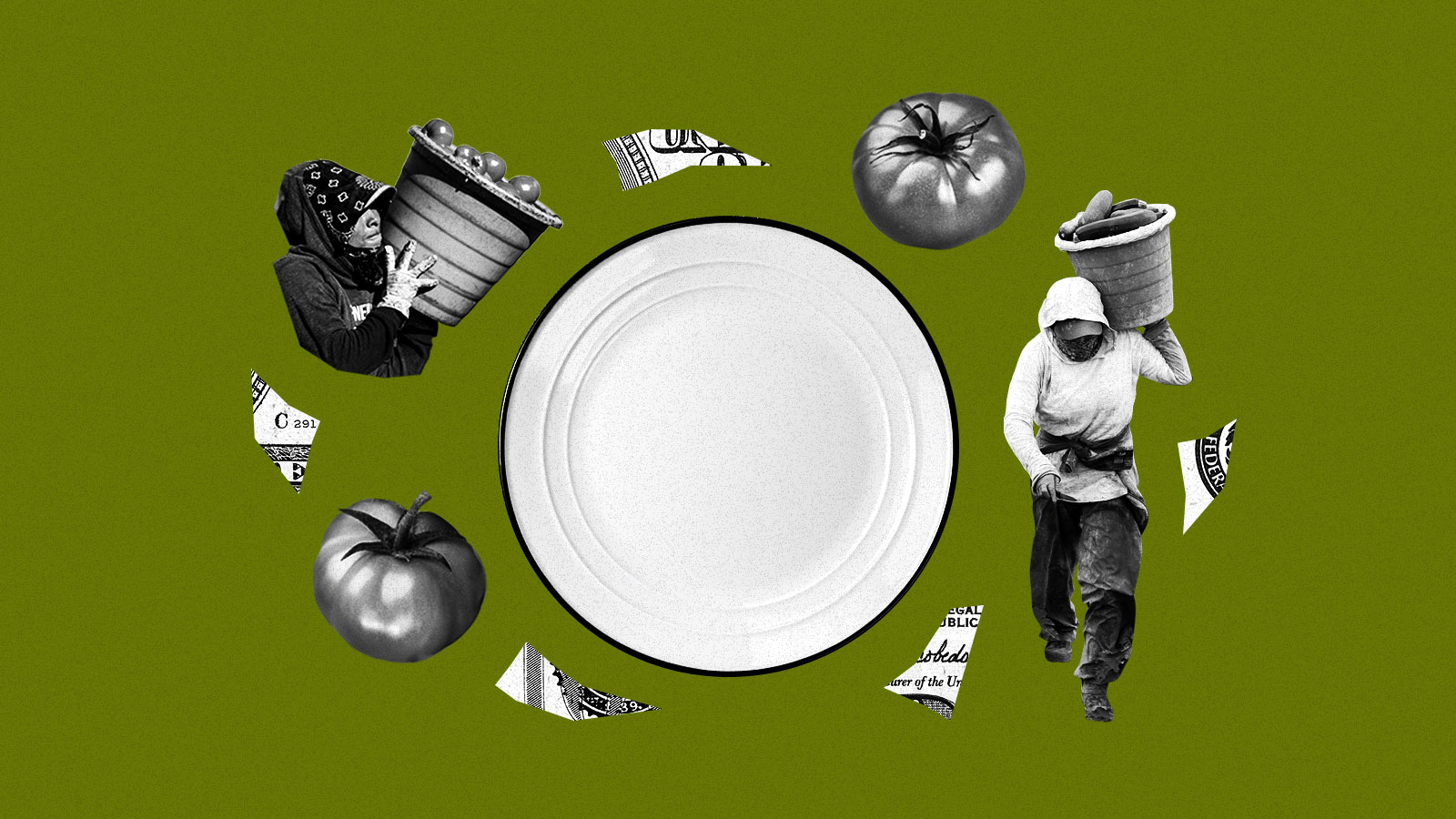
The people who feed America are going hungry
Climate change is escalating a national crisis, leaving farmworkers with empty plates and mounting costs.
Latest Articles
-
Amid collapsing fisheries and factory-farmed salmon, how to choose sustainable seafood
In Checkout Line, Lou Bendrick cooks up answers to reader questions about how to green their food choices and other diet-related quandaries. Lettuce know what food worries keep you up at night. Hello Grist, The food worry that keeps me up at night is how best to buy fish. Should I buy “wild caught,” with […]
-
The food system as ‘largest quasi-public utility in the world’
Apropos of the recent debate on Gristmill sparked by James Galbraith’s polemic on free markets, I got to thinking about something I recently read in Paul Roberts’ book The End of Food (which I reviewed here): [D]uring the late-nineteenth and early twentieth centuries Congress created a vast system of of support for food production: a […]
-
Urban gardening for the rest of us
Photo: lucy and her dent via FlickrAbout a quarter of the U.S. population lives in apartments or condos, according to the 2000 census [PDF], and most Americans will live in one or the other at some point in their lives. But apartment dwellers don’t have to miss out on the joys of growing their […]
-
What it means to put 4.1 billion bushels of corn into our gas tanks
The USDA just raised its projection for how much corn it expects the ethanol industry to burn through this year by 150 million bushels. It now expects a total of 4.1 billion bushels of corn to be turned into liquid fuel. That’s about double the amount of corn that went to ethanol in 2006 (2.1 […]
-
USDA says crops have shaken off flood damage
In early June, heavy storms and floods pounded the Midwest, threatening the 2008 corn and soy harvests. With heavy U.S. and European biofuel mandates in place, any major shortfall in these key crops would cause food prices to spike. Anticipating a poor harvest, investors bid corn and soy prices to all-time highs. Certain food-politics writers […]
-
The limits of consumption-based food movements
In “Dispatches From the Fields,” Ariane Lotti and Stephanie Ogburn, who are working on small farms in Iowa and Colorado this season, share their thoughts on producing real food in the midst of America’s agro-industrial landscape. This Olathe Sweet Corn is regionally renowned, entirely local, and grown entirely conventionally and industrially, meaning farmers use large […]
-
Umbra on diet soda
Dear Umbra, My name’s Jon and I’m a diet pop addict. My diet right now is 70-80 percent local, organic, or both, but I just can’t help myself when it comes to getting my fix. I drink several 20-ouncers a day of diet and just can’t seem to stop. Is my habit hurting the earth? […]
-
Evidently, the GMO giant has better things to do than to harass dairies over labels
After years of battling in court to prevent dairies from labeling their milk rBGH-free, Monsanto is apparently udderly fed up. Facing a growing backlash against its genetically engineered Recombinant bovine growth hormone (hence rBGH) that once conquered the U.S. dairy industry, the Gene Giant is selling rights to produce Posilac, its name for the the […]
-
Another reason to fear the factory farm
Superbugs. An alarming story in this week’s The New Yorker focuses on man-made new diseases that cannot be eradicated with conventional antibiotics, even inside hospitals. The writer quotes Michael Pollan to explain the connection to your local meat factory: “Seventy per cent of the antibiotics administered in America end up in agriculture,” Michael Pollan, a […]
-
![]()
![]()
Why Paul Roberts’ End of Food deserves to be digested
In the Middle East, water-poor nations are using petrol profits to buy farmland in economically depressed countries like Pakistan and Sudan. China, with its own farmland under pressure from development and pollution, is using some of its vast export income to snap up land in Africa and Southeast Asia. Meanwhile, Brazil — the globe’s emerging […]