Climate Food and Agriculture
Climate + Food and Agriculture
EDITOR’S NOTE
Grist has acquired the archive and brand assets of The Counter, a decorated nonprofit food and agriculture publication that we long admired, but that sadly ceased publishing in May of 2022.
The Counter had hit on a rich vein to report on, and we’re excited to not only ensure the work of the staffers and contractors of that publication is available for posterity, but to build on it. So we’re relaunching The Counter as a food and agriculture vertical within Grist, continuing their smart and provocative reporting on food systems, specifically where it intersects with climate and environmental issues. We’ve also hired two amazing new reporters to make our plan a reality.
Being back on the food and agriculture beat in a big way is critical to Grist’s mission to lead the conversation, highlight climate solutions, and uncover environmental injustices. What we eat and how it’s produced is one of the easiest entry points into the wider climate conversation. And from this point of view, climate change literally transforms into a kitchen table issue.
Featured
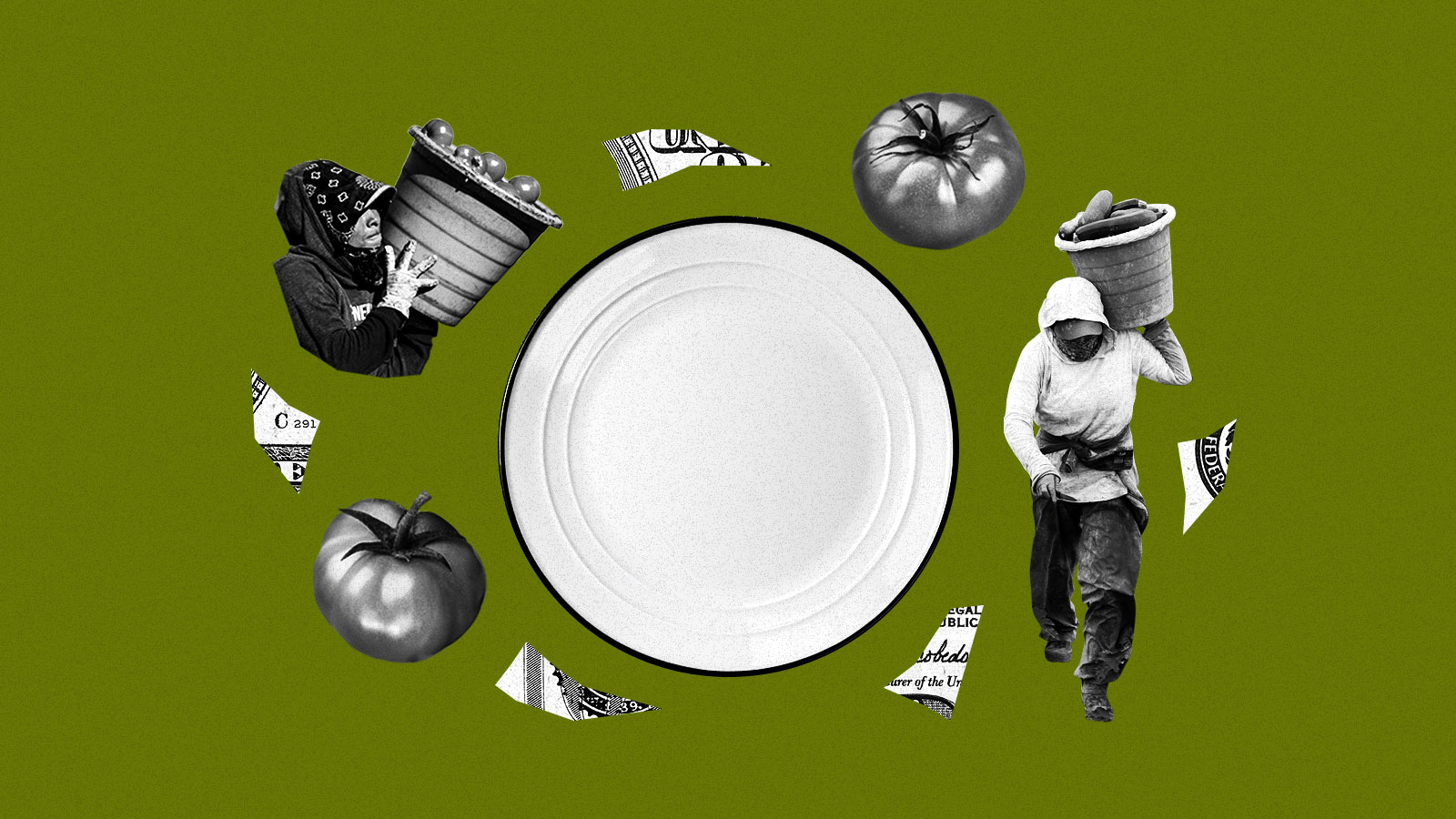
The people who feed America are going hungry
Climate change is escalating a national crisis, leaving farmworkers with empty plates and mounting costs.
Latest Articles
-
What people cling to when the going gets tough
Things are getting rough here in the land of cheap food. Corn and soy — building blocks of the industrial-food system — are trading at or near all-time highs. And that’s rippling through the food chain, from feedlots and food factories to the supermarket shelf. Here’s the latest: [B]y next year, the price of a […]
-
30,000 farmed salmon escape off B.C. coast, endangering wild stocks
Some 30,000 farmed Atlantic salmon have escaped from their pen off the coast of British Columbia into the Pacific Ocean. Farmed salmon can harm wild salmon stocks — which are already declining on the west coast — by competing with them for food as well as spreading disease. In this case, the escaped salmon are […]
-
Sen. Grassley: Screw conservation, let’s grow more corn!
Here in the U.S., our grocery bills are rising faster than they have since Gerald Ford bumbled about the Oval Office. Across the globe, the recent surge in crop prices is putting sufficient food out of reach of millions of people. The dismal human dimension of the food crisis has been amply (if sporadically) covered […]
-
More use of growth hormones would boost sustainability of dairy industry, says study
Shooting up cows with artificial growth hormones increases the sustainability of the dairy industry, claims a new study published in Proceedings of the National Academy of Sciences. “Giving rbST to 1 million cows would enable the same amount of milk to be produced using 157,000 fewer cows,” says the study, thus easing the impact that […]
-
Celeb chef clarifies his relationship with Greenpeace
A couple of weeks ago, we ran an interview with Food Network chef Alton Brown about his new sustainability efforts. In the course of the piece, Roz Cummins asked him if he'd be willing to crew on a Greenpeace boat, and he said yes -- an answer that's apparently been repeated and miscontextualized all over the place.
Brown dropped us a note to clarify his position. Here's what he has to say:
-
![]()
![]()
How the organic movement can regain its relevance
Buying organic makes you feel good … but does it make you think? On June 25, I spoke at the Organic Summit in Boulder, Colo., to an audience consisting largely of people who work in the organic food industry. This column is an adapted version of my talk. In his wildly popular satirical blog Stuff […]
-
Farm animals consume 17 percent of wild-caught fish
Here's a guest post from Jennifer Jacquet of the Sea Around Us Project and the UBC Fisheries Centre in Vancouver, B.C.
-----
It is one thing to grind up wild fish to feed to farmed fish, but it is quite another to grind up these perfectly edible fish to feed factory-farmed pigs and poultry. After all, when is the last time you saw a chicken catch a fish?
In the not-so-distant past, pigs and chickens ate grass, some grains, and food scraps. Today, in the throes of a perverse industrial food system that favors cheap protein and quick growth (with often astonishing results such as Mad Cow disease), we now feed farm animals lots of small, tasty fish.
Lots.
-
Corn tries to look a little too sweet
This week's $4.8 billion merger of Corn Products International and Bunge Ltd. probably didn't catch your eye, but with revenues projected to increase 29 percent this year to $4 billion, you might consider paying attention -- for the sake of your belly and the environment.
Corn syrup manufacturers are going on the offensive -- and that includes a charm offensive. The Corn Refiners Association -- an industry trade group -- launched a new marketing campaign yesterday that coincided with the announcement of the multi-billion dollar merger.
-
The costs of unsustainable agriculture
Here's a guest post from Rodale Institute CEO Tim LaSalle.
-----
Tom Philpott is right to highlight the tremendous ecological debt we've built up by depending on nitrogen fertilizer to run our crop production system. Depending on mined and fossil-fuel produced nitrogen for our food is no more sustainable than depending on peaking oil and mountain-top removed coal for our energy.
There's no more "cheap" food and fuel, because, really, there never was. The huge irony -- currently obscured by the psychological jolt of widespread shortages of food and fuel -- is that we were just learning of how not cheap industrial food has been:
-
Florida will buy out sugar company to restore Everglades
Nearly 300 square miles of sugar plantation in the Everglades will once again become marsh, as Florida Gov. Charlie Crist announced Tuesday that the state will buy the land from U.S. Sugar Corp. If all goes to plan, the $1.75 billion deal may be the largest environmental restoration in the history of the United States. […]