California has a good problem. As it scrambles to deploy more solar panels and wind turbines, it is reducing its greenhouse gas emissions and improving air quality while hitting the challenge of intermittency: When the sun doesn’t shine and wind doesn’t blow, you’re not generating electricity. So the state is building battery farms to store that energy — its storage capacity skyrocketed 2,100 percent between 2019 and 2025 — so it can keep the lights on when it’s dark or calm.
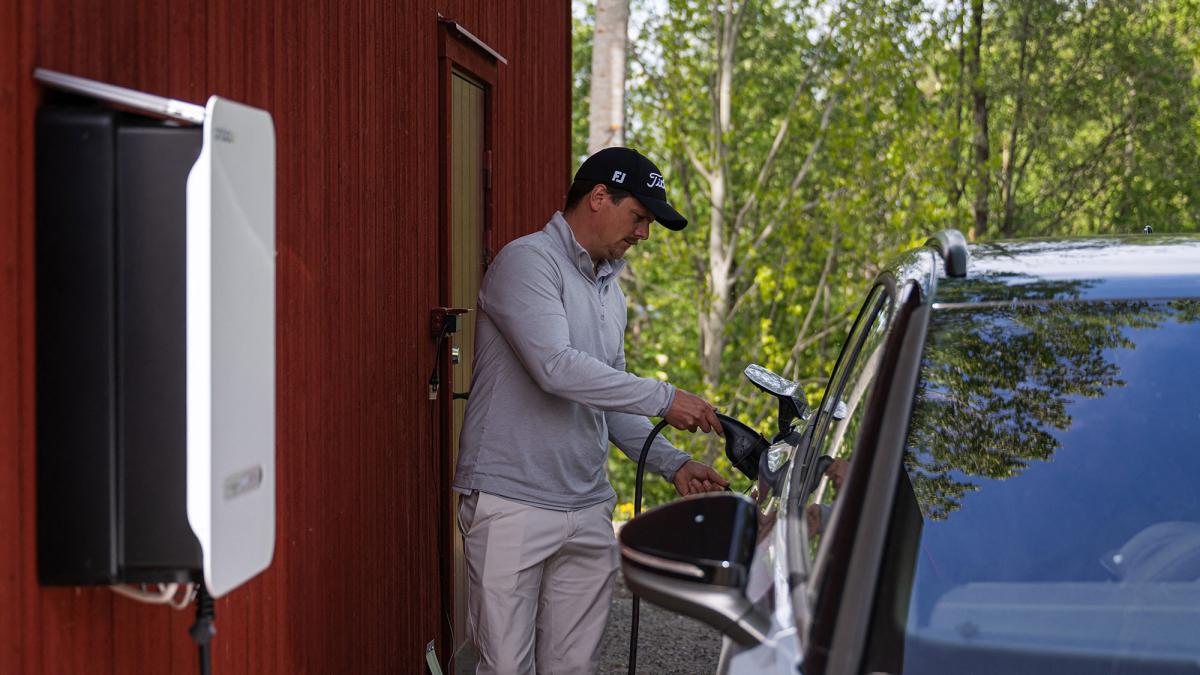
But the Golden State is also sitting on a vast, untapped storage resource — or, more accurately, the capacity parked in driveways and garages. Many EV models are equipped with vehicle-to-grid, or V2G, technology that allows them to send power back into the system during times of high demand. A new report notes that if just one-tenth of EV owners enrolled in V2G programs in California by 2036, they would provide one-third of the state’s targeted amount of long-duration energy storage. “It won’t take a huge amount of participation to make a meaningful dent in what would otherwise be very expensive grid-scale storage purchases,” said Pete Skala, vice president of professional and advisory services at the grid software company Kevala, which co-authored the report with the nonprofit GridLab and E3, an energy consulting firm.
Ideally, V2G would be combined with other “flexible load” devices that can discharge to the grid or shift their electricity use, thus spreading out demand more through the day. Taken together, the report notes, the state has a huge opportunity to accelerate the transition to renewables, bolster the electrical system, and cut costs for everyone, not just EV owners who get paid to provide their extra power. It’s just a matter of making the grid much more flexible.
Several challenges are converging for grids nationwide, not just in California. For one, demand is growing, due to the switch from fossil fuels to electric versions of stoves, heaters, and cars, and because sprawling data centers are sucking up enormous amounts of energy. At the same time, it’s getting a lot hotter, forcing people to run AC to stay healthy. This drives up the need for electricity during the summer, especially at the end of the day when people return home and need to cool down.
Historically, any utility could predict this and (usually) provide enough power by spinning up more generation at natural gas power plants. But with so much more solar in the mix, the sun is setting even as people are turning on their AC and all kinds of other appliances, like washing machines. Hence the need for those giant battery facilities, which are expensive.
By contrast, people are already buying EVs, which often sit idle, plugged in at home or at the office, ready to supply power to the grid. “If we can get this right, to take advantage of that resource in particular, [it] will reduce the amount of that grid-scale storage that we’d otherwise need to procure,” Skala said.
This would, in turn, reduce the costs that utilities typically pass on to customers through rate hikes. The trick, the report notes, is determining a compensation structure. Paying EV owners to provide backup power would incentivize participation, but paying too much would start to drive up costs, possibly exceeding what it would take to build more battery facilities. While only a fraction of California’s EV owners would need to opt in to make an impact, the more vehicles a utility can call on, the less energy it will have to draw from each. In any case, owners wouldn’t wake up to a drained battery: They could specify when they typically need their car fully charged. Even people without EVs would benefit, as rates shouldn’t rise if utilities can avoid building extra infrastructure. “We need to make sure that we set these incentives at levels in which everybody wins,” Skala said.
The rollout of V2G should happen in concert with strategies for reducing demand to begin with, the report says. One thing that utilities are already doing is remotely overriding smart thermostats. In this kind of opt-in program, a homeowner agrees to set their indoor temperature a few degrees higher during a heat wave, meaning their AC won’t run as much. Spread across thousands of thermostats, this “demand response” can reduce stress in the grid by blunting that late-afternoon spike in energy use.
Between V2G and demand response, in the very near future, you’ll become a more active participant in the grid, not just a consumer of electricity. Done right, all these programs can work in concert to encourage the transition to renewables and make electricity cheaper for all.