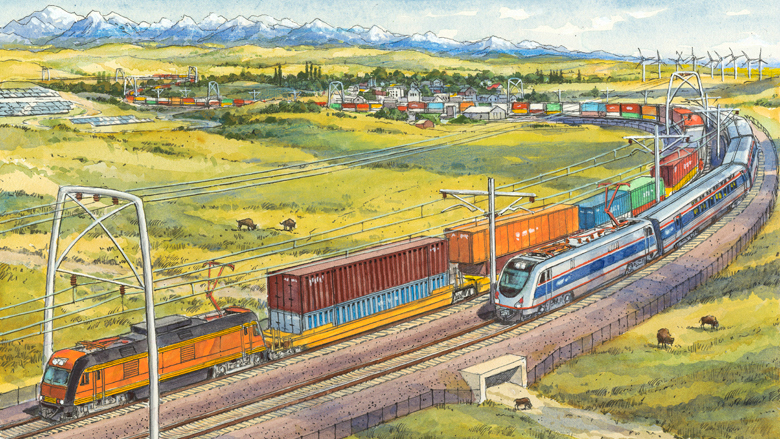
Driven by the fossil-fueled industrialization of Asia, carbon dioxide levels hit 395 parts per million in 2012, the highest level in four or five million years. That was an era when sea levels were around 80 feet higher and temperatures up to 10° Fahrenheit hotter. If we sustain those CO2 levels, or go higher as we are doing, over time a completely different world will emerge. Disruptive climate change is pushing two great carbon-reduction imperatives. The first is to dramatically reduce emissions of heat-trapping carbon pollution through a clean energy revolution, a rapid transition to non-fossil energy sources such as …
Patrick Mazza's Posts
Super Bowl blackout makes the case for smart microgrids
So what does it mean when America’s premier sports event goes dark for 34 minutes? Was Beyoncé just too electrifying? Or does the Super Bowl blackout signify deeper problems with electrical infrastructure?

First, we now know Beyoncé is off the hook. The halftime show used its own generator. So was the utility to blame? Entergy says a monitoring device detected a power surge in the system, and automatically shut down a feeder to half the stadium. That was to prevent any problems from spreading. Ironically, while the event spurred calls, such as this one at The Daily Beast, for a smart grid, that was a pretty smart piece of grid automation at work. Utility officials, in fact, place the problem within the Superdome’s own power system, giving the poster child for Katrina’s humanitarian crisis a new source of notoriety.
While the particulars are a bit blurred, the blackout does make the case for a different shape of power-grid architecture that is indeed an advanced form of smart grid. The vision is one of a network of smart microgrids served by distributed energy sources.
Clean energy conference weathers blackout with microgrid
Waking up in my hotel room across the street from the 13th annual Harvesting Clean Energy Conference Monday, I hit the light switch. Nothing. I try a few other switches and then look out at the hall to confirm it’s a blackout. But I can see out the window the lights of the Oregon State University campus shining into the still darkened sky. It turns out that while a blackout has engulfed Corvallis in darkness, the campus location is lucky 13 for the conference. The original location in a building on the edge of campus is dark, but the conference …
The carbon math – Western US ecosystems capacity to store carbon in future depends on emissions reductions now
How much carbon is stored in natural systems of the continental western US? Over coming decades, how much of the fossil fuel carbon dioxide we are pumping into the atmosphere will western ecosystems absorb? A new US Geological Service survey provides some sobering answers. The two crucial takeways: First, the capacity of western ecosystems to absorb carbon between now and 2050 depends on how rapidly we move now to reduce fossil emissions. To put it simply, the hotter and drier we let the world become, the less will climate-stressed forests, grasslands and other systems be able to capture and store …
Literal grassroots leadership: The Soil Carbon Challenge
Sitting down to talk about his work to focus the climate-saving power of soil carbon, Peter Donovan starts off with a trick question. “What’s the major greenhouse gas?” I fall right into it. “Carbon dioxide.” “No, it’s water vapor.” Of course, he’s right, and I know it. I have answered the question I thought I heard – What is the human-emitted pollutant that is the largest source of climate change? But in terms of actual gases in the atmosphere, good old H2O is hands down the greatest heat trapper. So what does this have to do with carbon in the …
Newly discovered super-advanced biocarbon device: anchovy poop!
(At the Northwest Biocarbon Initiative we are constantly on the hunt for ways to improve the carbon storage capacity of natural systems. One of my partners in the project, Rhys Roth, came across this new scientific study on the importance of fish poop. One way to help remove the carbon load in the Earth's atmosphere! Patrick Mazza) Filed under: NBI, biocarbon, solutions, carbon, natural systems By Rhys Roth I love pizza, but the anchovies? Not so much. Little did I know that by skipping the anchovies I may actually be helping protect https://grist.wordpress.com/wp-admin/post-new.phpEarth’s natural CO2 cleansing system. Anchovy poop, …
Fires, droughts put focus on climate — but will we seize the moment?

Flying from Seattle to Boise, Idaho, on Sunday for the Pacific Northwest Climate Science Conference, the pilot pointed to a bit of climate change out the window.
“Over to your left you can see plumes from the fires,” he announced over the intercom. The sky was choked with smoke from Eastern Washington wildfires, as it has been for weeks.
In Boise it was clear and sunny. But the hotel shuttle driver noted this was the first time in days you could see the mountains above the town. Boise, too, has been gasping on the wildfires.
The smoke came up again in a Monday conference welcome by Boise Mayor David Bieter. It is heartening when the leader of the reddest state’s biggest city greets an auditorium full of climate scientists with an acknowledgement that “the work you do is of such importance to our community and policymakers in general ... your work will help us understand what we might face in decades to come.”
Bieter said the climate issue has faded in recent times, but smoky skies seem to be bringing it back. “If we didn’t have climate change on our minds, events have forced us to think about it again.”
Indeed, this summer's record heat waves, sweeping wildfires, and widespread drought have left visible imprints on the public mind. There is a sense that denialism is finally in retreat, and that this is a moment of climate opportunity.
But moments pass. Will we seize this one?
On the verge of revolutionizing the U.S. power grid
Rachel Maddow, a kindred spirit whose heart beats a little faster at the word "infrastructure," has been campaigning recently for more infrastructure spending in the stimulus package. Pointing to the mass blackouts caused by Midwest storms, she asked the other day on her MSNBC show, "Can I put in a request for a grid that works, even in the snow?" Yes, Rachel, you can! What you want is a smart grid rich in distributed energy resources. First, it is important to be clear that we have two power grids: a transmission grid, which consists of the big lines carrying power …
Call it ‘green mobility’
With an auto industry bailout careening down the pike, Climate Solutions policy director KC Golden has some vitally needed insights regarding what we need to demand from industry leader GM in return. ----- We should not rescue General Motors as we know it. But Congress could use the proposed bailout as an opportunity to begin building a new prosperity that can last. As part of any public assistance, GM should be required to help America reduce its oil dependence and tackle the climate challenge by producing the cars of the future. Saving GM under any circumstances is a hard swallow. …

Macklemore credits Seattle parks with launching his rap career
What the frack do we know? (Not much)
Holland is better than we are at everything