This story was originally published by the Guardian and is reproduced here as part of the Climate Desk collaboration.
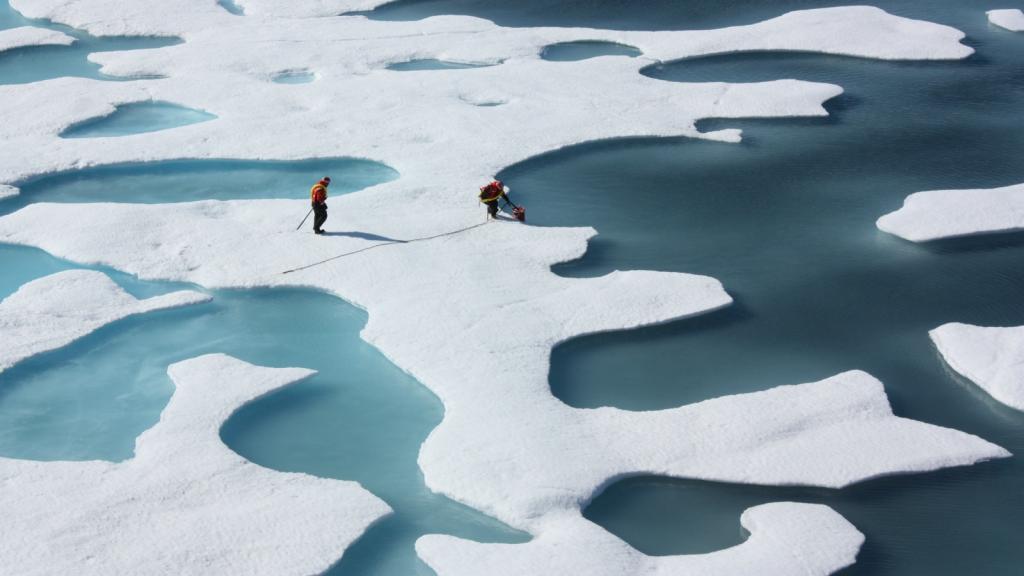
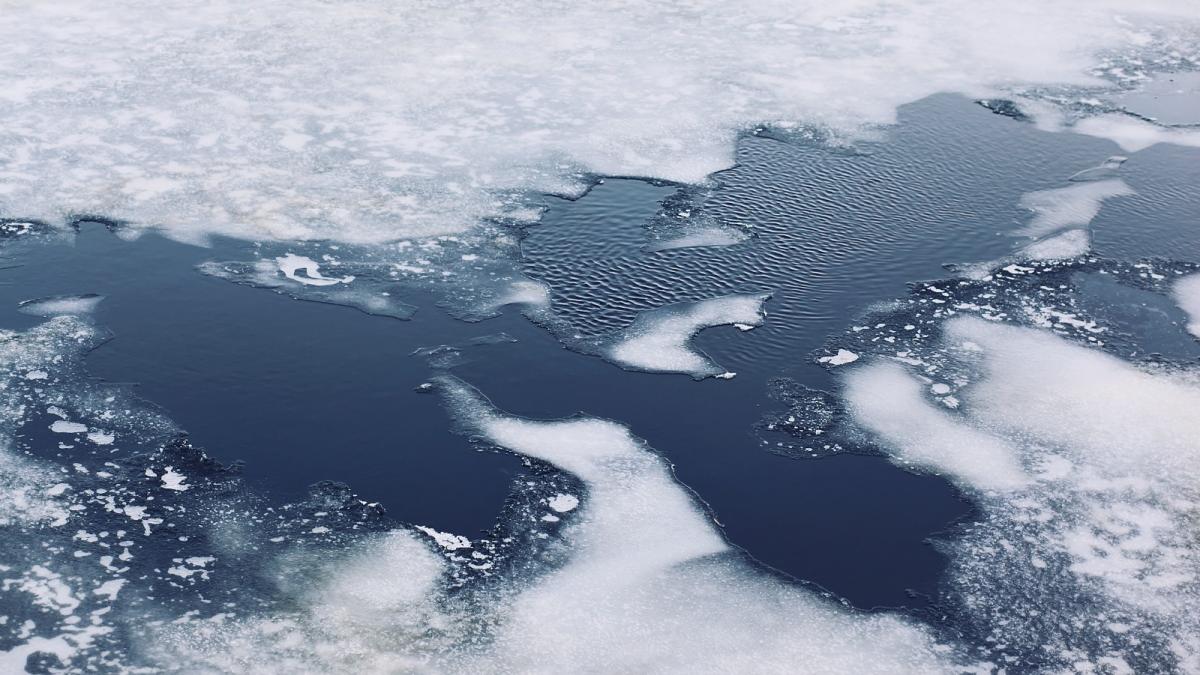
The summer sea-ice cover over the Arctic raced towards oblivion in June, crashing through previous records to reach a new all-time low.
The Arctic sea-ice extent was a staggering 260,000 square kilometers (100,000 square miles) below the previous record for June, set in 2010. And it was 1.36 million square kilometers (525,000 square miles) below the 1981-2010 long-term average, according to the National Snow and Ice Data Center.
That means a vast expanse of ice — an area about twice the size of Texas — has vanished over the past 30 years, and the rate of that retreat has accelerated.
Aside from March, each month in 2016 has set a grim new low for sea-ice cover, after a record warm winter.
NSIDC
January and February obliterated global temperature records, setting up conditions for the further retreat of the Arctic summer ice cover, scientists have warned.
Researchers did not go so far as to predict a new low for the entire 2016 season. But they said ... Read more