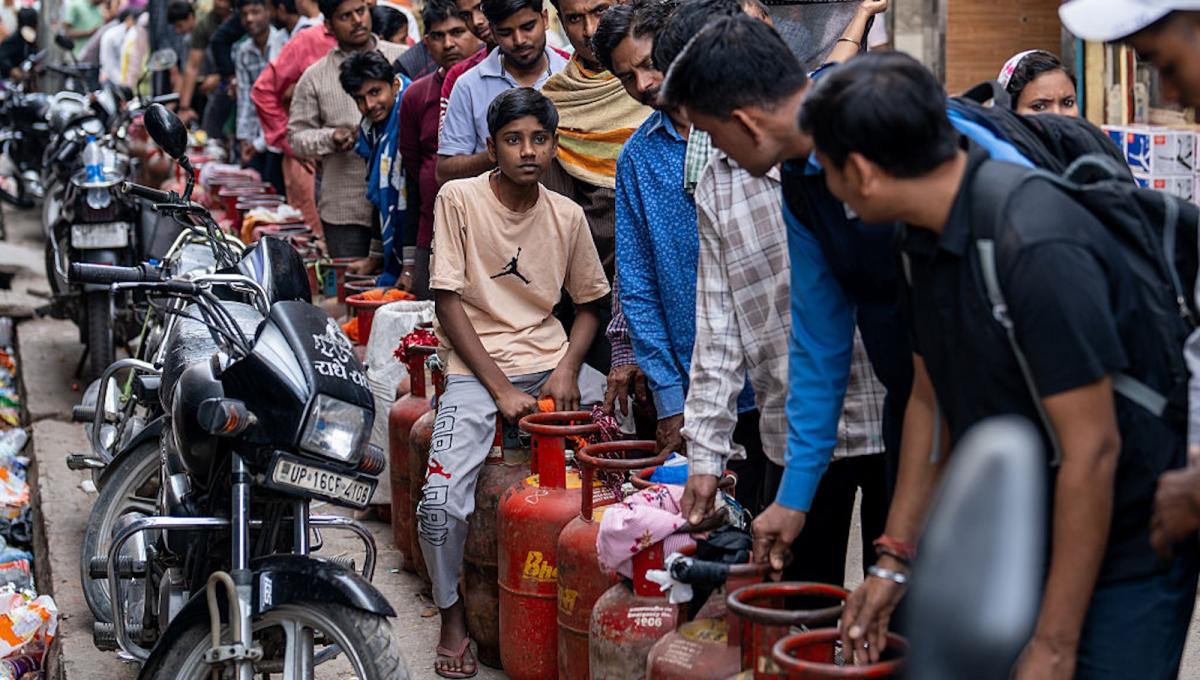
About a decade ago, India’s government began subsidizing the purchase of liquid petroleum gas, or LPG, to promote greater adoption among its lower-income citizens. Switching to the gas was considered a safer and more reliable alternative to burning wood and coal for cooking at home, which families in resource-strapped rural areas were still doing en masse. Ever since, the fuel has become ubiquitous. The bulk of Indian households prepare most of their food with it, and typically use a few cylinders of LPG every year, an amount that varies depending on whether they are in rural or urban communities.
In all that time, Subhash Kapoor hadn’t had much trouble securing cooking gas. Kapoor, who works as a driver in Noida, on the outskirts of New Delhi, lives with his wife and three children. A single gas cylinder would cost about Rs. 900 (about $10) and last about 40 days for the family. The process to secure one had become painless and routine: Every couple of months or so, he would place a call to a nearby gas agency, and the cylinders would be delivered to his home. In January, Kapoor did just that and r... Read more