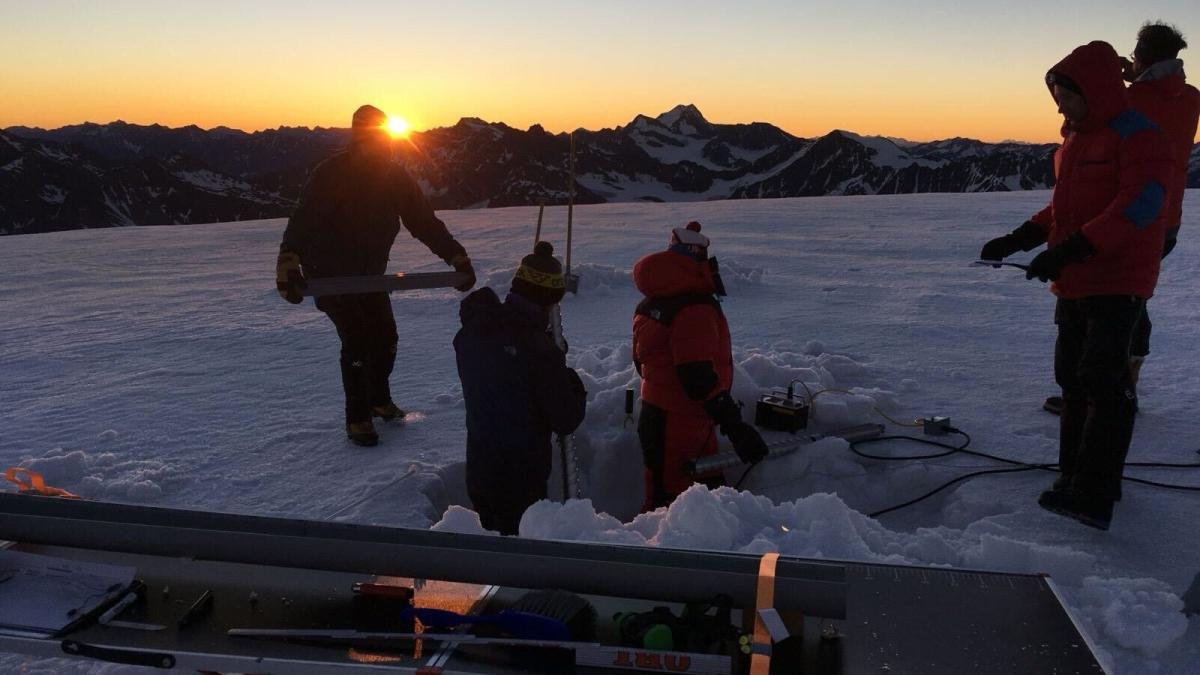
High up in the Ötztal Alps, near the border of Austria and Italy, sprawls the closest thing you can get — scientifically, at least — to a time machine. For thousands of years, snow has fallen here and turned to ice, building layer upon layer of the Weißseespitze glacier and archiving invaluable information. For instance, as mining and smelting of metals accelerated 1,000 years ago across Europe, pollutants like arsenic took to the air and fell on the ice. There are natural signatures, too, like chemicals from wildfires that give clues to the climate of the distant past.
Scientists are raising the alarm that as glaciers disappear, they’re taking critical insights with them. Already, warmer temperatures have taken their toll on the Weißseespitze glacier, as the upper layers — corresponding to the centuries since the 1600s — have melted away. What researchers are left with is a historical record between the second and 17th centuries CE. And the race is on: Some 30 percent of the glaciers in the Ötztal Alps could disappear in the next five years.
“It’... Read more