

The looming threat of cyclospora — a parasite often found in summer produce that causes severe gastrointestinal distress in humans — has struck fear into the hearts of salad enjoyers nationwide.
On July 17, shortly after beginning its investigation into the multistate cyclosporiasis outbreak, the Food and Drug Administration announced a positive test result identifying cyclospora on shredded iceberg lettuce grown in Mexico for Taylor Farms, a major U.S. food producer. The company issued a voluntary recall — but the FDA walked back its statement two days later, describing the test as a “false positive” while insisting its investigation is “ongoing.” Representatives from Taylor Farms allegedly asked the FDA for more time before the agency recalled its products, according to a Wall Street Journal report.
At the time, the outbreak had been contained to five states in the Midwest, according to the Centers for Disease Control and Prevention. Since then, the CDC has linked four more states reporting cases of cyclosporiasis to contaminated lettuce from Taylor Farms, bringing the total of impacted states to nine. The CDC also stated that the outbreak has caused close to 2,000 cases of the illness — although that is likely an undercount. (The CDC is also monitoring cases of cyclosporiasis that appear unrelated to this outbreak.)
There are a number of reasons why it can be difficult to track cases of cyclosporiasis. For example, many people may experience and manage symptoms, which include persistent, watery diarrhea, at home without ever seeing a doctor.
But the uneven rollout of information from public health authorities during this outbreak has further complicated matters. Former federal food-safety officials have criticized the Trump administration’s handling of what is now considered the largest known cyclosporiasis outbreak in U.S. history.
Unsaid in all of this is whether climate change and its impact on our globalized food system made this year’s outbreak more likely. The answer is complicated.
“There are a couple things that make it a little difficult to fully assess what [the role of] climate change or changes in weather patterns could be,” said Jeffrey Griffiths, a professor of public health at the Tufts University School of Medicine. “But I would say there’s still enough information that we have such that we can make some pretty reasonable inferences about how climate change would work.”
First off, what is cyclospora?
Unlike other foodborne pathogens — like salmonella and E. coli, which exist in and on animals — cyclospora is transmitted through food or water that has been contaminated with human feces. When infectious, cyclospora causes explosive diarrhea and other gastrointestinal symptoms in humans.
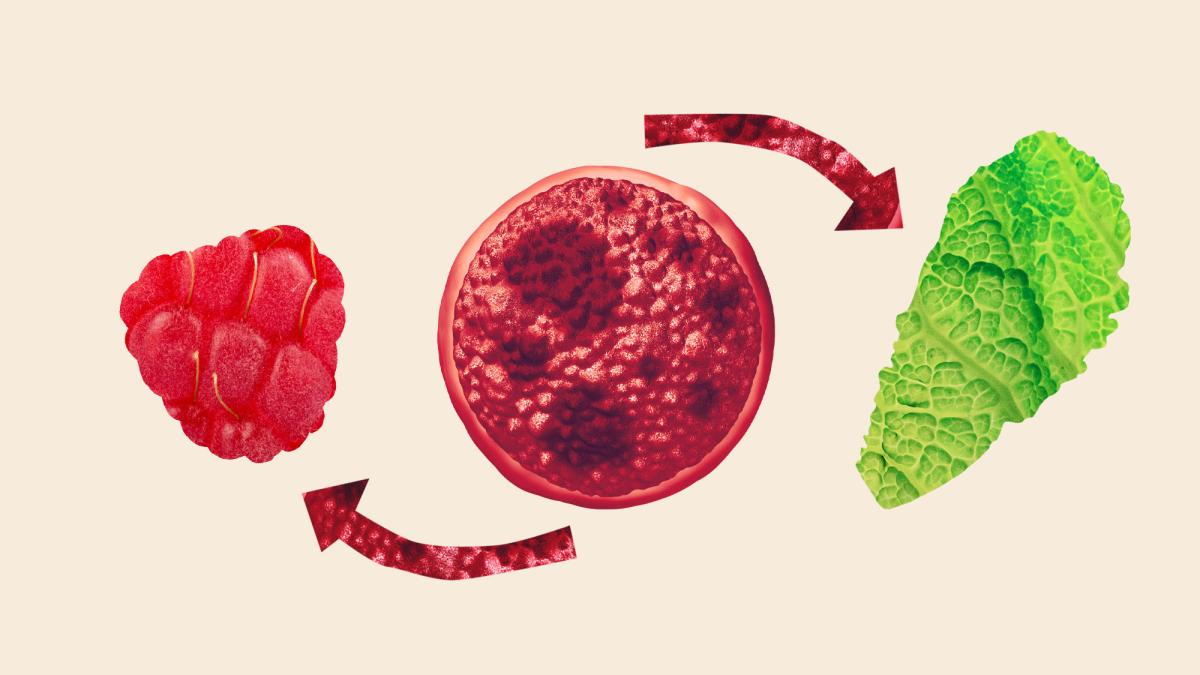
Cyclospora can often linger in difficult-to-wash produce with uneven surfaces, like leafy greens and berries. Previous outbreaks have been tied to fresh produce including cilantro, basil, raspberries, and other berries. Thankfully, for anyone feeling overly cautious, cooking fresh produce kills this parasite.
Whether or not a person who has ingested the parasite becomes ill depends on the maturity level of the parasite at the time of exposure. Cyclospora is not immediately infectious when released in human stool. The parasite must undergo a maturation process that typically takes about one to two weeks. If cyclospora is ingested after that point, then it is considered infectious and causes gastrointestinal distress in its host. However, if the parasite is ingested before it has had enough time to mature, then it will likely pass without causing any illness.
This window of time wherein cyclospora is in the natural environment (say, in our water supply or on our produce) but not infectious to humans has created a lag in public health authorities’ ability to trace the origins of the outbreak.
How does human fecal matter enter our food or water supply to begin with?
The exact origin of this specific outbreak is still unclear. Taylor Farms said in a statement that the company has voluntarily recalled its iceberg lettuce products that came from central Mexico “out of an abundance of caution” and has also reached out to “independent experts” to review its food-safety protocols.
But experts say there are a few potential pathways for contamination — most having to do with how water is used and managed for agricultural production.
In many past outbreaks of cyclospora that have been associated with fresh produce, “we’ve seen that water is critical,” said Kalmia Kniel, a professor of microbial food safety at the University of Delaware. If the irrigation water supply on an agricultural site comes into contact with wastewater, for example, and is not adequately filtered, then it runs the risk of contaminating crops meant for human consumption.
“There’s lots of different little mechanisms where that could happen,” said Griffiths — like if agricultural fields are located adjacent to faulty sanitation systems. In these cases, storm events resulting in flooding or water runoff could lead to cross-contamination. Additionally, if a farm reuses municipal wastewater as part of its irrigation system and that wastewater is not treated to a high enough standard so as to remove pathogens, it poses a risk of transmitting cyclospora to crops.
How might climate change increase the risk of an outbreak?
For one, warmer temperatures help speed up the maturation process that makes cyclospora oocysts, or early stage parasites, infectious to humans. That’s why you typically see more cases of the infection during the summer months. As climate change makes summers hotter — and longer — the window of time when cyclospora could become infectious and present a public health risk is also growing.
Another way that climate change supercharges the conditions for an outbreak like cyclosporiasis is by disrupting the water cycle. Extreme heat sucks moisture out of the environment, from rivers and lakes as well as the soil and plants. During drought conditions, agricultural producers are more likely to reuse nontraditional water sources, such as municipal and commercial wastewater, to irrigate crops. What’s more, cycling between drought and downpours means that when it does rain on dry soil, more runoff carries more particles and organisms across a landscape.
Is cyclospora the only foodborne pathogen to worry about?
I wish. Food system researchers have seen how very dry, hot conditions supercharge the likelihood of other foodborne pathogens, such as salmonella and E. coli. In 2024, the U.S. Department of Agriculture released a multiyear study centered on Yuma County, Arizona, where a majority of the country’s lettuce is grown in the winter months. The researchers found that dust kicked up from a nearby cattle feedlot helped carry E. coli through the air and deposit the bacteria on nearby water and soil.
Holly Bainbridge, a senior attorney at FarmSTAND, a legal advocacy organization, noted that studies like the USDA’s point to a gap in the nation’s regulatory oversight of the food system. “It was a step in the right direction, but the federal government hasn’t really done anything with it,” she said.
Bainbridge added that the corporate consolidation of agriculture — and specifically, the intensive confinement of animals on farms — makes outbreaks of salmonella and E. coli more likely.
Last week, the FDA issued a recall of over one and a half million eggs that have been potentially contaminated with salmonella. As of this writing, 98 people across 17 states have been made sick, according to the latest numbers from the CDC.