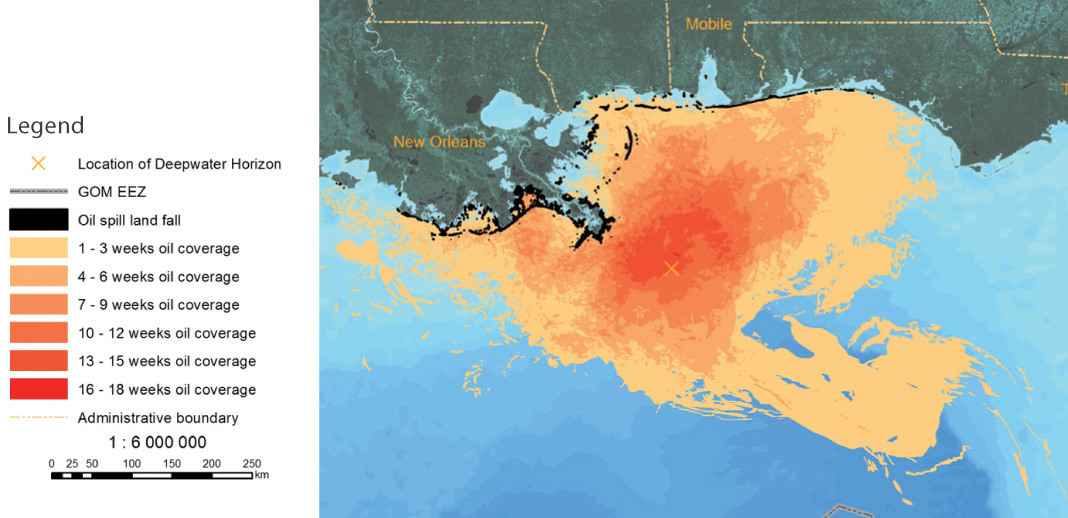
This map depicts the length of time oil was in the Gulf. The lightest orange indicates 1-3 weeks coverage; the darkest is 16-18 weeks.Image: European Space AgencyIt’s been six months since the BP oil spill and we now know the answer to the question of how badly the spill would hurt spawning bluefin tuna. New satellite data from the European Space Agency (ESA) shows that 20 percent of juvenile bluefin tuna have been killed by oil. Which is pretty significant since Atlantic bluefin have declined over 80 percent in the past 30 years, and at current fishing rates the critically endangered fish will be extinct by 2012.
Things could have been much worse though. The ESA analysis shows that the main spawning hotspot for bluefin to the west of the spill area was unaffected by pollution.
When bluefin tuna breed, females release eggs into the water and males following behind fertilize them. After hatching, the larvae begin searching for food near the surface of the water. Which in the case of the BP oil spill meant they came into contact will the oil, which killed them.
Get the full story from our friends at Treehugger.