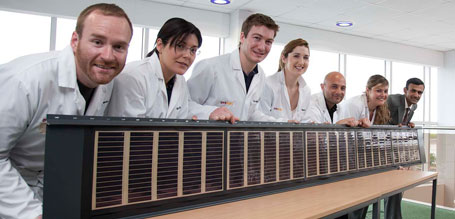
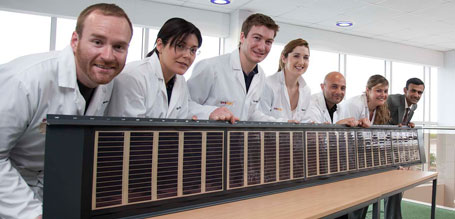
The world's largest dye-sensitized solar cell has just made an appearance. These cells have a couple of major advantages over traditional solar cells: one, they're incredibly cheap, and two, they can be printed right onto the materials used to make a building. Right now they’re being incorporated into girders manufactured by Tata steel.
DSC modules use titanium dioxide — the same stuff in old-school sunscreen — to receive electrons from a dye when it's struck by sunlight. They're not terribly efficient, but they're so inexpensive that as the technology matures it's anticipated that they will approach the cost of fossil fuels for production of electricity.
The idea is that eventually manufacturers will simply sell building materials covered with these solar cells, including roofs, facades, and windows. Putting up a house that doesn't generate its own electricity will seem as quaint as building one without electrical outlets — and about as practical.
A message from
Your support keeps our climate news free.
Grist is the only award-winning newsroom focused on exploring equitable solutions to climate change. It’s vital reporting made entirely possible by loyal readers like you.
At Grist, we don’t believe in paywalls. Instead, we rely on our readers to pitch in what they can so that we can continue bringing you our solution-based climate news. Donate today to keep our site free.