Latest Articles
-
Hillary Clinton
Hillary Clinton deserves enormous credit for this gracious, powerful speech: Especially since she and her supporters had to endure this:
-
McCain says Reid chose ‘to put politics above policy’
McCain's statement on Lieberman-Warner said this:
... it appears that for now, the Senate, at the direction of the Majority Leader, will choose to put politics above policy, and Congress will fail to act yet again on this critical issue.
You cannot be serious! The people who put politics above policy were McCain's fellow conservatives, who
- Forced 30 hours of pointless debate
- Forced a 9-hour reading of the bill
- Demagogued the gasoline and energy price issue over and over again
- Denied the reality of climate science
- Voted to block the bill from moving forward
That's why Congress failed to act. And, of course, Bush said he would veto the bill anyway. Where or when did the straight talk express derail?
This post was created for ClimateProgress.org, a project of the Center for American Progress Action Fund.
-
Now that L-W is dead, Barnes’ sky trust is looking good
Revkin speculates that Barnes' proposal is a way to break the deadlock stopping climate change legislation.
I think he may be right. Tax emissions. (Or cap them and auction permits.) Refund the revenue to everybody. It has the following political advantages:
- It is simple and easy to understand.
- It puts a price on emissions without really penalizing anybody. It is a no-hair-shirt solution.
This last point is worth emphasizing. It does not punish consumers, because the increased prices they pay are made up for by the dividend check. It does not really punish fossil fuel companies, because the tax they pay gets passed along to customers who have new money to pay those increased prices. Of course, fossil fuel companies do lose, as people use less of their product, but that is not punishment; it is an inevitable result of their selling a product whose side effects can no longer be tolerated. Since it will take time to phase out fossil fuels, oil and coal companies are free to use the time tax-and-dividend gives them to make the transition to other businesses, perhaps by expanding the investments they have already made in wind and solar.
I'm going to post soon on why I think the people who think tax-and-dividend (or any mechanism depending on price) can be the sole, or even main, solution are wrong. Price is insufficient by itself; public investment and rule-based regulation have to remain the primary solutions. But price is not avoidable as part of the solution.
-
Buying a high-mileage car easier said than done
My brother-in-law recently sent me a spreadsheet he'd built that compares a Prius and two similar-sized cars. He just wanted to know if "doing the right thing was going to cost me." The numbers said to buy a Prius. Ideally, going green should always be a win-win situation. Then, however, he found that the waiting list is "baaaack!" So he'll have to put down a deposit just to get in line. He was quite disappointed and may now buy a different car.
My car is also on the ropes. A few months ago, I asked for car advice and got some valuable feedback. I've been procrastinating, but a week ago, my door handle broke off, so in addition to having a jury-rigged ignition switch, I now have to roll the window down and open the door using the outside handle. It's getting embarrassing. At least I don't have to crawl out the window ... yet. I'll eventually get a part from a junkyard, but that was the final straw. Our 17-year relationship is over.
-
A new video about creation care
Another sharp new piece from the American News Project:
-
Country songs dedicated to your favorite climate personalities
Dedicated to the coal and nuclear industries: Lorrie Morgan's What Part of No Don't You Understand?
Dedicated to Scott McClellan: Randy Travis' Pray for the Fish:
-
Post-post mortem on Boxer-Lieberman-Warner debate
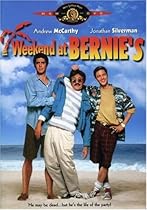 OK, so the long-dead B-L-W bill got propped up and dragged around for a few days. (Tagline: B-L-W may be dead, but it's the life of the party!) But I think the debate was quite useful for two reasons:
- The opponents of (even modest) action played and overplayed their cards. Now we know that the health and well-being of future generations is of no interest in them. Now we know what their primary arguments will be. This is the opportunity for progressives and moderates and hopefully President Obama to design a better messaging strategy -- and to get pro cap-and-trade businesses to weigh in.
- The many flaws in the bill (other than the fact it wouldn't actually save the climate) were exposed: not enough money returned to taxpayers, too much money given away to too many groups, too complicated, your flaw here -- I'd very much like to hear your ideas for how the bill could be simplified and improved.
I will be offering my recommendations for what a better bill would look like later this month. Clearly, the bill should be designed to achieve more reductions and to be easier to explain and defend.
After all, the original Weekend at Bernie's was kind of fun and made money. But did anybody actually see (and enjoy) Weekend at Bernie's 2? We don't want a lame remake next year.
-
Caribbean monk seal is extinct
The Caribbean monk seal is extinct, U.S. officials declared Friday. The seals, also called West Indian seals, have been on the endangered-species list since 1967; the last confirmed sighting of one was in 1952. The Caribbean monk, native to the Caribbean Sea and Gulf of Mexico, is the only seal that has gone extinct directly […]
-
Public transit ridership is up, but no one’s talking about a better system
But how long will they wait for infrastructure improvements? Photo: Sharat Ganapati One year ago, as America prepared for the traditional summer-driving crush, op-ed pages nationwide fretted over a disturbing trend. Only a decade earlier, oil had plumbed depths near $10 per barrel, and dirt-cheap gas had allowed us to roll over the nation’s blacktop […]
-
California launches database of green state buildings
Some day I’ll stop being surprised at the eco-dreaminess of California. But for now, I’m still tickled by even relatively minor developments — say, the creation of the country’s first statewide map of government-run green buildings. Sites are color-coded (and searchable) by whether they’ve achieved LEED certification, are pursuing it, or are being “retro-commissioned.” And […]
