

Latest Articles
-
Shooting for a green capitol
No, it's not a new psychological disorder, but a plan for greening the capitol complex.
Over at Building Design and Construction they've got a piece on the acceptance of a "green the capitol initiative."
-
Not all amphibians are toast
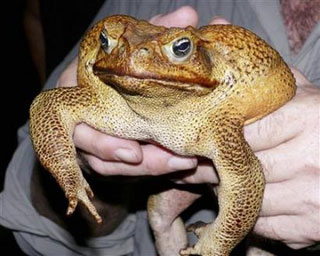 Not all amphibians are toast. From Mongabay:
Poison arrow frogs appear to make special effort to avoid exposure to damaging ultraviolet-B radiation ... The researchers found that the two species of frogs appear to be exhibiting UV-B avoidance behavior, with vocalizing frogs found at sites where UV-B levels were more than six times lower than average.
The ozone depletion problem is generally assumed to be under control for now, though I'm sure you can find scientists who would argue otherwise, especially if fame and wealth would result (as with the topic of global warming). A lot of people have confused the two largely unrelated issues. However, UV-B radiation levels are still elevated and are suspected to be a major factor in the present amphibian extinction crisis. If so, then there is hope that the amphibian extinction event may slow as UV-B radiation levels continue to drop:
-
New island ‘made’ by global warming
In the same week that science discovers a new, earth-like planet, we get a new island off the coast of Greenland. From The Independent:
The map of Greenland will have to be redrawn. A new island has appeared off its coast, suddenly separated from the mainland by the melting of Greenland's enormous ice sheet, a development that is being seen as the most alarming sign of global warming.
Yikes.
-
Biofuels scam at 12 o’clock high!
Is there anything that the rich and venal won't do to stave off limits on jet flights? The new scam is a discussion of laundering the fossil fuels through "biofuels" ...
-
Now that I’ve actually read the book …
When I caught up with 100-mile dieters Alisa Smith and James MacKinnon a few weeks ago, they were just kicking off their book tour with a stop in Toronto, and I hadn’t even had a chance to read Plenty, in which they recount a year of local eating. Sure, I had the basic info — […]
-
-
Indigenous leader Julio Cusurichi Palacios battles for an intact Amazon
Julio Cusurichi Palacios. Photo: Goldman Environmental Prize. The Peruvian Amazon is one of the most remote places in the world. In its wildest corners, in the Madre de Dios region along the Brazilian border, some indigenous communities continue to live far from modern society. But their solitude is eroding: Loggers are pushing deeper into the […]
-
Canadian Sophia Rabliauskas fights to protect her First Nation territory
Sophia Rabliauskas. Photo: Goldman Environmental Prize. The boreal forests of Canada, which stretch across the midsection of the country, are blessed with abundant wildlife, pristine wetlands, and vast carbon-storage capacities. For Sophia Rabliauskas, these abundant forests are also home. She’s a member of the Poplar River First Nation, and she grew up in its traditional […]
-
Conservation plan nixed
Though eel populations have declined 99 percent since the 1970s, according to a spokesman for the European Union, an EU eel conservation plan three years in the making was nixed by the French, according to a story by Charles Clover.
Mr. Clover is the environmental editor of the United Kingdom's Telegraph newspaper, and author of one of Oceana's favorite books The End of the Line.
-
Working with the fishing industry, Orri Vigfússon protects North Atlantic salmon
Orri Vigfússon. Photo: Goldman Environmental Prize. “I have a passion for salmon,” says Orri Vigfússon. “It’s the king of fish. It’s just a spectacular creature.” Vigfússon is a veteran business exec — the Icelandic brand Icy Vodka is one of his enterprises — and he’s now using his negotiating savvy to protect the iconic North […]
