Latest Articles
-
New Giller update
 She is Baby X no longer. Say hello to Ellis Adaline, coming in at 7 pounds, 11 ounces of pure, gorgeous Gillerness.
If your heart stirs at the sight of cute babies -- if you care about creating a world she can be proud of -- then how can you not contribute to Grist? I'm just saying.
(PS: These attempts to use Chip's new baby to fundraise for Grist are entirely unauthorized. I accept all responsibility and embrace my shamelessness.)
-
Gristmill on NPR
I was on NPR's "All Things Considered" yesterday talking briefly about the Chevy Tahoe ad campaign. You can hear the segment here.
-
Obama Hiccups; Grist Rushes to Transcribe
Obama slams Bush admin for inaction on America’s oil addiction Sen. Barack Obama, progressive golden boy, rebuked the Bush administration yesterday for being all talk, no walk on curbing oil use. When President Bush said America is addicted to oil, “I was among the hopeful,” said the Illinois Democrat. “But then I saw the plan.” […]
-
We’ve Got Poll, and We’re Super Bad
Polls find Americans worried about energy and climate problems To paraphrase Benjamin Disraeli, there are three kinds of lies: lies, damned lies, and poll results. So take the following factoids from three recent polls with a big block o’ salt. An Environmental Defense survey found that 71 percent of Americans think global warming is real […]
-
Jilting at Windmills
Measure in Congress could kill Cape Wind project The Cape Wind project on Nantucket Sound may soon receive another blow — oh, we’re so funny! — if Congress passes an amendment giving Massachusetts power to veto the controversial wind farm if it would interfere with navigation. Of course, it depends on what the definition of […]
-
With Rules Like These, Who Needs Rules?
Draft EPA regulation could up air pollution The U.S. EPA is considering a regulatory change that could massively increase air pollution — which is really its job, when you think about it. Currently, oil refineries, chemical factories, and other operations that emit more than 25 tons of toxics into the air a year must apply […]
-
The Great Peru Giveaway
Grist offers wicked awesome prize to lure new subscribers Maybe it’s been a while since you thought about Peru. Say, since you took junior-high social studies. Or read Paddington Bear. Or ate a plate of lima beans. But it’s time to start thinking again! From now until May 5, when you get your friends to […]
-
![]()
![]()
Japanese, Norwegians, and Icelanders spout off in favor of whaling
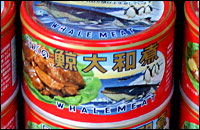
If you’re into eating whales, Kouji Shingru’s shop is the place for you. Located on a pedestrian-only street in Tokyo’s bustling Asakusa neighborhood, Shingru’s compact establishment has it all: deep red whale steaks and fillets in vacuum-sealed packages, cured whale on a stick, snack-sized bags of whale jerky, and a wide selection of canned whale […]
-
If the only tool you have is a Hammer …
... you see every problem as nailed.
Rep. Tom DeLay (R-Tex.) is leaving government.
-
Water safety rules will be more lax in rural areas

Has the White House declared war on farmers and ranchers?
The brunt of the Bush administration's rush to expand energy development in western states has been most directly borne by rural voters. Water-intensive gas-extraction procedures run ranchers' wells dry and expel water so salty it's toxic to crops. Gas compressor stations and their generators pump sulfur dioxide and carbon monoxide into the air. Livestock drink from uncovered drip pans containing antifreeze and perish. "People can't believe this can happen to them until their own ox is gored," says Jill Morrison of Wyoming's Powder River Basin Resource Council, which works with rural communities facing environmental concerns.
If that wasn't stunning enough, now there's this, courtesy of The Washington Post ... in March the EPA proposed regulating drinking water quality differently in rural America than in the rest of the nation.
Bottom line: If you live in a community of less than 10,000 people, your water would be permitted to contain three times the level of arsenic as your counterparts in urban and suburban areas. (The proposal is open for public comment until May 1.)
The logic is that smaller communities have more trouble than other areas paying to update and repair water treatment systems. But isn't this a clear case where the federal government should step in to bridge the gap -- not shrink away?
Update: More on the EPA proposal here from Carl Pope, who notes that one community that would be at risk is Crawford, Texas.