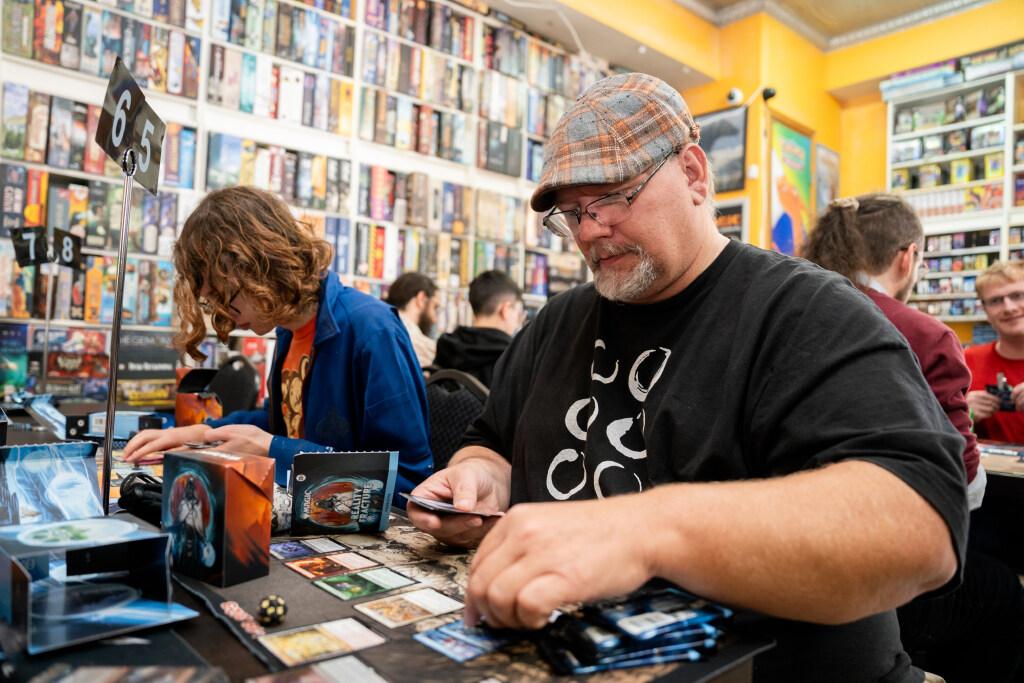
On a Saturday morning in September, the game shop Dice Dojo was packed. Players sat shoulder-to-shoulder at tables lining the far North Side Chicago shop with board games stacked from floor to ceiling and a giant yellow Pikachu on the wall. They were eagerly waiting to crack open boxes of the latest Magic: The Gathering trading cards and face off in a tournament.
Noel Camilotas spent most of the day pacing past rows of packed tables and helping players decipher the rules of the hotly anticipated new set. When he was done for the day, he walked out of the store with two boxes of cards.
Despite that haul, Camilotas had hoped for more.
“Some of the products I requested are not going to be available for me anytime soon,” he said. “One of the other products is not going to be available for purchase at all.”
Wizards of the Coast, a division of the toy giant Hasbro, announced in Augu... Read more