Climate Cities
All Stories
-
![]()
![]()
A live chat with sustainability smart guy Alex Steffen
The author and futurist talked with Grist readers about carbon zero cities. Check out a replay of the conversation.
-
![]()
![]()
Why we’re still fighting the smog that once choked London: It still kills
As the EPA gets close to finalizing new soot standards, a look at how this pollution affects our health.
-
![]()
![]()
Russia had a three-day traffic jam
There was a three-day traffic jam in Russia because of a snow storm. You thought maybe Russians were good at dealing with snow? Apparently they are not.
-
![]()
![]()
Big-city problems, small-farm solutions: ‘Carbon Zero,’ chapter 6
Reorganizing our food system provides an opportunity to ratchet down our cities' carbon emissions while also reconnecting them to the natural world.
-
Drawbacks of the digital city: ‘Carbon Zero,’ sidebar 3
If we want technology to be a force for good, here are a few things we should keep in mind before we weave it into every element of our carbon-zero cities.
-
![]()
![]()
Share and share alike: ‘Carbon Zero,’ chapter 5
In a carbon zero city, you wouldn't need to own a car -- or even a power drill. Redirecting the stuff we don't use into sharing economies can rewire consumption and save tons of carbon on the way.
-
![]()
![]()
Supreme Court takes on dirty water
The Supreme Court this week will hear three stormwater-runoff cases: two on logging roads in the Northwest, one on L.A.'s filthy outflow.
-
![]()
![]()
1904 song encourages you to make out in the newly built subway
This scandalicious, vaguely suggestive song called the subway "a new lover's lane."
-
![]()
![]()
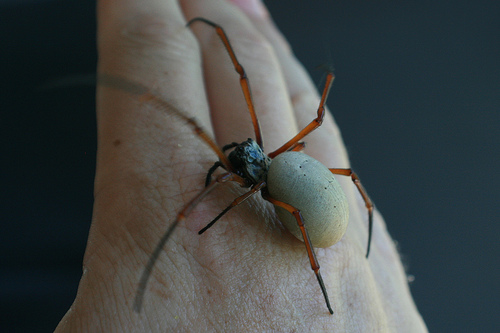
Cities make spiders gigantic
According to a new study, spiders living in cities are notably bigger than those living out in the bush.
-
![Green house]()
![Green house]()
If we build it right, they (emissions) will come (down): ‘Carbon Zero,’ chapter 4
The key to carbon zero cities lies not in retrofitting old structures, says Alex Steffen, but in optimizing the tons of new building we'll do over the next 20 years.