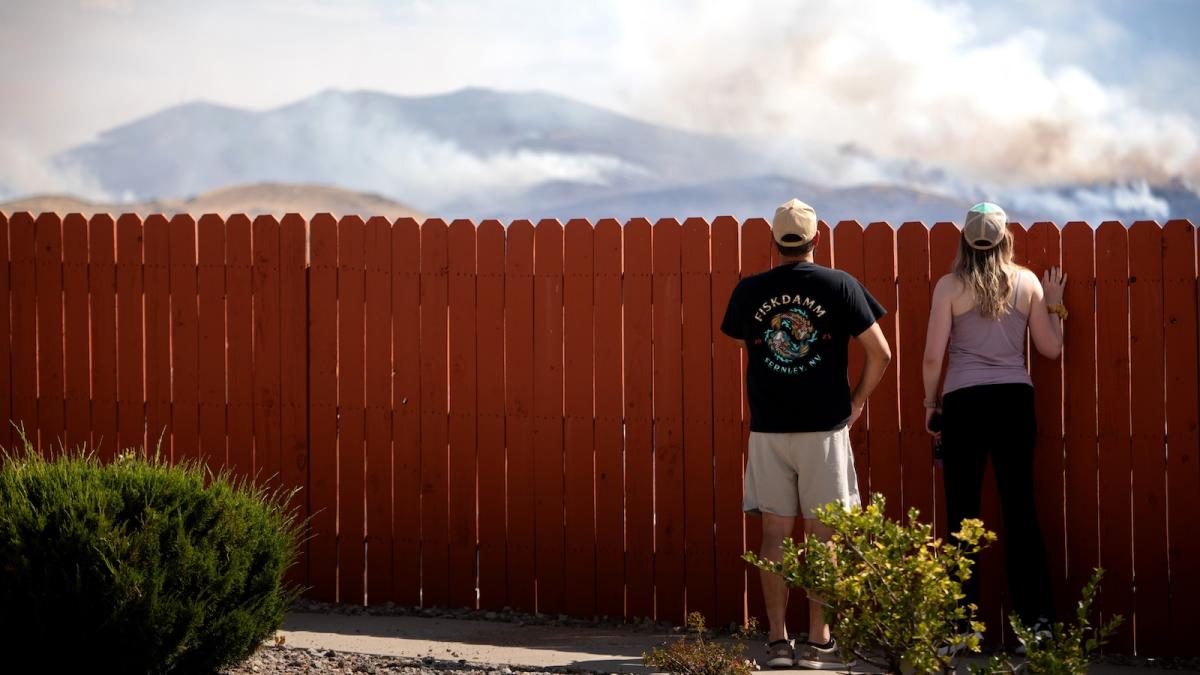
Somersett, a short drive from downtown Reno, Nevada, is a peaceful place where homes with sweeping, high-desert views line cul-de-sacs, and roads meander through shrubland, trailheads, and golf courses. But in the summer, months of low humidity and hot weather prime the landscape to burn. On the morning of August 22, it did.
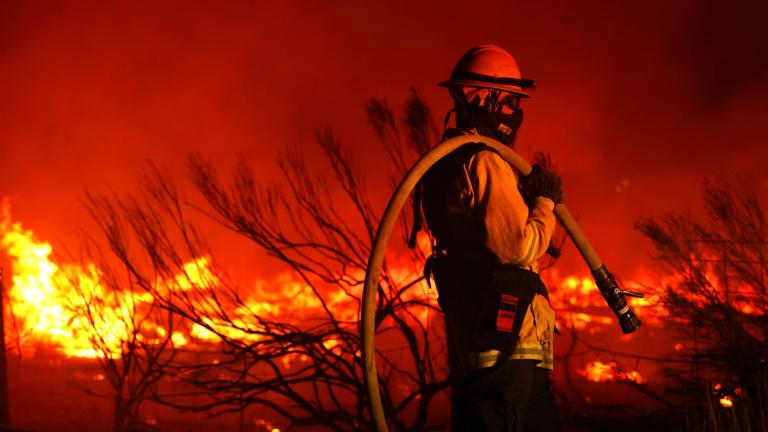
In just a few days, strong winds carried the flames of the Hawk Fire more than 23 miles, placing some 90,000 people on evacuation notice as dense smoke and orange skies blanketed the city. By Wednesday, dozens of houses had been destroyed. Two weeks earlier, the Bug Fire burned 150 square miles just north of the same area.
It’s the latest in an era of worsening wildfires in the United States, where more than 7.9 million acres have burned this year. A similar story is playing out in Canada, where First Nations and residents of Ontario have borne the brunt of more than 5,100 fires across the country. Scientists say climate change has made these fires, along with others in Europe, significantly more likely to happen. This year’s blazes in the Western U.S. were exacerbated by record-low winter snowfall, depriving the landscape of the moisture that typically seeps from snowpack throughout the summer, and by extreme and long-lasting heat waves that baked the landscape.
And the fires have highlighted another, deadly piece of the puzzle: suburban sprawl.
“What’s happened over the last decades is we’ve had explosive population growth in naturally fire-prone areas,” said Tim Brown, director of the Western Regional Climate Center at the Desert Research Institute in Nevada. “People are moving in to where fire happens.”
The wildland-urban interface, which researchers often call the WUI, is the phrase given to places where housing is sandwiched between paved city centers and forests or grasslands. Researchers have been raising the alarm about the fire risk posed to homes in these areas since the 1980s. As humans burn more fossil fuels and warm the planet, longer and more severe droughts will likely make that risk worse. Reno is the fastest warming city in the United States, according to the nonprofit Climate Central.
These half-wild, half-suburban neighborhoods remain one of the most rapidly growing types of land in the country, although development has slowed compared to the surge between the 1990s and 2010s. In some places, housing scarcity in cities has pushed home buyers to the outskirts of towns, where building is generally cheaper and faces fewer permitting or zoning requirements.
People are also attracted to living with more space, near outdoor recreation areas with beautiful scenery. More than a third of all homes in the continental U.S. are now considered to be in the wildland-urban interface.
The consequences of all that growth are now on display. A recent study in Natural Hazards, a Nature journal, found that the expansion of this kind of housing in tandem with climate change quadrupled the risk of destructive wildfire in California. In January 2025, the Eaton and Palisades fires broke out in the shrubby sprawl surrounding Los Angeles, forcing more than 200,000 people to evacuate and burning down thousands of structures. Earlier this month, three large wildfires struck suburban areas of Spokane, Washington, the state’s second-biggest city.
“Maybe we need to stop calling it the WUI and call it what it is: fire-prone,” Brown said.
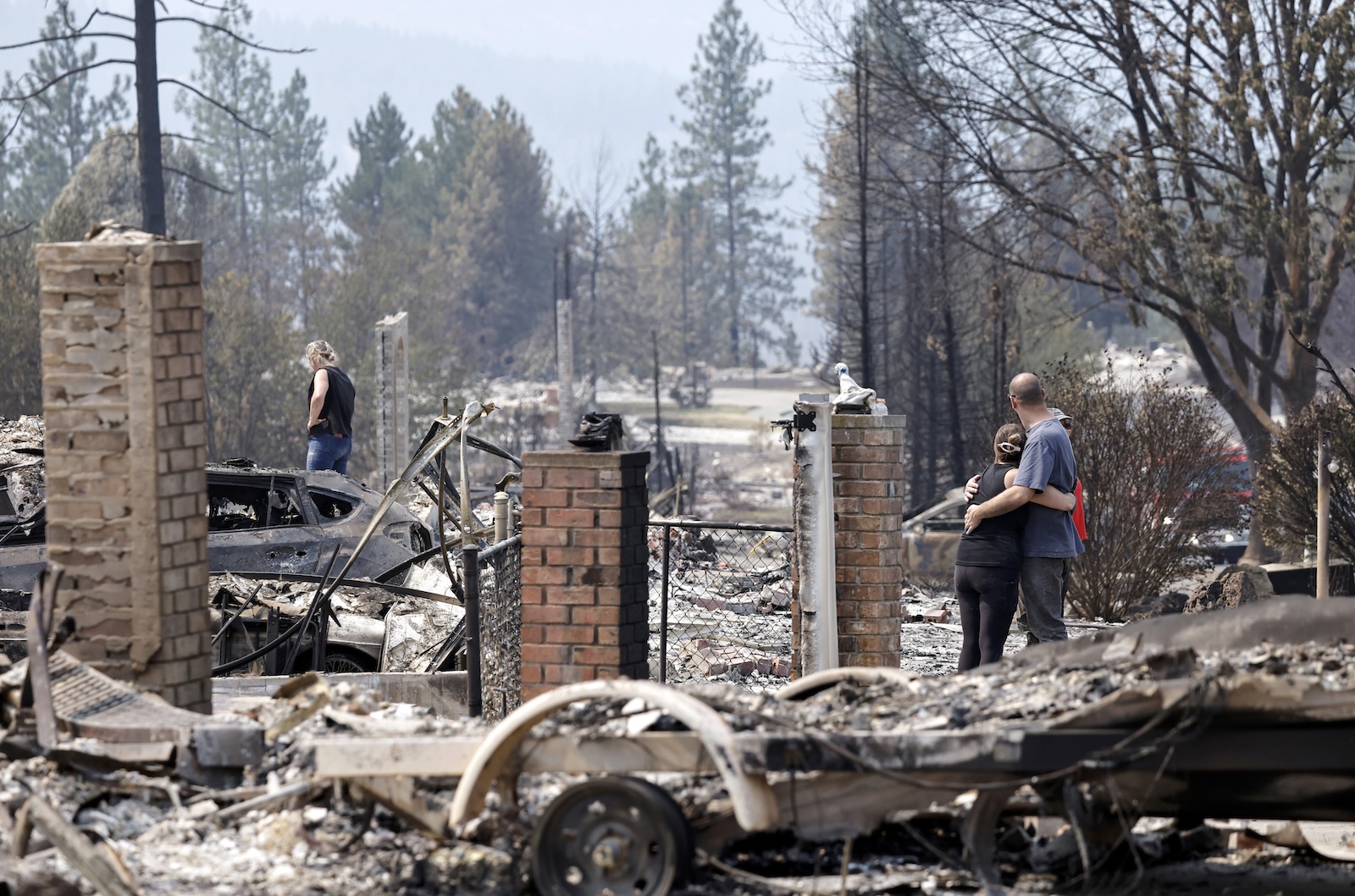
Mario Tama / Getty Images
The Hawk Fire in Reno followed a familiar pattern. After the blaze started on Saturday morning in Somersett, gusty winds and dry, quick-to-light grasses helped it balloon by thousands of acres and quickly spread to other areas. The fire eventually shut down U.S. Route 395, a major thoroughfare that hugs part of the border between Nevada and California.
Chris Buckley, a public information officer with the U.S. Forest Service, said that the chances of a fire increase as more people move into one of these areas. In just the last 15 years, Reno’s population has grown by 26 percent to more than 283,000 people.
“It’s a very beautiful place to make your home,” Buckley said. “But during this type of weather in this part of the country, anything that can cause a spark is just so dangerous.” Like the vast majority of wildfires, she said, the Hawk Fire was human-caused.
Evacuating from neighborhoods in these fire-prone areas can be especially fraught. Roads are often narrow and connected by a single road with only one way out. During the recent wildfires in Spokane, the rush of fleeing traffic caused hourslong jams, leaving families sitting in their cars as the flames closed in. Similar scenes of gridlock unfolded during the 2018 Camp Fire in Paradise, California, and drives that normally took 25 minutes took hours.
“Our roads are not built for all people to leave all at once,” said Brett Taylor, who helps prepare these kinds of communities for wildfires with the Truckee Meadows Fire Protection District near Reno. Evacuating early, before mandatory orders, can help avoid gridlock and free up resources, he said. “We really lose our effectiveness if all we’re worrying about is evacuating people and not fighting the fire.”
The flames are just the start of the danger. As the planet warms, researchers estimate that wildfire smoke is on track to kill 70,000 Americans each year by 2050. When fires break out in cities like Reno or Spokane, the burning of cars and plastic objects, rather than just trees and grasses, can create smoke that is especially toxic. Studies estimate that the Los Angeles fires exposed millions of people to high concentrations of chromium-6, a cancer-causing toxic metal. “You can smell the difference in the smoke,” Taylor said.
Recently, California and other states have tightened wildfire-safety rules requiring homeowners in fire-prone areas to clear vegetation around their houses. Removing these plants can boost the chances that a house will survive a wildfire. The odds are even better for homes built with materials or techniques that prevent embers from getting in. “Many homes burn from the inside out,” Brown said.
In dry and hot places like Reno and Truckee, wildfire outbreaks are practically inevitable, Taylor said. He visits homes in the region to advise homeowners what changes they can make to better protect their property. His district is also spending millions of dollars from various state, federal, and other sources to thin or cut down trees and grasses — measures that can slow or block fires from spreading. “We’re making a dent,” he said. “But it’s a tiny fraction of what needs to be done.”