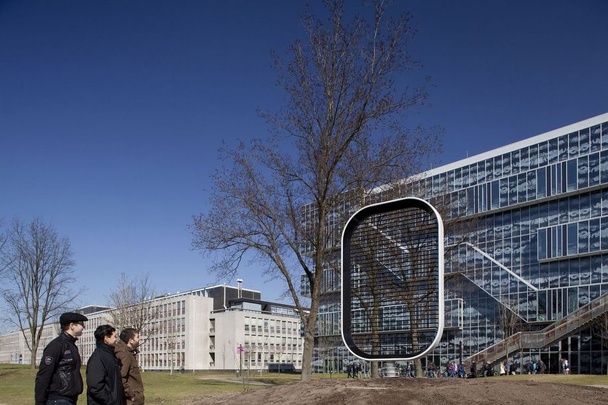
It may look like a giant airplane window strung with Venetian blinds, but this structure, designed by Dutch architecture firm Mecanoo and installed at the Delft University of Technology in March, is a model of a machine that would convert wind to energy without any moving parts.
Any mechanical moving parts, at least: The technology, developed by the Electrical Engineering, Mathematics and Computer Science faculty at Delft, uses the movement of electrically charged water droplets to generate power. How does this work? A handy video explains:
[youtube http://www.youtube.com/watch?feature=player_embedded&v=tqksCHWROBU]
The prototype of the EWICON (Electrostatic Wind Energy Converter), as envisioned by Mecanoo, has the potential to change the use of wind technology. The EWICON absorbs little wear and tear, requires hardly any maintenance, but most importantly, it makes no noise and casts no moving shadows, two of the principal complaints that hinder wind turbine installation in the United States.
This, Mecanoo believes, makes it the ideal feature for urban environments — it’s already incorporated them into its design for a project in Rotterdam.
[Hat tip: Designboom.]
 This story was produced by Atlantic Cities as part of the Climate Desk collaboration.
A message from
Your support keeps our climate news free.
Grist is the only award-winning newsroom focused on exploring equitable solutions to climate change. It’s vital reporting made entirely possible by loyal readers like you.
At Grist, we don’t believe in paywalls. Instead, we rely on our readers to pitch in what they can so that we can continue bringing you our solution-based climate news. Donate today to keep our site free.