Climate Climate & Energy
All Stories
-
U.S. media largely ignores latest warning from climate scientists
In the last two years, our scientific understanding of business-as-usual projections for global warming has changed dramatically (see here and here). Yet, much of the U.S. public — especially conservatives — remain in the dark about just how dire the situation is (see here). Why? Because the U.S. media is largely ignoring the story. Case […]
-
Whatever its virtues, the gas tax is nearing the end of its life
The post on the mileage tax stirred up a lot of reaction, much of it negative. As it happens, the state of Oregon recently wrapped up a successful trial of a mileage tax system, so for the next few posts I’m going to be relying heavily on an excellent final report on the system (PDF) […]
-
UNEP yearbook distills a year’s worth of climate science and innovation
The United Nations Environment Programme (UNEP) released its 2009 Year Book last month to relatively little fanfare. Here are a few highlights, in case you’re behind on the State of Things (and missed the Worldwatch Institute’s State of the World report, President Obama’s unofficial state of the union speech last month, Stephen Faris’ Forecast of […]
-
Don’t make too much of current energy prices; they are disconnected from fundamentals
There is a fair amount of hand-wringing over the recent collapse in energy prices which — while academically interesting — is largely irrelevant to larger macro forces. Here then a quick observation that is critically important and horribly misunderstood throughout our current energy, environmental, and economic conversation: current energy prices have very little to do […]
-
Climate change and the threat to water
INSTANBUL — The World Water Forum — the largest gathering of water-sector public policy makers, private-sector vendors and non-profit organizations — got underway this morning in Istanbul with a dash of glitz and a glut of gloom. “Everyday, thousands of children die as a result of complications due to consumption of unclean water,” Turkish President […]
-
![]()
![]()
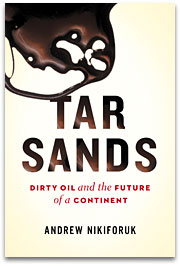
Book exposes the messy conditions of Canada’s tar sands
Of all the absurdities at play in extracting oil from Alberta’s vast northern tar sands deposits, the most staggering might be the nuclear renaissance it threatens to create in Canada. Andrew NikiforukWhether nuclear energy presents a legitimate alternative to greenhouse-gas-emitting energy sources is one question. Environmentalists have long debated that. But Canada is considering something […]
-
Hilarious headline of the day
“Saudi Arabia Warns on Rapid Shift to Renewable Energy“
-
DARPA to investigate geoengineering
Oh, great, DARPA — the Defense Advanced Research Projects Agency, an arm of the Defense Dept — is convening a meeting to look into geoengineering. Count me with Ken Caldeira: “The last thing we need is to have DARPA developing climate intervention technology,” says Caldeira. He says he agreed to go to the meeting “to […]
-
![]()
![]()
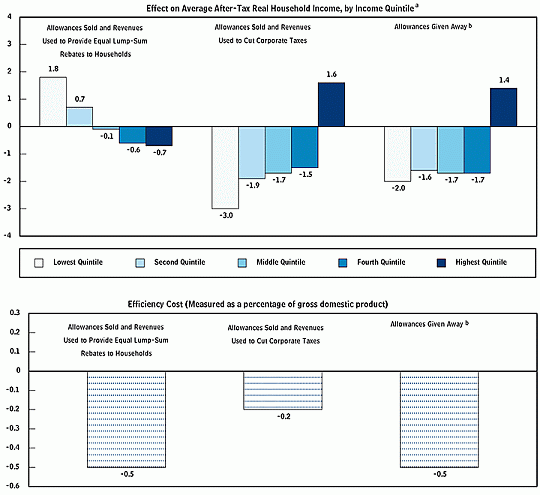
The choice of what to do with carbon revenue is a clear-cut issue of justice
The debate around various climate policies sounds complex, but there’s a simple way to understand it: follow the money. When we put a price on carbon emissions, we place value on something that used to be worthless. That means all the sudden there’s a big new pot of money. The most important question facing policymakers […]
-