Dave Carew was going on vacation. But first, he had some tabling to do.
It was Thursday, two days before the Fourth of July, and Carew, a UPS worker of 13 years, had set up an information booth with pamphlets and thermometers outside the company’s customer center in the north Bronx. His goal was to catch workers on their way in and out of shifts and educate them on how to stay safe when it’s blisteringly hot outside.
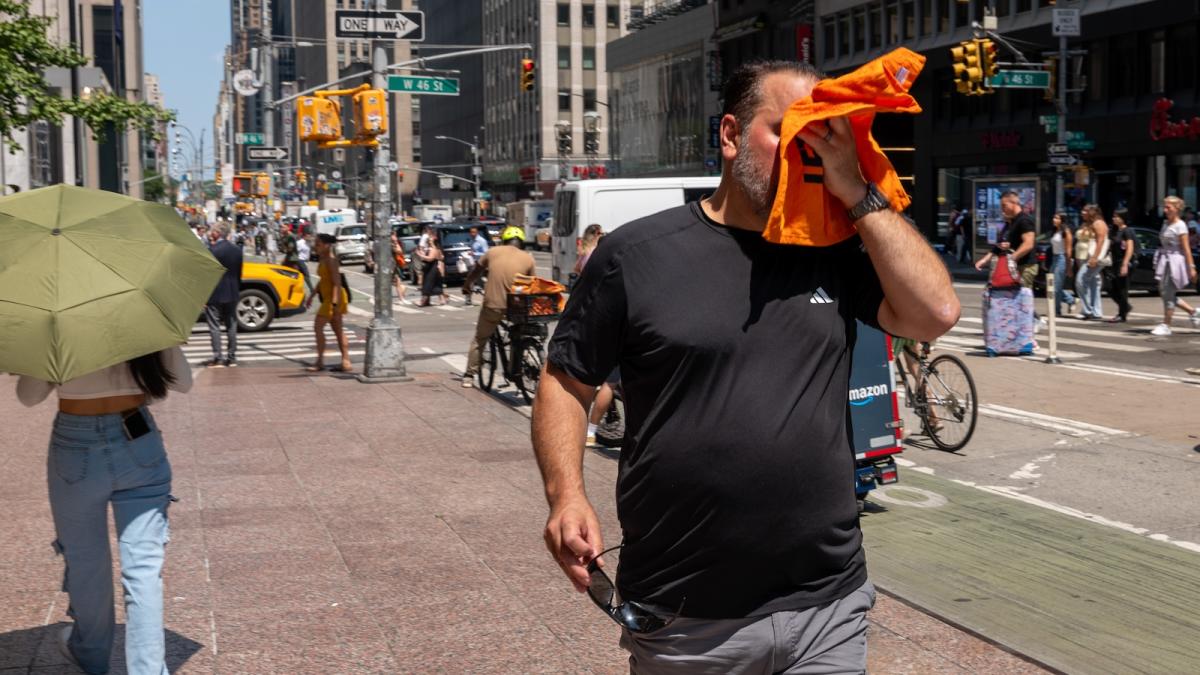
Weather forecasts in New York City predicted temperatures nearly 100 degrees Fahrenheit over the holiday weekend — and the heat was already intensifying. Standing in the shade and sporting bright blue sunglasses, Carew talked to his fellow workers, reminding them of their right to take paid breaks in the heat.
“Heat safety is no joke,” he said the following day. Extreme heat protections have long been a concern for outdoor workers, and in recent years, unions representing delivery workers, farmworkers, and construction workers have been pushing for additional safety measures. In 2023, UPS workers won a labor contract with provisions requiring the company to install air-conditioning in new vehicles starting the following year. The safety measure was an important win, but Carew pointed out there are still risks on the job. In the back of delivery trucks where packages are kept, temperatures can still reach unsafe levels on very hot days.
“I’ve seen numbers close to 150 degrees Fahrenheit,” he said. “When you’ve got 400 packages, and you’re looking for one envelope, it can get dangerous very quickly.”
Carew takes his role as a worker-organizer seriously — in part because there is currently no federal rule protecting the U.S. labor force from the effects of extreme heat exposure on the job. Although the Biden administration proposed a draft federal heat rule two years ago, the already lengthy process to codify such a rule has slowed even more under Trump. As climate change continues to push summer temperatures up, it has left states and municipalities to create their own standards for worker heat safety.
Labor groups also play an important role in workplace protections. According to Carew, last year the Teamsters, the union that represents UPS employees, began “aggressively” enforcing contract protections. Members held safety meetings in parking lots, hosted webinars, and distributed tool kits. The efforts seemed to have paid off: Last year was the first summer without any widely reported heat-related deaths at UPS.
In New York City, labor rights groups and city agencies are working closely to protect vulnerable New Yorkers from extreme heat. Last month, Mayor Zohran Mamdani signed an executive order announcing a first-of-its-kind initiative to protect outdoor workers from heat illness. Shortly after, a few days before the heat wave descended over the region, Mamdani shared a separate, all-hands-on-deck plan to prepare for the high temperatures over the Fourth of July. The city rolled out hundreds of cooling centers and more than a dozen outreach vans with staff to perform wellness checks during the heat wave. And it also collaborated with groups like the Street Vendor Project to promote the use of pop-up cooling stations for outdoor workers.
The need for this kind of direct community outreach will continue, since it’s unlikely to be this summer’s only extreme heat event.
“When I show them the QR code” to see a map of where cooling centers are located, said Andrew Conca-Cheng, a program manager for Street Vendor Project, “there is a lot of excitement from vendors. They pull out their phone and want to know.”
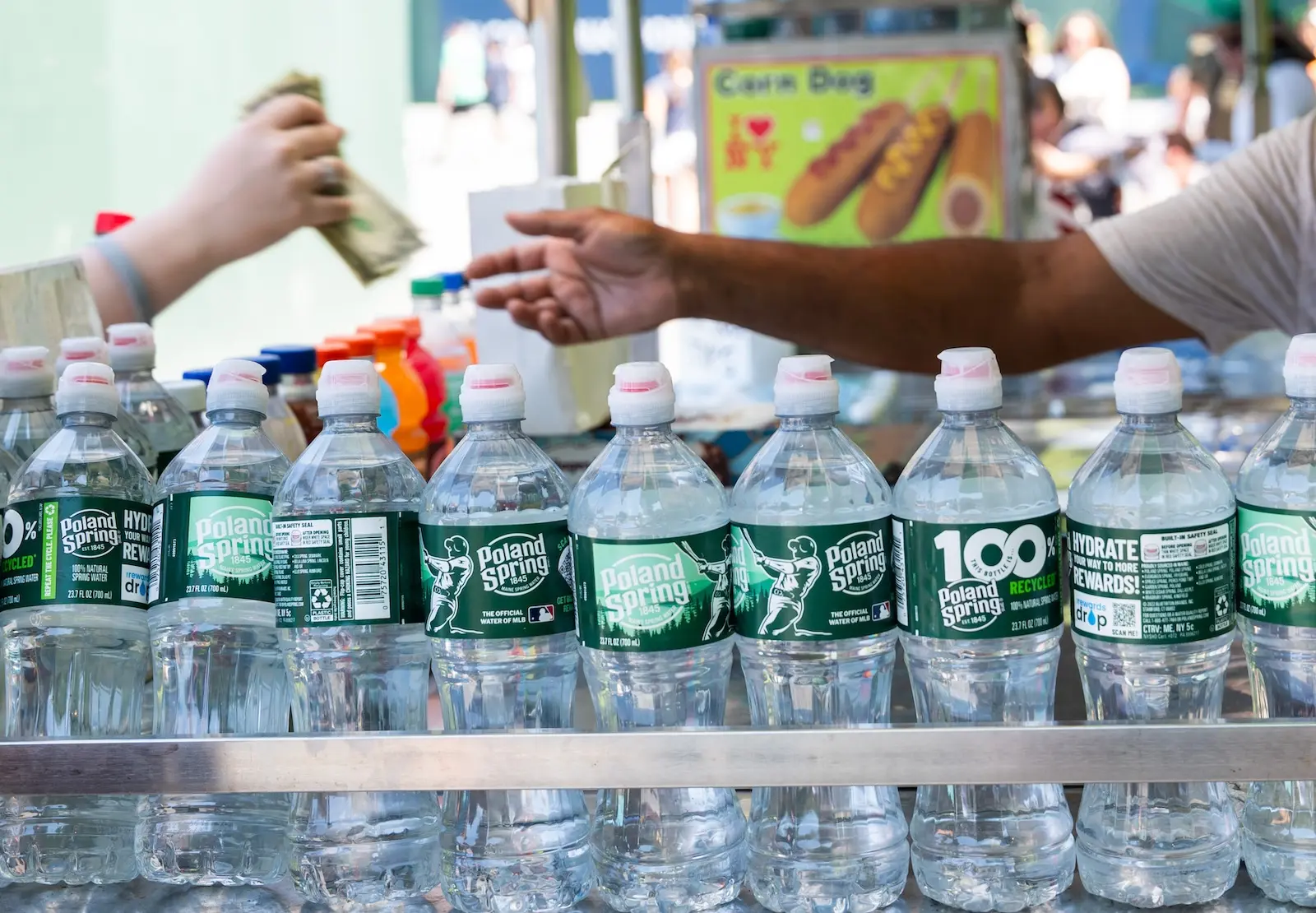
Street Vendor Project represents over 3,000 food and merchandise vendors across New York City and has been in touch with various city agencies for over a year on heat safety issues. And as part of the executive order signed last month to protect outdoor workers from heat stress, city health and emergency management agencies must now develop a multilingual messaging campaign on heat safety “as soon as practical” this year.
This emphasis on language access is critical given the wide array of languages spoken by street vendors, delivery workers, construction workers, and other outdoor laborers. These professions often attract immigrants, many of whom may feel more confident reading and speaking in a language other than English. Just within the Street Vendor Project membership, for example, said Conca-Cheng, the main languages spoken in addition to English are Spanish, Arabic, Bangla, French, and Mandarin.
The difficulty of crafting local policy to protect workers goes beyond overcoming a language barrier or distributing QR codes. Paid breaks, as well as shade and water access, are among some of the best practices for protecting workers from extreme heat. But the nature of outdoor work can make such basic and common-sense solutions challenging. For example, street vendors may be self-employed or, if they’re operating without all the necessary licenses and permits, may technically work in the informal economy. If they step away from their station — say, to visit a cooling station or take a break in the shade — they may worry about their food carts or supplies being stolen, or have to enlist a neighbor to watch their belongings.
For app-based delivery workers, taking a break to cool off can result in lost wages. Delivery apps may penalize bike messengers who slow down to take water breaks and stay safe in the heat for taking too long to complete orders.
Heat waves have complicated the already grueling nature of outdoor work. Labor advocates understand that this is the unfortunate reality for many trying to make a living on a warming planet.
“Extreme heat is no longer an occasional emergency,” said Ligia Guallpa, executive director of the Worker’s Justice Project, a worker center in New York City. “It is becoming a defining feature of New York summers. Our response has to evolve accordingly.”
Guallpa added that the organization is “grateful” for Mayor Mamdani’s executive order to protect outdoor workers. (Worker’s Justice Project helps run Los Deliveristas Unidos, a labor union for app-based bike couriers.) She called the initiative “an important step because it acknowledges that the people who keep New York running during extreme weather deserve protection.”
NYC Deputy Mayor of Economic Justice Julie Su told Grist she has heard from workers who voiced similar concerns. “We met with workers in City Hall who all said the same thing: They can’t stop for water when they have a quota to hit. They can’t step into the shade, much less a cooling center, when they’re on the clock. They know what it’s like to feel faint, dizzy, exhausted, [and] to be rushed to the hospital,” said Su. She added that the new executive order “treats this as the public health emergency it is.”
“It’s important for the city to meet vendors where they’re at,” said Conca-Cheng. Recently, he added, the organization heard from members that cooling stations are not always in “relevant locations.” In one case, a cooling station was set up on a street that was temporarily closed to car traffic and turned into a public space for pedestrians, but it was not located near any street vendor clusters. The city’s Department of Health and Mental Hygiene, which expanded pop-up cooling stations during the recent heat wave, did not respond in time to a request for comment.
The work of connecting vulnerable workers to existing resources continues even as New York City enjoys slightly cooler temperatures this week. “’Cause there’s definitely going to be a lot more hot days this summer,” Conca-Cheng said.