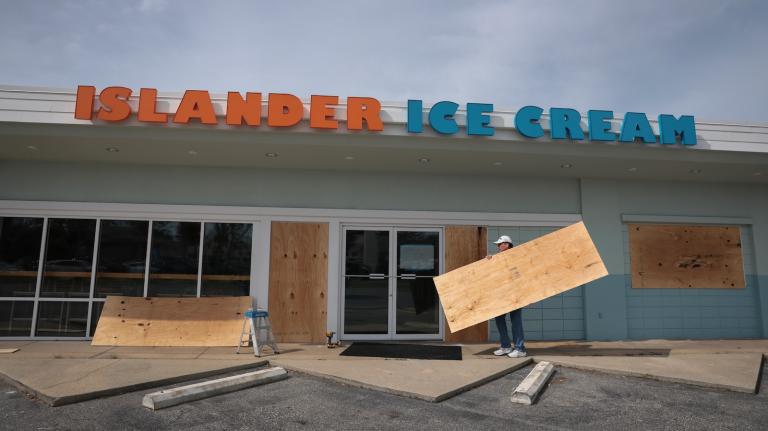
The first year of the Trump administration almost destroyed the Federal Emergency Management Agency.
Elon Musk’s purge of the federal civil service was just one of many blows to FEMA. Former Secretary of Homeland Security Kristi Noem instituted a freeze on almost all disaster recovery and response spending, paralyzing the agency’s core function. This held up billions of dollars for communities around the country, delayed disaster response during catastrophic events like the July 4 floods in Central Texas, and all but ended the agency’s efforts to prepare for future disasters. The agency also slow-walked and even denied a large share of aid requests, especially from Democrat-controlled states. Earlier this year, leaked memos showed that the Department of Homeland Security, or DHS, planned to slash FEMA’s on-the-ground response staffing by around half. (FEMA is one of multiple agencies within DHS.)
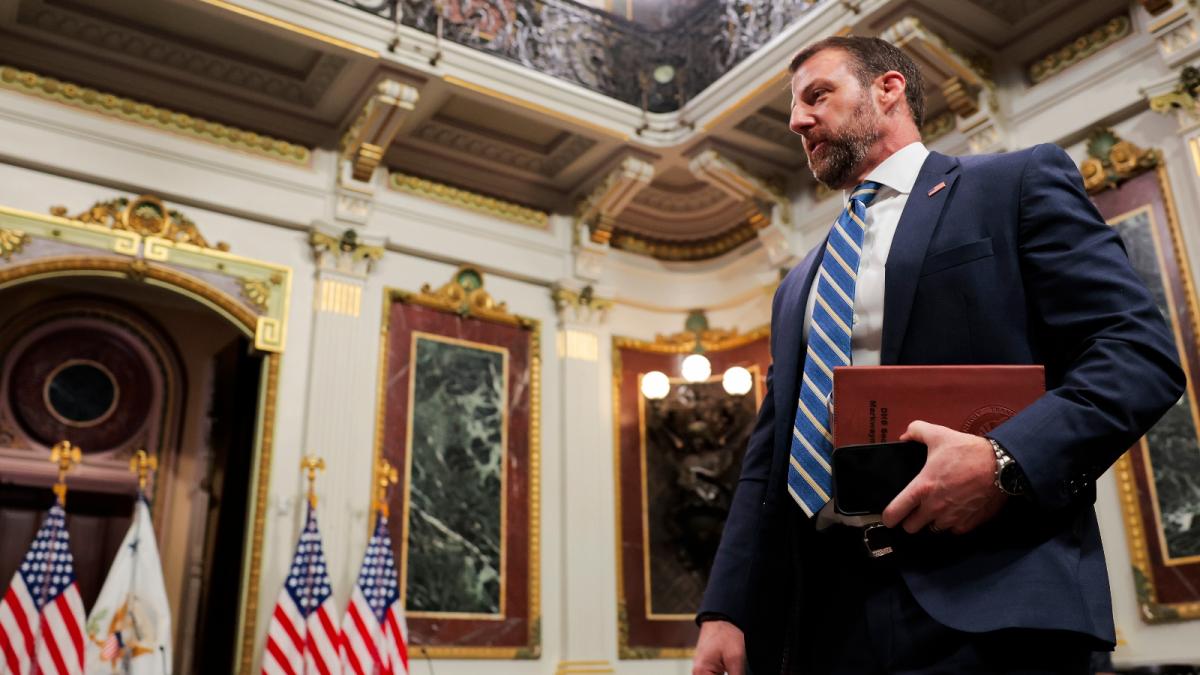
President Trump’s firing of Noem last month — which came after a series of controversies regarding her handling of immigration enforcement, improper personal spending, and allegations that she misled Congress — has stirred hopes that FEMA might regain its footing. Noem’s replacement, former Oklahoma senator Markwayne Mullin, has vowed to end her spending freeze, which he dismissed as “micromanaging.” Mullin has also said he will select a permanent administrator to lead FEMA, something Noem never did. He already appears to have fired many of Noem’s top deputies, according to FEMA employees who requested anonymity because they aren’t authorized to speak with the media.
Yet FEMA officials and disaster response experts say they are still unsure if Mullin can restore the agency to a pre-Noem level of functionality — if that is even his goal. They’re also concerned that the agency’s workforce may not be prepared for the fast-approaching hurricane season. Morale remains low, and many key agency functions are still in limbo.
“It’s like we are collectively waiting for the other shoe to drop,” said one regional FEMA official who requested anonymity to avoid retaliation from agency leaders.
Even though Mullin has vowed to end some of Noem’s policies, FEMA’s operations have not yet changed all that much, according to officials who spoke to Grist. Some disaster reconstruction payments to cities and states have been unfrozen, but many expenses still require high-level approval from Karen Evans, Noem’s handpicked interim administrator. (Evans will lead the agency until Mullin’s pick is approved by the senate.) The agency’s programs that help prepare U.S. infrastructure for future disasters are still inactive; FEMA has not offered new long-term infrastructure aid money from one major program in about a year, and it only gave up its plan to eliminate another resilience program last month after a court order.
Essential measures such as the National Flood Insurance Program, which provides subsidized flood coverage to some 5 million households, have been undermined. The program uses a rating system to provide insurance discounts to the cities that are most proactive about flood protection, but the contract with the company that manages the rating system lapsed several weeks ago. The discount program has since been suspended, which means no one from the federal government is monitoring if U.S. cities and counties are rebuilding in floodplains and mitigating flood damage.
Though current and former FEMA officials have expressed hope that Mullin will undo some of Noem’s damage, they also expect a lasting shift to a more balkanized emergency response policy. President Trump has long maintained that states should shoulder more of the burden of preparing for and responding to disasters. Mullin appeared to endorse this diminished role for the federal agency during his recent visit to North Carolina, saying that “we shouldn’t look at FEMA as being a first responder, but … as supporting the first responders you already have.”
“The state is much more equipped,” he continued, “but we can be there to get them past the first heavy lift.”
For some FEMA employees, the comments were an unwelcome sign.
“His comments show he has just as little of an understanding of FEMA as Noem did,” said one senior FEMA official. As this official saw it, Mullin’s statements appeared to indicate that he didn’t understand how much most states rely on federal emergency managers right now. (Neither FEMA nor DHS responded to requests for comment.)
While FEMA coordinates the immediate response to the largest hurricanes and wildfires, for most disasters it acts as a reimbursement agency, using money set aside by Congress to pay for disaster recovery most states can’t afford. Local and state governments have to ask the agency to repay them for each street repair, each elevated house, and each rebuilt school, and these projects have to comply with federal rules. The agency also runs national grant programs to prevent everything from power outages to tidal floods.
Many emergency management experts agree with a version of the viewpoint shared by Trump and Mullin — the idea that states should play a larger role in disaster planning. Florida and Texas, some of the most hurricane-prone states, have well-funded emergency management departments that can coordinate post-disaster response. But those same experts caution that the federal government still plays an essential role in coordinating the recovery from large disasters, and that a transition to the states would need to be accomplished over a long period of time with ample support.
“It matters what flavor that comes in,” said Andrew Rumbach, a senior fellow at the Urban Institute who studies disasters and housing. “If it’s a smaller federal role, with smaller federal resources, that has hugely significant impacts.” For example, storm-vulnerable states with meager budgets, like Mississippi and Louisiana, would struggle to keep up with the mounting toll of disasters.
“If we’re just transferring responsibility for federal resources to the states,” he continued, “that raises a whole different set of questions — in some places, it might be a step back, but in others you could see some interesting experimentation.” A remote state like Hawaiʻi could use no-strings-attached federal money to pay for modular housing solutions that make sense for its island location, rather than trying to relocate fire survivors to apartments or hotels that might not exist, which is FEMA’s current default policy. But the freedom might also give states wide latitude to make bad decisions with their money; they could potentially prioritize rebuilding rich cities over poor ones without fear of federal intervention, for instance.
Any reform along these lines would require an act of Congress, but the Trump administration has been trying to shrink FEMA’s role on its own, just by pulling back assistance the agency has provided in the past. This has left states such as Washington, Maryland, and Vermont to recover from severe flooding under new austerity conditions, without the typical reimbursements from the federal government.
Many of these states are now preparing for a future without the guarantee of FEMA aid, and one where state officials must take the lead on disaster planning. After communities in western Maryland suffered a devastating round of river floods last year, the Trump administration refused the state government’s request for more than $30 million in reconstruction money, despite meticulous documentation of the damage. Governor Wes Moore and the state’s congressional delegation appealed the decision, but to no avail.
With no federal funds incoming, the state had to go it alone. The Moore administration launched Maryland’s first-ever “state disaster recovery fund” and doled out around $500,000 to the county that had suffered the worst of the flooding. This year, state lawmakers have doubled down on this commitment to independence: They’re workshopping a bill that would establish a new grant fund for projects that promote resilience against future climate disasters, including erosion control structures for shoreline homeowners.
The problem, of course, is scale. The damage from last year’s floods was more than triple the threshold for triggering federal aid, and the cost of road and bridge repairs is equivalent to around a fifth of the impacted county’s budget. The local authorities might be able to start planning their recovery, but without some federal backstop, they won’t be able to afford it.
The Trump administration last year convened a “review council” of governors and state emergency managers to decide the agency’s fate. In December, the council completed a Noem-approved report that argued for shifting responsibility to the states with the federal government in a “supporting role,” but it never published the report. Trump has since extended the review council’s lifespan until May.
Mullin’s statements in North Carolina suggest that he agrees with the direction of the review council and wishes to reduce the federal government’s role in disasters. It remains unclear whether or not he will seek to make such changes this year, as the hurricane and wildfire seasons approach.
In the meantime, said Rumbach of the Urban Institute, state and local emergency managers are in limbo.
“There’s a lot of, ‘wait and see,’” he said.