Students at the New York Institute of Technology began with a simple observation about what happens after a disaster hits: “Two things typically show up at relief sites: [1] Water bottles on [2] shipping pallets.”
They wondered if these two resources could be used for a purpose besides [1] holding water and [2] holding water bottles. And the answer was yes: Combine the bottles and the pallets, and you could create a better shelter for people whose homes were destroyed. Gizmodo explains:
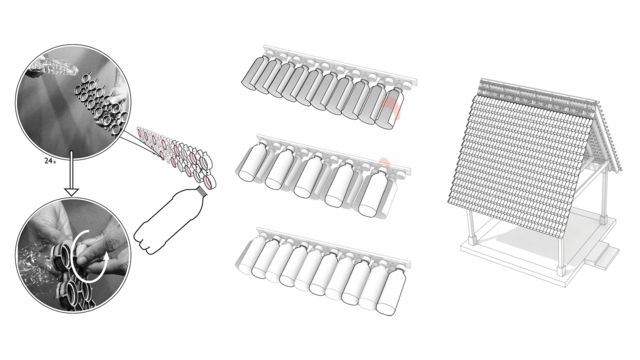
The design … uses a custom plastic pallet into [which] crushed plastic bottles are screwed. The crushed bottles overlap, much like Spanish roof tiles, to form a surface that is fully covered and weatherproof.
The plastic pallet would be used to deliver goods, lasting for around 60 trips, compared to around eight for a normal wooden pallet. Then, when disaster does strike, old and beaten up pallets would be donated to the cause, then taken apart to construct the shelters.
It’s designed for use in tropical climates — it protects from hard, driving rain, but also filters heat out from under the roof. The only catch is that disaster refugees will have to drink a lot of water, fast, if they want a roof over their heads.
A message from
Your support keeps our climate news free.
Grist is the only award-winning newsroom focused on exploring equitable solutions to climate change. It’s vital reporting made entirely possible by loyal readers like you.
At Grist, we don’t believe in paywalls. Instead, we rely on our readers to pitch in what they can so that we can continue bringing you our solution-based climate news. Donate today to keep our site free.