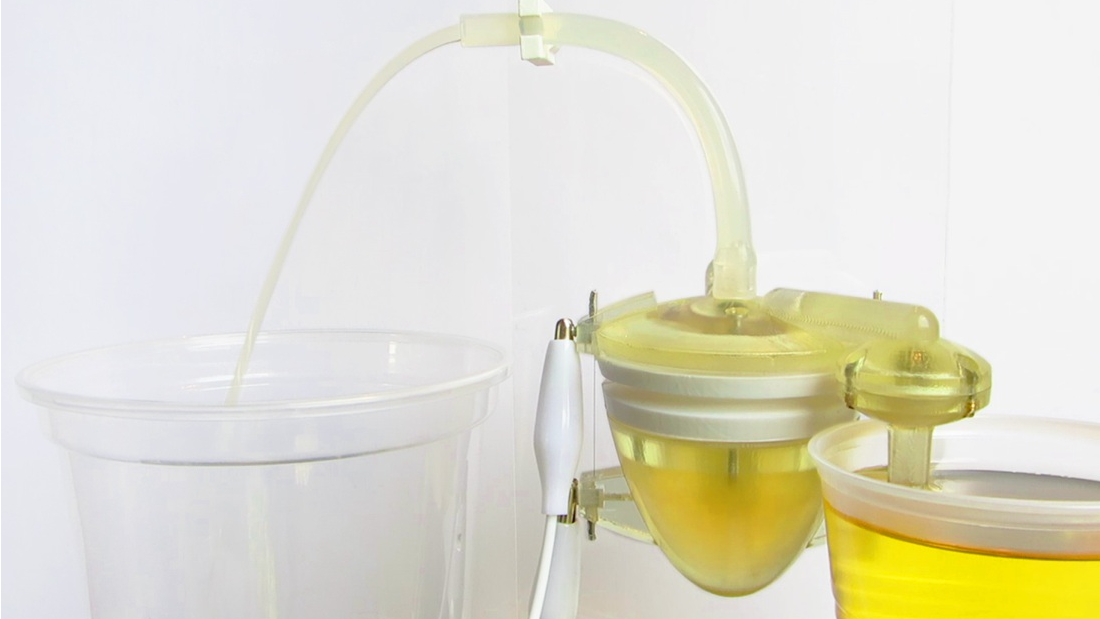
Urine is liquid gold — for comedians, 13-year-old boys, and now robots that monitor pollution.
How so? Basically a heart-like squeezing device pumps pee into a fuel cell, and the fuel cell powers a robot called the EcoBot, which measures environmental factors. If this sounds vaguely familiar, it’s because University of Bristol researchers previously made EcoBots that ran on rotten fruit, dead insects, and wastewater. (Fun, right?) Here’s the scoop:
Each [EcoBot] is powered by a microbial fuel cell, containing live microorganisms like those found in the human gut or sewage treatment plants. The microbes digest the waste (or urine) and produce electrons, which can be harvested to produce electrical current …
The researchers have already proved the microbial fuel cells can use urine power to charge a mobile phone.
Pee power! Researcher and industrial designer Peter Walters said that hopefully someday the EcoBot will do “remote sensing” in cities, measuring everything from temperature and humidity to pollution and wastewater quality. All fueled by the goodness in public restrooms! As long as the EcoBot isn’t equipped with a sense of smell, it should be just fine.
A message from
Your support keeps our climate news free.
Grist is the only award-winning newsroom focused on exploring equitable solutions to climate change. It’s vital reporting made entirely possible by loyal readers like you.
At Grist, we don’t believe in paywalls. Instead, we rely on our readers to pitch in what they can so that we can continue bringing you our solution-based climate news. Donate today to keep our site free.