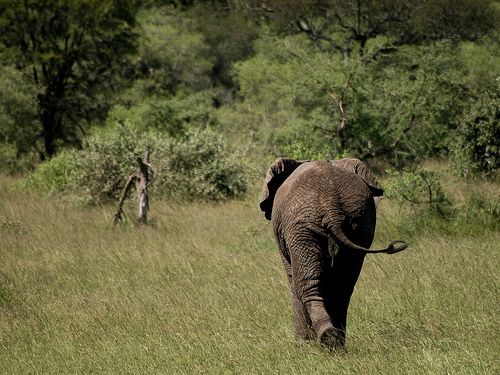
In Africa, there are forest elephants and there are savannah elephants. Forest elephants are smaller than savannah elephants and also less likely to be featured in a Disney movie. They also have more beautiful tusks and are therefore being hunted down even more aggressively — a new study found that the number of forest elephants in Africa has dropped by two-thirds over the past decade, to just 100,000. The Guardian reports:
Forest elephants have suffered particularly badly because they range across central Africa, which has been left lawless in large areas by war, and where poachers have ready access to guns. Furthermore, the tusks of forest elephants are longer, straighter and harder than savannah elephants, making them particularly sought after. “A lot of carvers prefer forest elephant tusks,” said [Wildlife Conservation Society]’s vice president, Elizabeth Bennett.
To track the decline, scientists spent nine years trekking over more than 8,000 miles of rainforest and collecting evidence of the elephants’ presence. They say the current population is just 10 percent of its potential size; that’s hundreds of thousands of elephants that could be tromping around the rainforest, clearing trails, keeping clearings intact, dispersing seeds, and generally making life better for everyone else. But instead some people get to have carved elephant tusks hanging out somewhere in their house collecting dust.
A message from
Your support keeps our climate news free.
Grist is the only award-winning newsroom focused on exploring equitable solutions to climate change. It’s vital reporting made entirely possible by loyal readers like you.
At Grist, we don’t believe in paywalls. Instead, we rely on our readers to pitch in what they can so that we can continue bringing you our solution-based climate news. Donate today to keep our site free.