👋 Hi, everybody! This week, I am beyond excited to introduce a new project — and a new voice you’ll be hearing from here in Looking Forward.
Several months ago, we asked you about the level of anxiety you feel for the fate of our planet. The results were pretty revealing — 71 percent of you responded that you feel anxious about our climate future every day. Given the dire nature of the headlines as we start off 2026, for the climate and beyond, I can only imagine that anxiety has reached new levels — as, admittedly, it has for me.
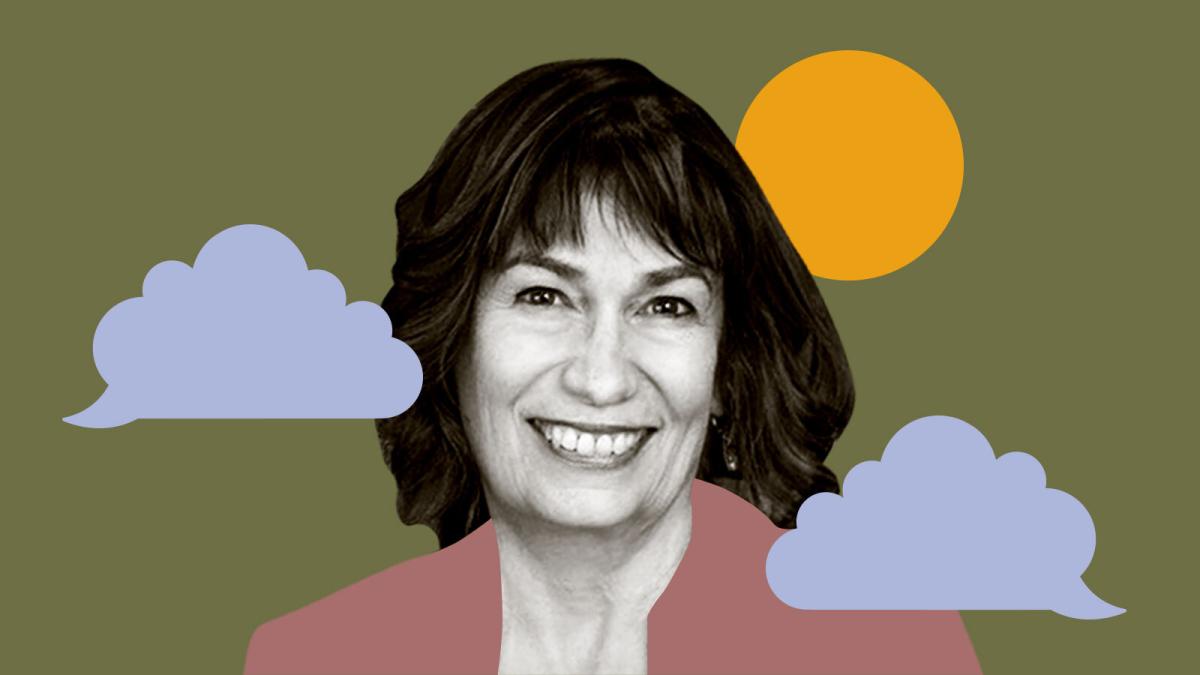
So today, I want to introduce you to Leslie Davenport. She has over two decades of experience as a practicing therapist, and is a leader in the field of climate-aware therapy. And she’s here to answer your questions about the complicated intersections between climate change, emotions, and mental health.
Have you been processing climate-related anxiety, grief, anger, or guilt? Wondering how to help a family member or friend? Frustrated by someone who just doesn’t get it? Trying to balance taking action and finding peace? Submit your questions here, and over the next few months we’ll feature some of them in Looking Forward with thoughtful responses from Leslie in a column we’re calling Ask a Climate Therapist.
I’m hopeful that Leslie’s input will be helpful in processing questions that a lot of you may be thinking about — or even questions you didn’t know you had until you read them!
We’ll feature our first column in February, so submit a question now, or anytime, through the linked form or by simply replying to this email. And read on for a Q&A with Leslie about how therapy can be a crucial tool in enabling climate solutions and action, and how to practice that kind of emotional awareness on the regular. Also this week, we’ve got some stories about what’s in store for Venezuela’s oil, the anniversary of the tragic L.A. fires, and a case for the benefits of climate migration.
This post originally appeared in Grist’s weekly solutions newsletter, Looking Forward. Not on our list yet? Subscribe here to get it in your inbox every Friday.
Why you should talk about your feelings — for the climate
If you relate to feelings like climate grief, anger, or guilt, the good news is you’re not alone. In fact, feeling these feelings and working through them may be a crucial part of how we go about building a better world.
Psychotherapist Leslie Davenport knows this well. With over two decades of experience as a practicing therapist and a speaker, writer, and educator, Leslie has become an internationally recognized voice on the emotional and psychological aspects of climate change — both how we got here, and how we can work our way out of it.
As Leslie told me, processing our feelings isn’t just about quelling anxiety or other emotions we view as negative. It’s about nurturing the creative and intuitive parts of ourselves that we need just as much as our practical skills to address the climate crisis.
“When I talk about that, what I always want to underscore is that it’s not taking us away from the roll-up-your-sleeves hard work that is happening and needs to keep happening,” Leslie said. “It’s building a buoyancy or resilience and depth to what we do that will both allow us to stay engaged in the long run, but also make sure we’re not just, I don’t know, moving the furniture in the same room. It’s getting to a place of, what do we really need to envision in a different way?”
I sat down with Leslie to talk a bit about how she came into this work and what sorts of questions she hopes to help people tackle — in her work more broadly, and also here in Looking Forward. Our conversation has been edited and condensed for clarity.
☀️ ☀️ ☀️
Q. How did you personally get interested in climate change and begin to weave it into your work as a therapist?
A. I’ve always had an interest in the environment and ecology. I didn’t pursue it academically, but I was always reading and watching documentaries and staying as current as possible. Close to 20 years ago, I had what I think of as my climate awakening moment, where information I’d been reading just sort of coalesced and became a visceral understanding of really the severity of what we’re facing. It just kind of hit home in a very deep and powerful way.
I decided I was going to shift as much as I possibly could, personally and professionally, to contribute to address it. And professionally was my largest sphere of influence. I already had a couple books out on health psychology, people sort of knew me.
And so I realized — and this was before terms like eco anxiety were really common — that there’s so much that mental health professionals are trained in that’s really relevant. Like supporting people in processing grief and complex emotions, supporting lifestyle changes, breaking through denial. These light bulbs went off.
Q. So you were one of the early leaders in this space — I think today there’s a lot more awareness of the emotional side of climate change, and eco anxiety like you said. But to drill down into that a bit more, can you tell me why you think it’s important to focus on mental and emotional health in this era of climate change?
A. The foundational statement is about realizing that climate change isn’t only an environmental or technology crisis or however it often gets framed. I mean, those are obviously important things to focus on. But it really is a human crisis — how we got here, how we don’t perpetuate it, as well as living with what we’re dealing with now. The uncertainty, the loss, the sense of betrayal that I hear people talk about, and just the steady escalating threats and impacts — all of that really affects how we relate to each other, how we can act or not. Because when the mental and emotional parts of this go unaddressed, it can so easily show up as overwhelm or burnout or polarization or blaming.
So it’s not just about coping and personal well-being, but it’s what will enable us to really respond over the long run and stay connected. I think that’s a misconception, that this is just for a few people who are really upset. What I want to bring across is that it’s really integral — our psychology, how we are with each other and ourselves and the natural world. And the more depth we can have with this, I feel like the more creative we can be.
Q. That’s really interesting to think about — not just the emotional side of where we’re at, but the behavioral question of how we got here and the personal work we need to do to make a different world.
A. Yes. Exactly.
Q. As someone who’s been practicing this for a long time, what sorts of behavioral or mental health questions have you helped people address in the past — and what are some of the questions you envision people submitting for the column?
A. I have noticed some consistent themes that come up frequently — not just in individual therapy, but in talks or workshops. One is how to work with the big feelings that arise, whether it’s the grief, the rage, the anxiety. And I feel like it’s really important to acknowledge that all of these feelings and more are completely natural responses to an unhealthy, threatening system. But they can get overwhelming and they can interfere with daily life. So I do want to be as practical as possible with providing support and things people might want to try.
Some of the other themes are around conversations, whether it’s with a partner, family member, colleague — kind of the people important in their lives who don’t get it, or don’t get it to the same degree. And so there’s this growing divide and distress about important relationships.
I’ve also found with young adults in particular, there’s a lot of big, existential questions around whether to have children, given what projections look like about the future. Or for people who do have kids, how to be honest without overwhelming them. While climate distress absolutely ripples through all the generations, I have seen that it lands — and the research shows this, too — with particular force on youth and young adults, because that’s the natural time in life when you’re glancing into your future. And it often feels hijacked by what’s happening with the climate.
Q. As a young-ish person I can definitely relate to that. And that brings me to another question: Who do you think can benefit most from doing this sort of emotional work? Who would you say the audience for this is?
A. I’d say there are sort of two audiences. First, the people who are struggling in some way and they’re taking the time to reach out with the kinds of questions we’ve been talking about. And that’s obviously where I want to primarily focus, to provide as much practical support as possible, so if someone writes in and then they read this, they’ll feel like they’re going away a little better equipped to know how to work with this.
But I do believe that, sort of across the board, we need to strengthen our emotional literacy, our emotional intelligence, and really deepen our understanding of the human elements of what’s happening. So my hope is that even if someone doesn’t have a specific need, that in reading the questions and the answers, and hopefully follow-up conversations, that it builds a shared language for everyone and a shared understanding around climate emotions. And I hope that we can carry that into a more emotionally informed way of relating and responding to each other, in workplaces, in community efforts, to grow more fully into the best parts of what’s possible with our humanity.
Share your thoughts
What question would you like to see Leslie answer in a future column? Maybe you’re wondering how to talk about climate change with young kids, how to manage climate anxiety, or how to avoid burnout in your climate work? As Leslie nodded to above, this won’t just be about coping with challenges. It’ll be about finding joy, making meaning, and laying strong foundations within ourselves to continue to help build a better future. Submit your question here.
More from Grist
🛢️ The oil of it all
After invading Venezuela and abducting its president, Nicolás Maduro, Trump made big claims about reviving the nation’s oil industry. Venezuela is home to the largest known reserves of heavy crude oil in the world — but what does the market actually look like for this fossil fuel? Demand from industries like aviation and heavy trucking remains high, but experts say an overhaul like the one Trump is promising may be a tall order. Read more
🚫 Thank you for not polluting
Climate policies have to strike a difficult balance: If they’re not ambitious enough, they won’t have sufficient impact. But if they’re too aggressive, they can backfire. New research shows what happens when people perceive climate policies as impinging on their personal freedoms — not only do they resent those measures, they can turn against the whole movement. For that reason, experts say that focusing on incentives and disincentives can be more effective than bans. Read more
🗺️ Climate movement
It’s no secret that climate change is driving, and will continue to drive, global migration. Moving can be a life-saver — not only for the people who leave to find safety and new opportunities, but also for migrants’ home communities that they support from afar. In an excerpt from his new book, Shelter From the Storm, Julian Hattem argues why climate-smart policies should encourage more migration, not less. Read more
📚 And one more thing
If you haven’t already, be sure to sign up for the Looking Forward book club! We’re meeting next Wednesday, January 14 (on Zoom), to discuss Under the Sky We Make, by climate scientist Kimberly Nicholas. Hope to see you there!
In other news
- A year after the tragic LA fires, recovery is still slow. But there have been bright spots, like neighbors helping neighbors. (Inside Climate News)
- A remediated Superfund site in Illinois is now home to a community solar development, which will help low-income households access clean energy (Canary Media)
- New (and used) EVs will be coming to the US market this year. Here are some of the most anticipated models and trends. (Heatmap News)
- In a world first, and a win for pollinators, native stingless bees have been granted legal rights in two regions of Peru (The Guardian)
- Scientists and media experts — including Grist’s own Tory Stephens! — share their favorite works of climate-fiction, from books to plays to games (The Washington Post)
And finally, looking forward to …
… the emotional resilience we need to face both the work and the challenges ahead.
🪸🪸🪸
You take deep breaths, perched on the edge of your colleague’s e-boat. You’re about to see your favorite dive spot for the first time in a decade. For years, you’ve stayed away, too heartbroken to face the bleached, lifeless reef.
But you never gave up on it. All the research and advocacy efforts you and others have led has actually begun to show signs of success.
You know it won’t look like it once did. But you’re finally ready to see how your beloved reef is recovering.
Your kind colleague pats your shoulder as your fins touch the water.
“Ready?”
— a drabble by Claire Elise Thompson
🪸🪸🪸
A drabble is a 100-word piece of fiction — in this case, offering a tiny glimpse of what a clean, green, just future might look like. Want to try writing your own (and see it featured in a future newsletter)? We would love to hear from you! Please send us your visions for our climate future, in drabble form, at lookingforward@grist.org
👋 See you next week!