👋 Hi, everybody! This week, with back-to-school season in full swing, we’re talking about climate change in the classroom — specifically, a project designed to give students the tools and outlets to process big emotions related to the climate crisis. (Although geared toward a school setting, the resources and approaches are relevant to anyone, of any age.) We’ve also got some news about the present and future of high-speed trains in the U.S., and more upcoming Grist events to share.
How educators can help students channel climate anxiety into action
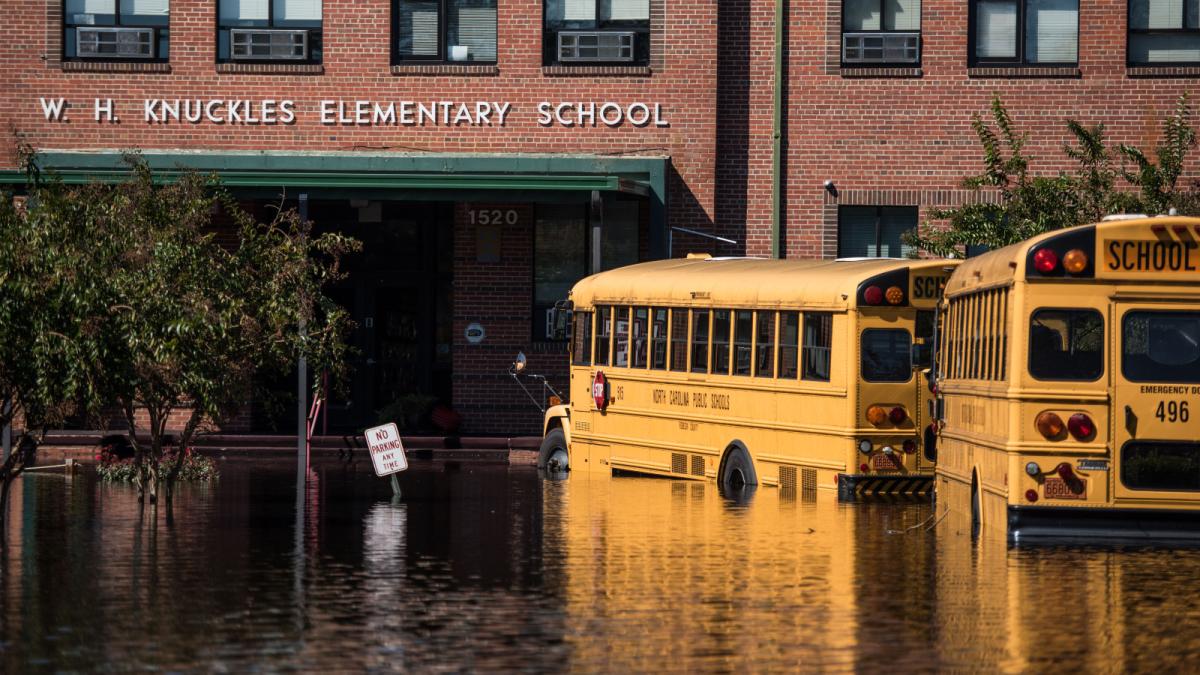
Young people today are dealing with a lot. Between the pandemic that wrecked their formative years, the continual threat of gun violence in schools, and the prevalence of addictive (and sometimes harmful) social media apps, it’s no wonder that anxiety is on the rise in younger generations. And as if those factors weren’t enough, a number of recent studies reveal yet another major source of their anxiety: the climate crisis.
Younger generations are poised to inherit the ever worsening impacts of a changing climate, and according to one study in The Lancet, a majority of 16- to 25-year-olds report being scared about that future. They also report feelings of sadness, helplessness, and anger.
With so many young people grappling with difficult emotions and questions about our climate future, classrooms can be a crucial place to process those feelings — and even turn them into something constructive. Earlier this year, my colleague Kate Yoder wrote about one initiative to equip middle school teachers with the tools to help their students cope with various shades of climate anxiety.
As Kate wrote, many teachers are themselves struggling with the topic and how best to handle it in class. Last fall, a nonprofit called the Climate Mental Health Network, in partnership with the National Environmental Education Foundation, piloted a free toolkit full of activities and other resources specifically to help middle school teachers support their climate-concerned students. For instance, the “climate emotions wheel” helps students put words to what they’re experiencing. (As the toolkit describes, simply being able to recognize and name a negative emotion can help to abate it.)
Some of the activities are also geared toward helping students figure out how they can take action — one of the key ways to combat feelings of helplessness and despair. One prompt encourages students to think about “circles of action,” or how they can have an impact in the circles and communities that they’re a part of.
A neat example of how this can manifest comes courtesy of marine biologist and climate policy advocate Ayana Elizabeth Johnson, who shared in her newsletter last week a roundup of op-eds that college students in her climate communications class produced, all of which were accepted for publication in news outlets around the country. “As my student Zoe Storonov found out with her op-ed in the Anchorage Daily News (her hometown paper) on Trump, NOAA, and fishing,” Johnson wrote, “op-eds can spark valuable conversations across political divides. And goodness do we need more of those.”
Of course, young people aren’t the only ones dealing with climate anxiety — and they’re not the only ones who can take action, either. Resources like the climate emotions wheel might be beneficial to anyone looking for coping strategies, and sparking conversation — whether that happens in an op-ed, around the dinner table, or even, dare I suggest it, on social media — is an example of the kind of ripple-causing action that anyone can take.
Read more:
- What makes middle school even worse? Climate anxiety. (Grist)
- My students have (climate) opinions (What If We Get It Right?)
More from Grist
🚅 In training
California’s long-anticipated high-speed rail line, connecting the northern and southern hubs of the state, has been plagued by chronic funding shortages, delays, and red tape. Nevertheless, 62 percent of voters want the state to keep at it. What will it take to actually bring the project to fruition? Read more
🍽️ Leave no crumbs
Can we feed 10 billion people without totally wrecking the planet’s ecosystems? Author Michael Grunwald seems to think so. In this Q&A, Grunwald talks about his new book, We Are Eating the Earth: The Race to Fix Our Food System, and why he’s hopeful that innovation can win that race. Read more
🌍 Quite continental
In preparation for the annual U.N. climate conference, COP30, which will be held in Brazil later this year, African nations convened this week to align on a unified vision of climate solutions and leadership for the continent. The 54 nations agreed on ambitious targets, including investments in clean energy and adaptation. Read more
☝️ And one more thing
We’ve got a couple of exciting Climate Week events to share with you, if you’re planning to be in NYC later this month! On Wednesday, September 24, Grist will host a timely conversation between author Michael Grunwald and Grist journalist Ayurella Horn-Muller exploring the connections between the global food system and the climate crisis, and the hidden consequences of how we grow, process, and consume food. Learn more and register here. Then on Thursday, September 25, join us for a special evening celebrating not one, but two major milestones: the 10th edition of the Grist 50 list (Grist’s annual list of climate leaders to watch) and the 25th anniversary of Grist itself! This Moth-style storytelling event will feature powerful, personal stories from people featured on the Grist 50 over the years, as well as Grist journalists who report on the people, policies, and ideas driving climate progress. Register here.
In other news
- Amtrak has rolled out snazzy NextGen Acela trains. This rider gave the experience a sparkling review. (The Philadelphia Inquirer)
- The port of Los Angeles now houses the nation’s first onshore project generating renewable energy from waves (ABC News)
- In remote areas prone to wildfires, utilities are replacing power lines with solar microgrids (Canary Media)
- Water-stressed Morocco is betting big on a technology known as desalination (The Washington Post)
- This electric mustang is outselling its gas-powered counterparts (Electrek)
And finally, looking forward to …
… the pleasures of high-speed rail. While the U.S. has been woefully slow to catch on to this modern, climate-friendly form of transportation, it’s not because Americans don’t want it — as evidenced by Californians’ continued support of the project there. Earlier this year, I wrote about how the photo drop of a sleek new interior design for France’s high-speed trains had U.S. residents drooling. Today’s drabble is a nod to what we could have.
🛤️🚆🛤️
Most people take this train for the stunning mountain views. It’s true, the Tetons really never get old.
But your work as a ranger keeps you pretty isolated, most of the time — this commute you enjoy twice a year is a rare opportunity to people-watch.
You watch a young blind guy, whose assistive tech is narrating the scenery for him in gorgeous detail. You see kids snapping selfies, then gradually forgetting their phones as the fast but leisurely journey wears on. You overhear a couple happily crossing this train off their travel bucket list — it seems it has not disappointed.
— a drabble by Claire Elise Thompson
🛤️🚆🛤️
A drabble is a 100-word piece of fiction — in this case, offering a tiny glimpse of what a clean, green, just future might look like. Want to try writing your own (and see it featured in a future newsletter)? We would love to hear from you! Please send us your visions for our climate future, in drabble form, at lookingforward@grist.org
👋 See you next week!