👋 Hi, everyone! Grist’s offices are closed tomorrow for the Juneteenth holiday, so we’re coming to your inboxes a day early this week. (If you’re looking for some holiday reading, check out this essay by climate strategist Tamara Toles O’Laughlin from 2021 — the year Juneteenth was established as a federal holiday — making the case for climate reparations, a global framework that is now being actively discussed.)
Today, we’ve got a story for you about two plans for how to repurpose an abandoned rail line in Queens, New York. We’ve also got news for you about coral reefs, urban heat, and the cost of living.
This post originally appeared in Grist’s weekly solutions newsletter, Looking Forward. Not on our list yet? Subscribe here to get it in your inbox every Friday.
Should an abandoned rail line become a subway or a park — or both?
Courtesy Friends of QueensWay
The United States is home to tens of thousands of miles of abandoned railroad tracks. This idle infrastructure is often considered a blight — almost everyone agrees it should be put to better use. Old railroad tracks could become part of a new transportation network, helping people get around faster and more sustainably. Or they could become parks, like New York City’s High Line, bringing green space into areas that desperately need it.
That’s exactly the problem.
In Queens, New York, a 3.5-mile stretch of unused rail line has become an example of how a fight over two alternatives that would both be better than the status quo can derail (no pun intended) the best intentions.
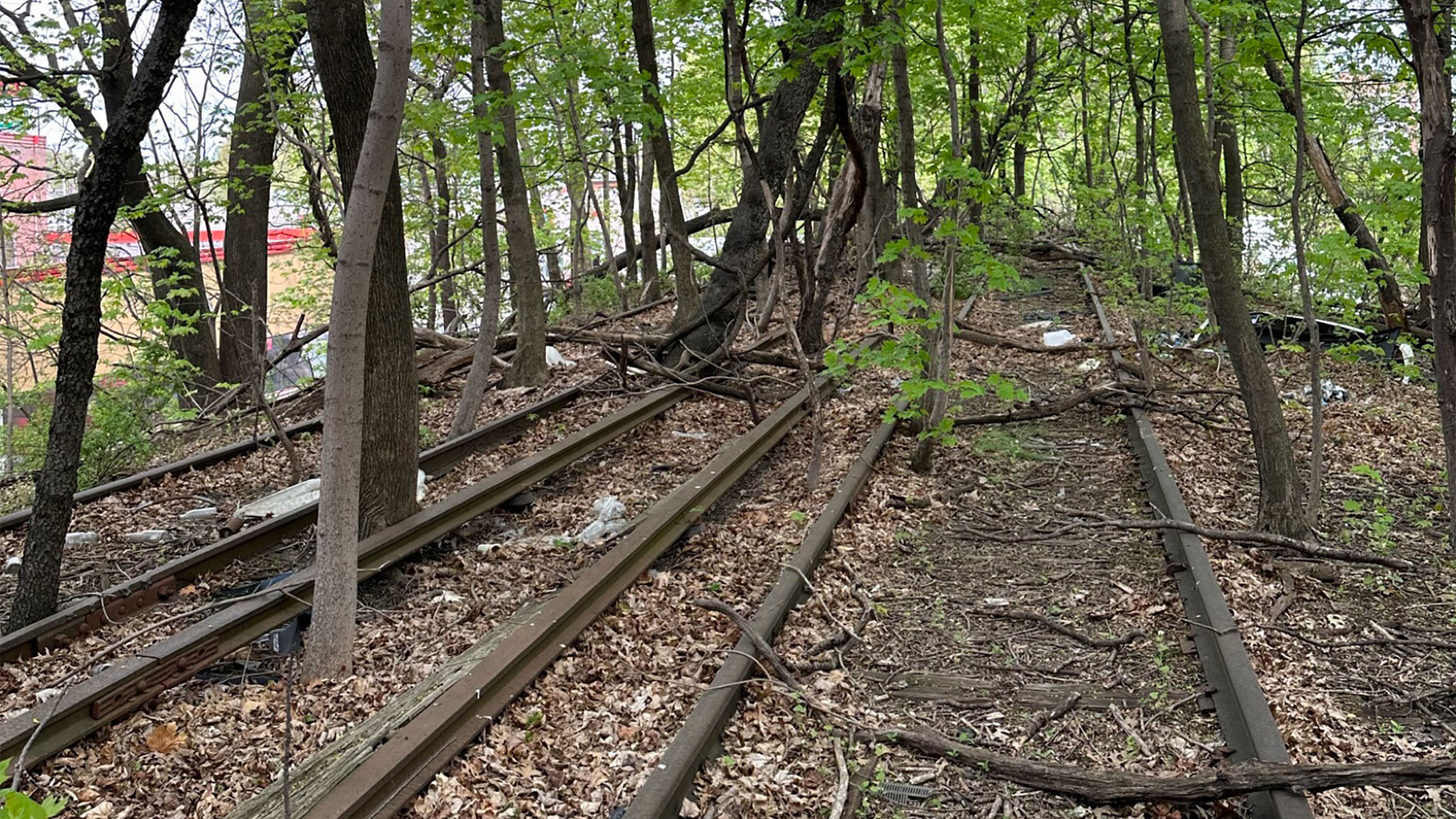
The abandoned tracks, unused since 1962, have become an illegal dumping ground and residents are sick of it, as freelance writer Benton Graham reported in a story for Grist last week.
One group of residents came up with a proposal known as QueensWay: a 47-acre linear park that would make the borough more walkable and bikeable, connecting several neighborhoods that currently suffer from a dearth of park access.
Another contingent wants to see the railway become a subway line. As Benton noted in his story, Queens residents currently make more trips by car than in any of the other four boroughs that make up New York City.
For years, the debate was between transit access (with the alternate proposal originally branded as QueensRail) and equitable park access.
But, Benton recounted, in 2016, a local advocate named Andrew Lynch wrote a blog post wondering why the two sides couldn’t find common ground — and posited that the space could, in fact, be used for both. He later helped develop a proposal for QueensLink (the evolution of QueensRail), which would include four new subway stations and 33 acres of parkland.
It’s not a crazy idea. “You see other projects around the country that incorporate parks and trails into rail projects,” Benton said. For instance, Austin, Texas, where he used to live, has plans to build a car-free parkway along a light rail line. That city is also building out a new light rail that will include bike and walking trails, with plans to replace any parkland displaced by the construction.
The Atlanta Beltline is another mixed-use initiative: a proposed 22-mile network of trails, transit, affordable housing, and park space on a former rail corridor. But, with about 17 miles of trails completed, plans to include a light rail line appear to have stalled.
“I think that’s become a cautionary tale for the QueensLink folks,” Benton said. If QueensWay comes to fruition, he said, QueensLink advocates don’t think their project — arguably the more ambitious one — stands much of a chance. And with work on QueensWay finally scheduled to begin this year, it’s become an existential dilemma for those who want to see the two-pronged solution put into place.
Part of the problem, according to the QueensWay supporters, is that the transit project just isn’t feasible. The Metropolitan Transportation Authority estimated the cost at around $5.9 billion (though advocates of the project hired their own consulting firm, which placed the cost closer to $3.5 billion).
“It’s super expensive to build infrastructure of any kind in this country, particularly transit and rail,” Benton noted. That money may be hard to come by, especially with the federal government withdrawing support for clean transit initiatives — and QueensWay supporters don’t want the park to get held up.
QueensWay’s bill, meanwhile, is estimated at about $350 million. New York City Mayor Zohran Mamdani included $43 million for it in his most recent budget, to the dismay of the QueensLink proponents.
Mamdani, who supported QueensLink as a state assemblyman, said the door isn’t closed and that the land won’t be rezoned as park space. But once a park is already there, advocates say it’s hard to see how the rail line could get added. “Then they’d have to tear up this very nice park that they just built,” Benton said.
This type of tension often plays out over abandoned rail lines across the country — even when either approach would be better than seeing the tracks remain idle. “This is a rail line that’s been sitting there for 65 years, and there’ve been projects that have popped up and ideas like this that have popped up through the years, and it’s still just kind of this abandoned rail line,” Benton said of the Queens track.
“I think it’ll be an interesting one to follow and see how the political leaders in New York are thinking about those trade-offs.”
Dive deeper:
- What is the best use for old railroad tracks? New Yorkers have opinions.
- France’s new high-speed train design has Americans asking: Why can’t we have that?
More from Grist
💸 In this economy?
Climate change is making life more expensive. And a recent study showed that two-thirds of American voters (including most Democrats and moderate Republicans) are making that connection — though they overestimate some factors, like rising energy bills, and underestimate others, like health care costs. Read more
🌽 Don’t sell the farm
Farmers in Georgia (and elsewhere) face a lot of pressure to sell their land to developers. The Georgia Farmland Conservation Fund, which just closed its first round of applications, aims to ease some of that pressure by offering farmers another route to get value from their land without losing it. Read more
👣 Cool runnings
Walking outside in the hot summer is becoming an increasingly risky proposition — especially in cities, where the urban heat island effect magnifies the stress. An open-source pilot project at Arizona State University helps users chart the coolest routes for walking, factoring in things like reliable shade. Read more
In other news
- Researchers have produced a new detailed global map of coral reefs that may be resilient to climate stress (Inside Climate News)
- A federal judge paused Trump’s order to remove ‘negative’ signs from national parks, and ordered parks to restore exhibits already affected (The New York Times)
- A new initiative aims to launch training centers for the geothermal workforce, with the first opening this year in Massachusetts (Canary Media)
- China rolled out a plan to electrify heavy-duty trucks, including highway charging and battery-swapping facilities (Bloomberg)
- The El Niño weather pattern has officially arrived. Here’s what that may actually mean for weather in the coming months. (NPR)
And finally, looking forward to …
… more creative repurposing of spaces. This drabble comes from Looking Forward reader Liza Duncan.
🌳🌳🌳
They are rewilding the golf course and turning it into a park. They are bringing back the floodplain and letting the grass grow long, taking down the fences and opening the gates. Everywhere, little blue and orange flags, young trees on spindly limbs. New birds are nesting, finches and sparrows and blackbirds, and it’s noisier than it’s ever been. The trees sing, too. Light rain troubles the leaves and spatters the ponds, where silver-hued fish are spawning. Ferns and wildflowers are occupying the spaces where sand traps used to be, and it is the sweetest occupation ever.
— a drabble by Liza Duncan
🌳🌳🌳
A drabble is a 100-word piece of fiction — in this case, offering a tiny glimpse of what a clean, green, just future might look like. Want to try writing your own (and see it featured in a future newsletter)? We would love to hear from you! Please send us your visions for our climate future, in drabble form, at [email protected]
👋 See you next week!