👋 Hi, everybody! As we get ready to head into Earth Month, we are super excited to launch a new feature here in Looking Forward. It’s a climate-themed geography guessing game we’ll be running for five weeks. (If you’ve ever enjoyed games like GeoGuessr or Travle, or if you just like trivia generally, how do you do, fellow nerds! This is for you.)
Through the end of April, each newsletter will include a photo of a natural landscape with climate significance, and a prompt to guess where in the world it is. Think of it like an Earth Month scavenger hunt, offering you a moment of zen to revel in the beauty of our wonderful planet, along with a chance to test your ecological knowledge, learn about some new places, and compete against your fellow Looking Forward readers for glory. 👑
And to sweeten the deal even more, we’ll be giving away free copies of my colleague Jake Bittle’s book, The Great Displacement: Climate Change and the Next American Migration, to the top scavenger hunters.
Ready?
OK.
Take a few seconds to look at this picture. Take in the scenery, the vegetation, the colors. Think about what type of ecosystem it is and what you associate with that ecosystem. Now — can you guess the location?
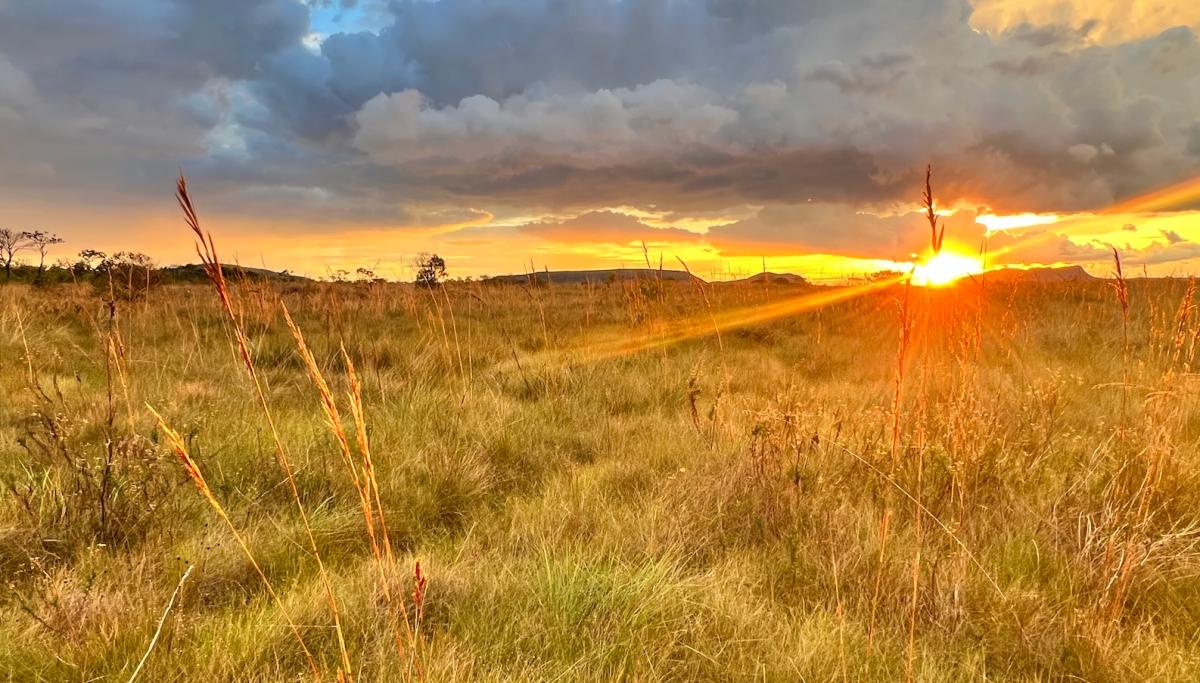
Do you think this photo is from:
- The California Foothills
- The Great Plains
- The Brazilian Cerrado
- The Serengeti
- The Hungarian Steppe
Once you submit your guess, you’ll see instructions about how to get onto the leaderboard to compete against fellow readers, and how to earn bonus points. (Of course, you can also play just for fun.)
We’ll share the leaderboard results (and the next beautiful location to guess!) in next week’s newsletter. In the meantime, speaking of beautiful places with climate implications, today we’ve got a story for you about how scientists are combating the spread of dengue fever, from remote towns nestled in the Amazon to futuristic labs. We’ve also got stories about glacier tourism, green jobs, and clean energy funding.
This post originally appeared in Grist’s weekly solutions newsletter, Looking Forward. Not on our list yet? Subscribe here to get it in your inbox every Friday.
A forward-looking approach to combating mosquito-borne illnesses
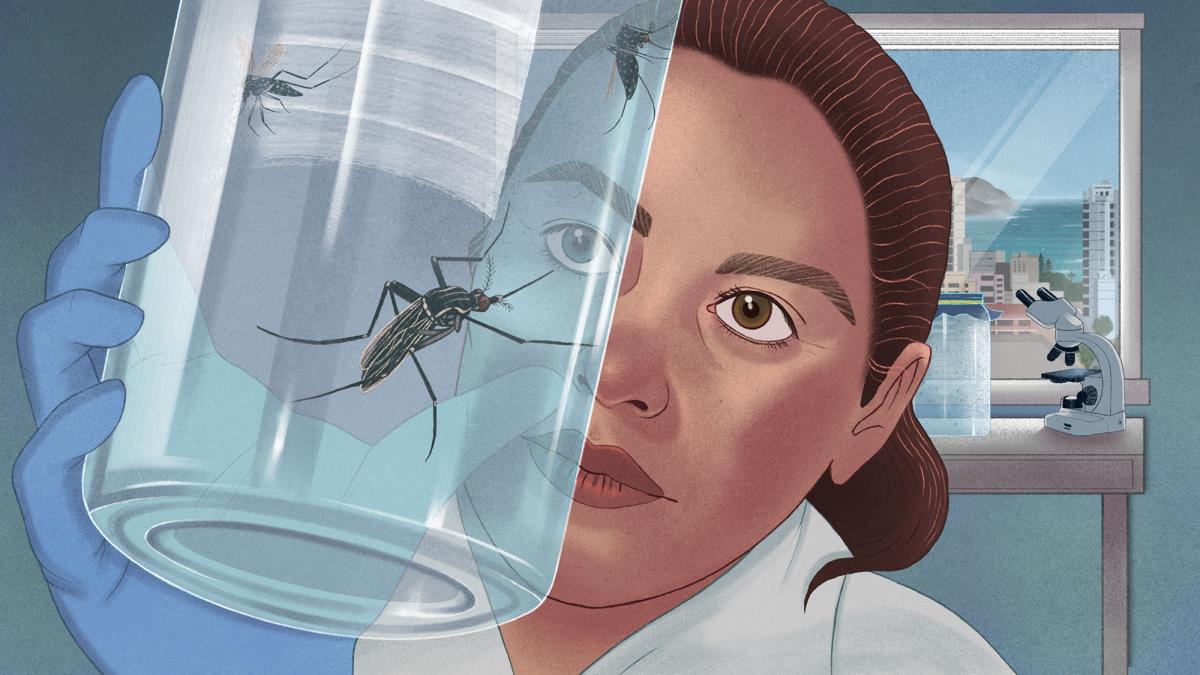
Climate change is impacting our health in countless ways. Sometimes it’s acute — like the danger posed from a heat wave, a wildfire, a flood. Sometimes it’s more of a slow creep — like the way changes to our environment allow diseases (and the vectors that carry them) to spread.
In 2024, that slow creep tipped over into a full-blown crisis when Brazil suffered an “earth-shattering outbreak” of dengue fever, my colleague Zoya Teirstein told me. “Cases had been rising in the years prior to 2024, but they basically exploded that year,” she said. Peru also saw a dengue epidemic, partly due to the hot and wet conditions caused by the El Niño weather pattern. When it’s hot, not only do disease-carrying mosquitoes thrive, but the dengue virus itself also proliferates more rapidly within its hosts. The explosion of cases was so severe that it disrupted society — think ambulances running at all hours and grocery stores facing staff shortages — not unlike what the whole world experienced during the height of COVID.
Dengue fever is now the most common and fastest-growing mosquito-borne disease in the world. Mild cases might feel like the flu. Severe cases damage blood vessels and can cause internal hemorrhaging. There is no vaccine.
But, as Zoya reported in a feature this week, scientists at the epicenter of the outbreak are getting creative to outsmart the disease. It’s an example of how the most promising climate adaptations actually learn from, and work with, nature — rather than fighting against it.
In Peru, Zoya traveled to the remote Amazonian community of Llanchama, where the arrival of a highway has created new habitats for mosquitoes to thrive, but also allowed researchers to set up a monitoring station with the goal of understanding the extremely complex factors that might predict an upcoming outbreak.
Llanchama now has a weather station providing real-time, minute-by-minute updates. It’s part of a network of tools capturing all sorts of environmental signals — like acoustic sensors to detect the movement of birds and people, air quality sensors to catch changes in pollution, and drone surveys.
The community’s roughly 300 residents have become part of the research as well, Zoya shared. At the school, kids use paper microscopes to find mosquitoes living in the root systems of trees, contributing data to help build the early-warning system.
“They have this community that is very low-tech and does not have a lot of resources — but it is at the very forefront of the world’s understanding of how to think like a mosquito,” Zoya said.
The multi-pronged approach is working. The researchers can now predict dengue outbreaks three months in advance — enough time for hospitals and health systems to get prepared.
In Curitiba, Brazil, Zoya got a firsthand look at an even more high-tech approach: a “mosquito factory.”
“It was like Spy Kids,” Zoya said of the factory. “To get into these rooms where the mosquitoes were, you have to scan your palm. It really felt like the future of mosquito control in there.”
In this facility, scientists are breeding mosquitoes that are essentially immune to dengue (and other diseases that this same species can carry, like Zika and yellow fever). These mosquitoes are infected with a bacteria called Wolbachia that crowds out dengue from the insects’ stomachs.
Experiments with Wolbachia started out as a way to shorten mosquito lifespans, but scientists soon realized it did something even more powerful. Since then, Wolbachia mosquitoes have been raised and released to mate with native mosquitoes. The breeding was originally done by hand, but just last year, this fully automated facility took over the process, now producing 100 million eggs each week.
Notably, this approach does not mean that residents will be rid of the biting pests. (In one scene in Zoya’s story, a health official in a nearby city drove around releasing Wolbachia mosquitoes from the window of her car, while a woman at a bus stop looked on, bemused.) The Wolbachia method amounts to fighting mosquitoes with more mosquitoes — and those used to the faster-burn method of spraying with pesticides told Zoya they’re concerned about how long this may take to show results.
But in one city that received releases of Wolbachia mosquitoes from 2017 to 2019, the results were staggering. During the 2024 dengue outbreak, there were fewer than 2,000 reported cases.
Health officials in the U.S. could learn from these developments — and may need to. “The first-ever locally acquired cases of dengue in the U.S. were discovered in California in 2023, and there have been local outbreaks since,” Zoya emphasized to me. We may view tropical diseases as a distant threat — but to some degree, so did the residents of many cities in Peru and Brazil, before dengue cases suddenly skyrocketed.
“I think that climate change is sort of upending that calculus a little bit,” Zoya said, “and we need to be more prepared.”
Dive deeper:
- The frantic, high-tech fight to stop climate-fueled dengue fever
- More from Vital Signs, a yearlong series exploring the intersections of climate and health
More from Grist
🏔️ On thin ice
Glacier tourism has become a booming industry, as more people want their chance to see these otherworldly formations before they melt away. But climate change also makes glaciers and ice caves more unstable — and dangerous. Tourists, guides, scientists, and locals all have a part to play in making the industry safer. Read more
👷 A pipe dream
Illinois has a lead pipe problem. Replacing them is an urgent need from a public health standpoint. But it could also be an economic driver, creating up to 90,000 jobs over a decade, according to a new report. Read more
☀️ Leave it a loan
Trump’s energy secretary claimed to have dismantled a Biden-era clean energy loan program. But in truth, sources say, the program has survived in close to its original form, and is still supporting the build-out of clean energy infrastructure. Read more
🌎 And one more thing
I’m going to be moderating a virtual panel on April 9, as part of LA Climate Week. It’s called Screen to Table: Food, Culture, and Climate Storytelling — we’ll be digging into the ways culture and media shape our relationships with food, and how advocates are trying to nudge that narrative toward sustainability. Register here to tune in.
In other news
- The U.S. has ramped up its production of grid batteries ‘at a dizzying pace’ (Canary Media)
- If they succeed in the midterms, Chuck Schumer says, Democrats plan to restore clean energy tax credits (The New York Times)
- A Washington utility is piloting ‘bidirectional charging,’ where EVs supply backup power (Utility Dive)
- Mexico has begun building a supercomputer with the hope of improving extreme weather data and forecasts (Bloomberg)
- How natural building materials, like bamboo and hemp, could replace carbon-intensive aluminum, concrete, and steel (Atmos)
And finally, looking forward to …
… a future where we can live healthily with nature, and one-step ahead of disease.
🦟🦟🦟
You feel another pinprick and reach down to slap the mosquito on your shin.
“Dad, can I use some more of the bug spray?” you whine.
“We shouldn’t spray here, honey,” he replies. “We’re in a pollinator zone. Besides, a few skeeter bites never hurt anyone.”
“That’s not true!” your sister pipes up, ever the know-it-all. “They used to carry really bad stuff. Like diseases. Plus, some people are allergic.”
You slap another one on the back of your neck, as she starts to explain how scientists figured out how to get rid of diseases you’ve never even heard of.
— a drabble by Claire Elise Thompson
🦟🦟🦟
A drabble is a 100-word piece of fiction — in this case, offering a tiny glimpse of what a clean, green, just future might look like. Want to try writing your own (and see it featured in a future newsletter)? We would love to hear from you! Please send us your visions for our climate future, in drabble form, at [email protected]
👋 See you next week!