👋 Hi, everybody! Today, we’ve got another column in our special series Ask a Climate Therapist. This time, leading climate-aware therapist Leslie Davenport is reflecting on a recurrent pattern she’s seen in her practice: what happens when, despite caring for the natural world, we lead lives disconnected from it — and how to rebuild that connection in small and attainable ways.
We’ve also got news for you about a consequential midterm race (probably not one you were already thinking about), city trees, and Magic: The Gathering.
This post originally appeared in Grist’s weekly solutions newsletter, Looking Forward. Not on our list yet? Subscribe here to get it in your inbox every Friday.
Advice from a climate therapist: Touch grass. (No, really.)
Grist / Getty Images
In my years as a psychotherapist, I’ve worked with many people facing similar struggles. One such pattern is embodied by a client I’ll call Emma (whose real name and identifying details I’ve changed for privacy purposes). She came to see me because, despite pursuing a climate career aligned with her values, practicing good self-care, and having a close community of friends, she couldn’t shake a persistent feeling of being “low.” She didn’t know what was missing.
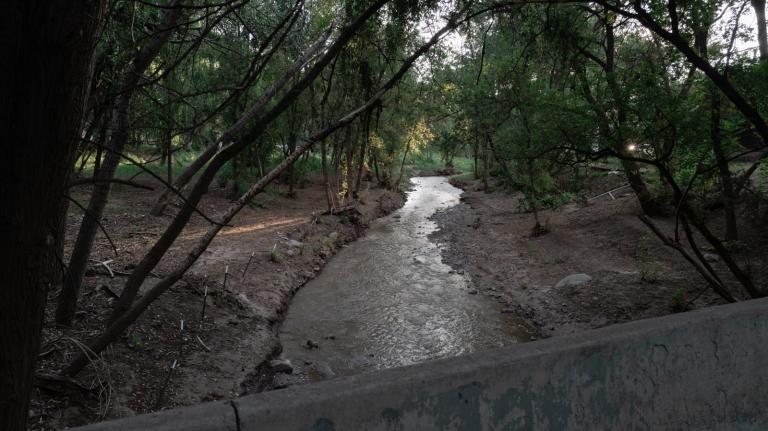
Emma was invited to an event at a scenic destination — let’s say, for your mind’s eye, that it was a wedding in Alta Lakes, high in Colorado’s San Juan Mountains. Imagine a scene something like this: The cool scent of spruce and fir drifted through the open windows, along with the thin, mineral clarity of mountain air. Now and then two owls traded low hoots through the dark, and something slapped in the water out on the lake.
Emma lay listening for a long time. For reasons she couldn’t name, tears began to slide down her face, and soon she was sobbing.
She wasn’t sad or upset. She described a welling up of joy, a sort of homecoming moment — a deep remembering that felt familiar yet beyond the reach of words. It was, she said, like “drinking clear, cool water when you didn’t know you were thirsty.”
Emma spent most of her workday in an office building. She loved to run, but usually on city streets with a podcast playing in her ears, or on a gym treadmill. Like most of us, she lived by a daily routine whose steady stream of input kept her separate from the natural world. She cared for nature, but it was cognitive, not visceral.
Our work focused on integrating what had lifted her mood during that experience in Colorado and keeping that connection alive in her everyday life.
We don’t need to go to the mountains to touch the living world within and around us. For Emma, it started small. She left her earbuds at home on some runs and let the wind and birdsong keep her company. She began each morning with a moment at the window watching the sky before opening her laptop. At lunch she found a beautiful tree in a nearby park and made it her regular spot to pause and sit, watching it change through the seasons.
I was reminded of Emma, and the other clients I’ve seen who were similarly feeling the sorrow of this detachment, when I read a question that came through the Ask a Climate Therapist form: “Why is it that working with animals and tending to plants helps process the grief, anxiety, and depression?”
This question-asker found the answer that Emma and others were seeking, but wanted to understand the “why” behind it. I can point to some of the science that backs this up: Compounds released by trees can boost the activity of our immune cells. Stroking an animal lowers stress hormones and can raise oxytocin. But I would also say that we don’t need academic journals to know these things. We feel better working with plants and animals because we can sense directly how life flourishes as a complex, interwoven system that we’re part of. When you water a garden or care for an animal, you’re practicing a form of reciprocity that’s also a way of caring for the future.
And so for you, reader of this column — wherever you may be at in your journey of connecting with, caring for, and feeling a sense of belonging in the natural world — remember that engaging with nature brings more than just joy; that restoration of connection actually supports and sustains your ability to do the larger work.
Below, I offer just a few practices to begin to cultivate that more mindful relationship. I would love to know about your regular practices, too. How do you create moments of connection and kinship with nature in your daily life? Reply to this email or reach out to [email protected] to share them with the Grist team, and with me.
Practice tips:
There are many ways to cultivate an awareness of our place in the living world.
- Listen to the mp3 “We are Nature” — a free resource I created to accompany my book, Transforming Climate Anxiety — for a guided experience of connection.
- Take a daily sensory pause. Once a day, stop for one minute and notice what’s alive around you: Take the temperature of the air on your skin, notice a bird call or the smell after a rain. As you breathe, remember that the Earth’s trees and plants created the oxygen you’re taking in, and that your exhale feeds them in return.
- Tend something — and say thank you. Water a plant, fill a birdfeeder, or care for a patch of garden. Reciprocity is how we take our place in the web of life: We receive and we give back.
- Leave the earbuds at home from time to time. Try a walk or run with the wind, neighborhood sounds, and your own breathing as the soundtrack.
In this with you,
Leslie

Ask a Climate Therapist is a special series from Grist, tackling your burning questions about climate change and mental health with licensed therapist Leslie Davenport. Do you have a question you’d like to see Leslie address in a future column? Submit it here. (And if you try out any of the practice tips from today’s column, please let us know how it goes!)
More from Grist
🏠 Home on the ballot
As California faces worsening threats from wildfires, the home insurance market has fallen into a crisis. This midterm season, two Democratic candidates for a little-known office — insurance commissioner — claim they can fix the state’s woes: one with a market-based approach, and one pushing to ditch the market altogether. Read more
🌳 It’s not easy being green
It can be challenging to live in a city — especially if you’re a tree. But a new study has found that urban trees are actually more resilient to climate stresses than their wild country counterparts. That’s largely because, in the city, trees are more likely to be watered and tended to by people. Read more
🃏 Counting cards
Climate impacts have come for yet another cultural phenomenon. This time, it’s Magic: The Gathering. Fans of the card game are waiting on new products that are currently stuck in the Panama Canal, where El Niño-driven drought has restricted the flow of ship traffic. Read more
In other news
- This Illinois nonprofit is working to diversify the clean energy workforce (Canary Media)
- England has announced a plan to expand organic farmland over the next decade, from 3.4% to 10% (The Guardian)
- Researchers discover that simply being near healthy corals can help bleached ones recover more quickly (The New York Times)
- In Ohio, a hotspot for data center development, unlikely allies are leading a resistance movement (Inside Climate News)
- Science tells us not to underestimate the benefits of small green spaces scattered throughout cities (Mother Jones)
And finally, looking forward to …
… a future where daily communion with nature will be (excuse the pun) second nature.
🌿🪟🌿
It’s your favorite time of year: the few fleeting days (or weeks, in a good year) when summer heat is behind you but the chill hasn’t quite set in. When your building winds down the cooling system but hasn’t yet fired up the heating. When you can have the windows wide open all day and night without a trace of guilt.
You practice gratitude in every season, but these are the days you feel it the most. You start your mornings listening to birdsong from your second-story bedroom, and end your evenings on the green roof harvesting herbs for supper.
— a drabble by Claire Elise Thompson
🌿🪟🌿
A drabble is a 100-word piece of fiction — in this case, offering a tiny glimpse of what a clean, green, just future might look like. Want to try writing your own (and see it featured in a future newsletter)? We would love to hear from you! Please send us your visions for our climate future, in drabble form, at [email protected]
👋 See you next week!