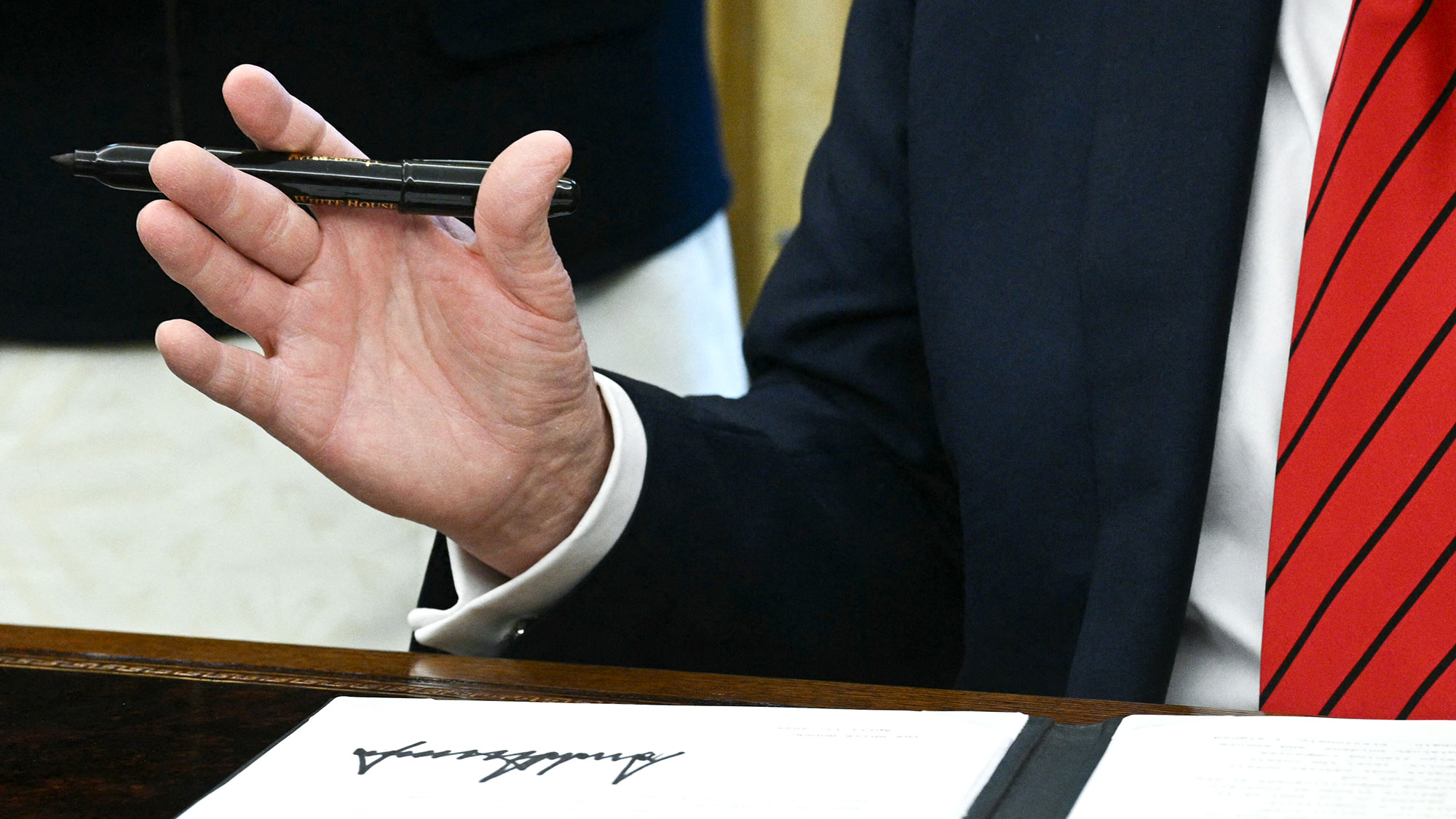
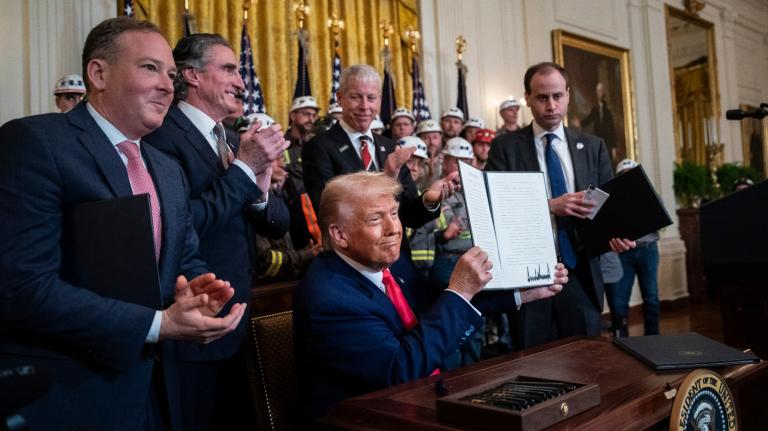
One year ago, with one of the first strokes of his presidential Sharpie, President Donald Trump signed an executive order declaring a “national energy emergency,” making good on a campaign promise to “drill, baby, drill.” It was the first of many such orders, signaling that the championing of fossil fuels would be a cornerstone of the new administration: A subsequent order pledged to revitalize America’s waning coal industry, eliminate subsidies for electric vehicles approved by Congress under former president Joe Biden, and loosen regulations for domestic producers of fossil fuels. Yet another executive order withdrew the U.S. from the Paris Agreement, the nearly unanimously-adopted international treaty that coordinates the global fight against climate change. He resumed liquefied natural gas permitting paused by his predecessor and reopened United States coastlines to drilling.
In the days following his inauguration, Trump killed a climate jobs training program, closed off millions of acres of federal water designated for offshore wind development, reopened U.S. coastlines to drilling, and scrubbed mentions of climate change from some federal agency websites. To many observers, it looked like the most comprehensive reorientation of the executive branch’s environmental and climate priorities in American history.
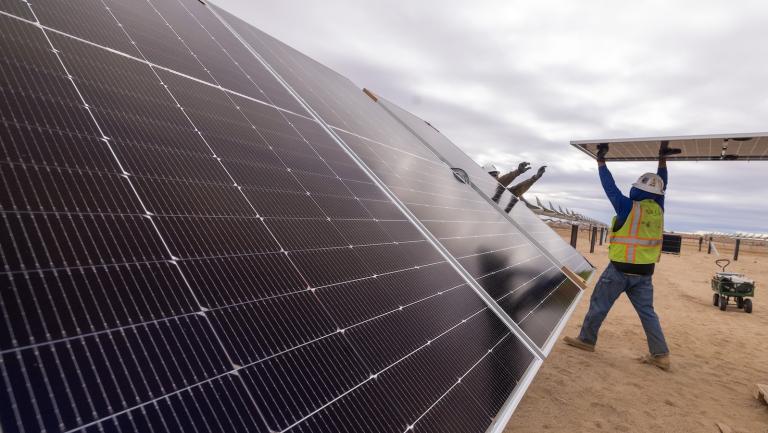
On paper, it certainly appears as though Trump has continued to make good on these early promises. He pushed Congress to pass the so-called Big Beautiful Bill, which phases out an extensive set of tax credits — for wind and solar energy, electric vehicles, and other decarbonization tools — that were responsible for much of the progress the U.S. was expected to make toward its Paris Agreement commitments. (That move has already led some companies to abandon new clean energy projects.) Trump’s attacks on the nation’s offshore wind industry, which he recently called “so pathetic and so bad,” have been unrelenting, culminating in a blanket ban on offshore leases last month. A few weeks ago, he upped the ante on his earlier withdrawal from the Paris Agreement by severing ties with the United Nations framework that facilitates international cooperation on matters of climate change, environmental health, and resilience — a treaty that was ratified unanimously by the U.S. Senate in 1992.
“It has been an extraordinarily destructive year,” said Rachel Cleetus, climate and energy policy director at the nonprofit Union of Concerned Scientists. It’s not hard to find specific moves that have already done tangible harm to the climate: The EPA, for instance, delayed a requirement that oil and gas operators reduce emissions of methane, an ultra-potent and fast-acting greenhouse gas, for a full year. The Interior Department announced a $625 million investment to “reinvigorate and expand America’s coal industry” and directed a costly Michigan coal plant on the verge of closure to stay open.
More on Trump’s first year


However, while these moves have been effective in sowing panic and uncertainty, their long-term effects on the country’s climate policy framework are far from certain. Indeed, only a small fraction of the climate damage threatened by Trump is truly permanent, experts told Grist. That’s not only because many of Trump’s moves may ultimately be ruled illegal — federal judges in Rhode Island and New York, for instance, allowed offshore wind farms in those states to resume construction just last week — but also because executive actions can be reversed by a future president. And the president has not shown much interest in passing energy- or climate-related legislation, a far more durable form of policymaking than executive decree. Despite claims to the contrary, Trump has signed fewer bills than any president since Dwight D. Eisenhower.
“He is not changing law,” said Elaine Kamarck, who worked in the Clinton administration and is the founding director of the Brookings Institution’s Center for Effective Public Management. “He is changing practice.”
Even something as unprecedented as the EPA’s moves to relinquish its own authority to regulate the emissions that affect human health — a responsibility that comprises a core tenet part of the agency’s mission and is therefore widely regarded as unlikely to hold up in court — could be unraveled by a future administration even if it’s ruled to be legal, though that process would take years.
“You can’t make up for the lost time, the increased emissions, and the extent that new areas are opened up for [fossil fuel] exploration,” said Michael Burger, executive director of the Sabin Center for Climate Change Law at Columbia University. “But from a regulatory perspective, what this administration is doing to EPA and the other agencies are all executive actions that can be undone in the same way they were done.”
The major exception is the GOP’s One Big Beautiful Bill Act, or OBBBA. If a future administration wants to restore expansive tax credits for wind and solar energy, that president will have to push Congress to pass new climate legislation. But the climate-relevant portions of OBBBA are noteworthy for being subtractive rather than additive — and are perhaps more accurately viewed as a representation of Trump’s quest to refute former President Biden’s legacy than a desire to radically alter U.S. energy law. Indeed, the new law left in place tax credits for other sources of carbon-free energy, including nuclear and geothermal — something that more moderate Republicans who do not share the president’s dismissal of climate science have been quick to note.
“We like to point out that the baseload clean energy credits were maintained,” said Luke Bolar, head of external affairs and communications at ClearPath, a think tank that develops conservative climate policies. Sean Casten, a Democratic U.S. Representative from Illinois, said that the goal of the Biden-era climate legislation — ensuring that U.S. clean energy can be built in a cost-competitive way — has largely been achieved even if specific parts of the law have been repealed.
“Every single zero-carbon power source … is still cheaper on the margin than a fuel energy source,” he said.
The relative fragility of Trump’s assault on bedrock environmental and climate laws could be a product of the president’s prioritization of political dominance over lasting change, said Josh Freed, senior vice president for climate and energy at the think tank Third Way.
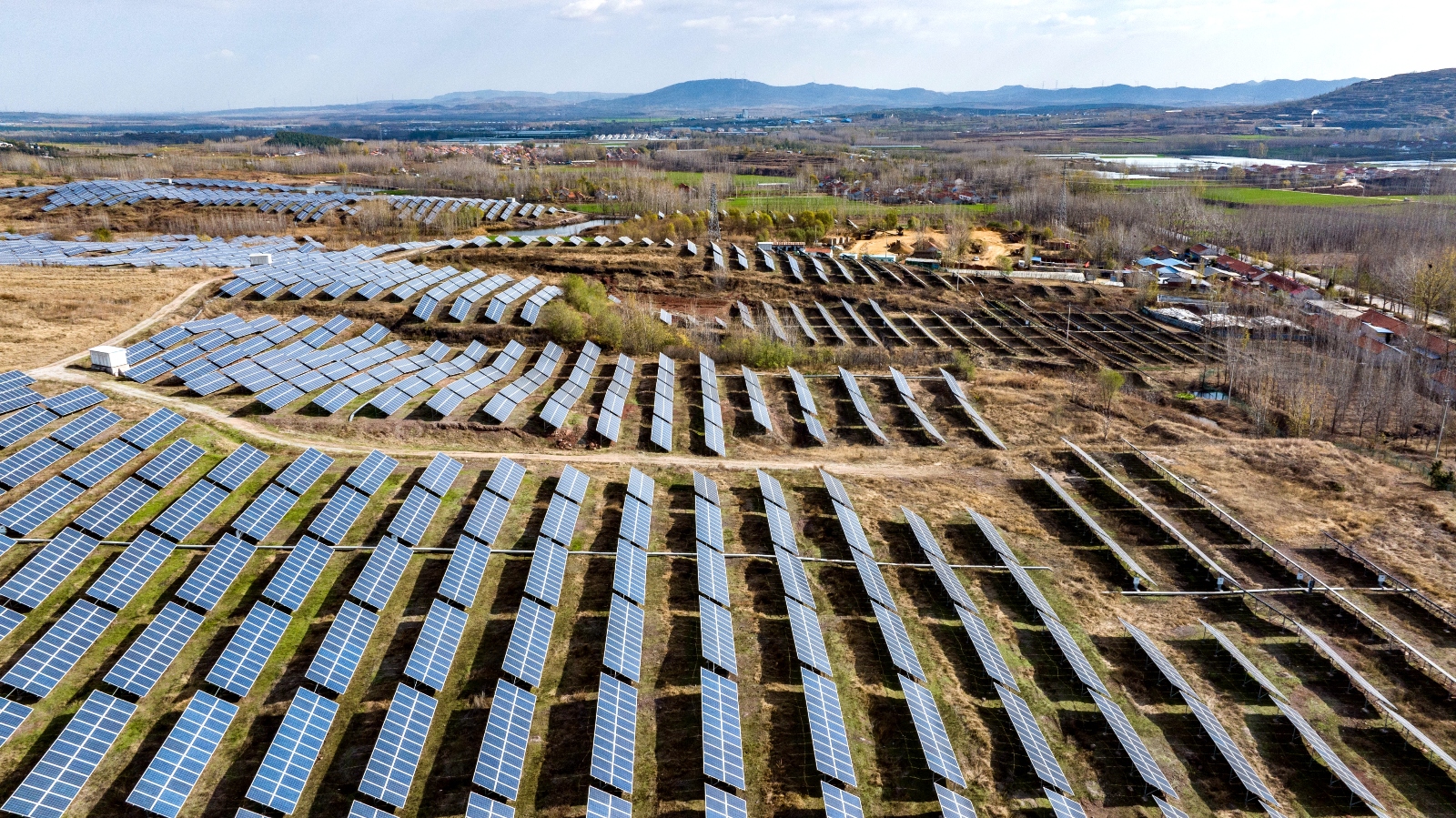
For example, the administration has taken steps to shield the American coal industry from the punishing blows of competition, environmental regulation, and the rising costs of mining. Trump has signed an executive order aimed at “reinvigorating America’s beautiful clean coal industry,” granted coal-fired power plants temporary exemptions from emissions limits, and ended a federal moratorium on coal leasing. But those interventions will do little in the long run to reverse a decline driven mainly by economics: The nation’s aging coal plants are becoming increasingly expensive to run while natural gas and solar energy have only gotten cheaper. And they certainly don’t help the president’s stated goal of reducing household energy costs.
To attempt to make sense of the president’s crusade to save coal is to assume there is a larger political strategy at play — which may not be the case, Freed said.
“There’s no reason to bring back coal other than to show that the administration can bring back coal,” he said. “It’s not like there’s this huge lobbying effort or donor base that will be of significant benefit to MAGA or Republicans if they do it.”
A style of governance motivated by political dominance is a good way to make headlines, but it’s not a particularly effective way to build a lasting legacy. Trump’s efforts to buoy coal may help the industry in the short term, but experts are broadly in agreement that coal can’t be “saved” without sustained support from the federal government. And an industry that can only survive with a coal-friendly Republican in the Oval Office isn’t exactly thriving.
“When you have to get the government to step in to put its thumb on the scale in order to help your industry,” Sean Feaster, an energy analyst at the Institute for Energy Economics and Financial Analysis, told my colleagues earlier this week, “it’s a sign that you’re not particularly competitive, right?”
For decades now, the pendulum of U.S. climate policy has swung left and right, reflecting the priorities of the sitting president. Trump’s climate blitzkrieg may be the starkest example yet of the benefits and drawbacks of that model. But despite his best efforts to stand out from the pack, the president’s first year back in office fits a well-worn pattern. As a result, his victories may not last much longer than his presidency.
A message from
Your support keeps our climate news free.
Grist is the only award-winning newsroom focused on exploring equitable solutions to climate change. It’s vital reporting made entirely possible by loyal readers like you.
At Grist, we don’t believe in paywalls. Instead, we rely on our readers to pitch in what they can so that we can continue bringing you our solution-based climate news. Donate today to keep our site free.