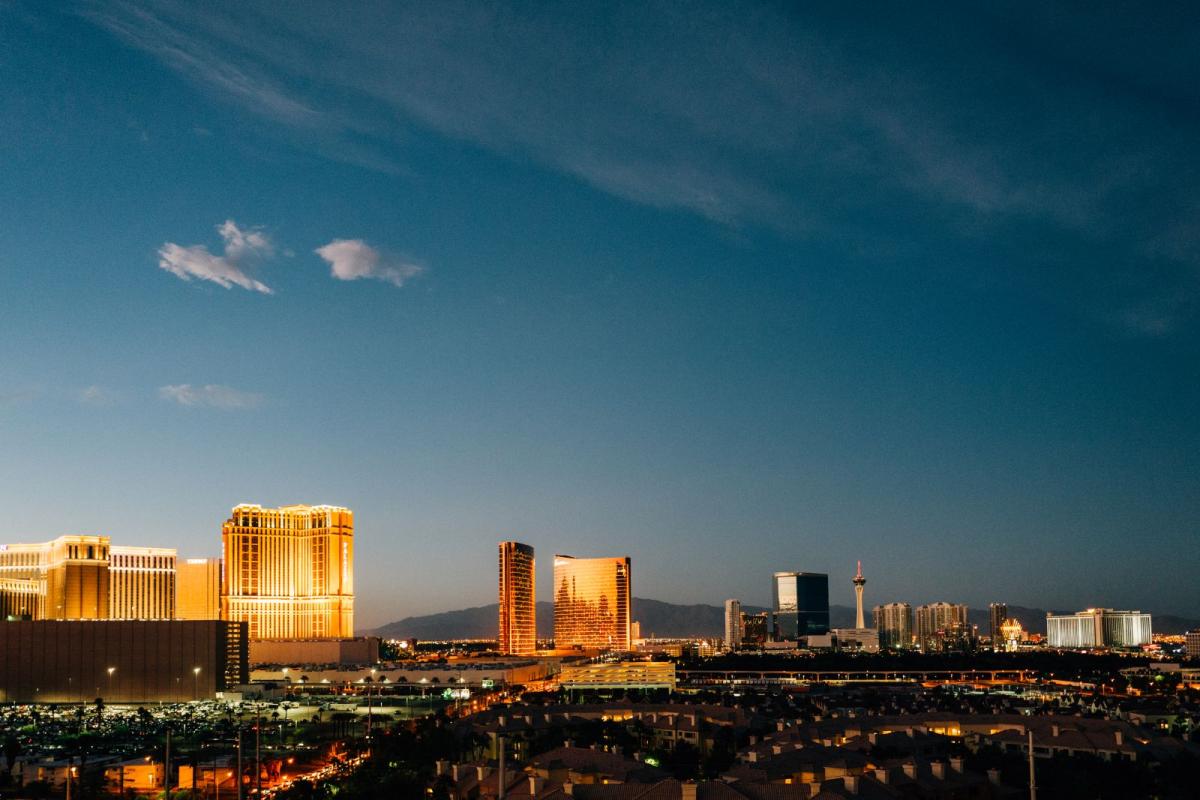
Nevada officials have long presented themselves as a voice for compromise and conservation in debates over the Colorado River. The Las Vegas area, home to two-thirds of the state’s population and most of its economy, has become a model of urban water conservation. As the river has declined from overuse and a decades-long drought exacerbated by climate change, southern Nevada water planners built extensive water reuse facilities and implemented tight restrictions on new turf and fountains, dropping the region’s per capita water use by 58 percent in roughly 20 years. Meanwhile, in interstate negotiations over the management of the Colorado River, state representatives have positioned themselves as bridge-builders, sometimes referring to themselves as the “middle basin” between the river’s divided upper and lower basin states.
When the federal government’s new management plan for the river was announced earlier this month, most observers thought Arizona, which stands to take the largest immediate cuts, would launch the first lawsuit over the plan’s implications for its water supplies. So it came as a surprise to many Colorado River experts when Nevada became the first to sue the federal government over the plan this week.
“I expected that there would be litigation, but it was surprising to me that Nevada fired the first shot,” said Anne Castle, former chair of the Upper Colorado River Commission.
Nevada’s lawsuit comes after more than two years of negotiations among the seven Colorado River states and the federal government over how to reduce water use on the declining river. The states failed to reach a long-term agreement before the river’s current management procedures expire in October, leaving the Interior Department to impose its own plan. The federal government’s plan largely relies on cuts to water use among the Lower Basin states — Arizona, Nevada, and California — to prop up water levels in the river’s largest reservoirs. Those reservoirs have been draining so quickly that the dwindling water depth could threaten hydropower and dam operations within months without intervention.
Nevada argues that the federal government’s plan illegally forces it to take too much of those cuts. In a worst-case scenario, the plan could allow for a 71 percent cut to the Las Vegas area’s water supply, the state argued, calling it an unacceptable risk to the state’s largest population center and economic hub. Nevada believes this outcome results from a misreading of the law and also claims the government didn’t consider important alternatives to such drastic cuts.
This worst-case scenario, which experts say is an interpretation of the plan’s implications by Nevada, would become possible if reservoir levels continue to drop and if Nevada couldn’t reach an agreement with Arizona and California to help it absorb more of those cuts. Those three states already have such an agreement, which is incorporated into the federal plan and meant to last through 2028, at which point the plan allows the states to update the operations with a new agreement. Without an agreement, the federal government will implement cuts based on preexisting water rights and agreements, cutting the most from Arizona and leaning increasingly on Nevada and California as potential shortages increase. The plan was created through a decision-making process required under the National Environmental Policy Act, or NEPA, which mandates that federal agencies gather public input and consider environmental and socioeconomic impacts of major decisions.

At first glance, the lawsuit seems like a departure from Nevada’s long-standing posture as the river’s conciliator, advocating consensus among the river basin’s seven states and 30 tribes, which hold vast water rights but are not formal members of interstate negotiations. John Entsminger, the state’s negotiator on the river, has repeatedly portrayed compromise as the state’s preferred path, telling a Las Vegas water conference just a week before the lawsuit that negotiation and cooperation were the state’s “first, second, and third choice.”
But Nevada has consistently paired its call for consensus with a warning that it would defend its water if negotiations failed, and the state’s case seems less surprising in light of the drastic cuts it claims are possible under the federal plan. Unlike other states, Nevada sends its Colorado River water almost entirely to urban areas. That means cuts fall directly on the Las Vegas area, while other states can cushion the blow by fallowing agricultural fields.
“There is an absurdity to a plan that would require Las Vegas to cut 71 percent. That’s existential. Of course Nevada sued,” wrote John Fleck, water expert and author in residence at the University of New Mexico’s Utton Center, in a recent blog post.
The lawsuit can also be read as a continuation of Nevada’s advocacy for consensus among the basin states and tribes. With the states unable to reach a long-term agreement and the federal government moving ahead with its own plan, Nevada is now using a different tool to make the same basic argument: that a federal decision without full buy-in from all the states can’t accommodate all their needs and find the innovative solution needed to manage the river.
Nevada argues in its suit that the legally required decision-making process that led to the federal plan failed to account for economic consequences to the Las Vegas area or consider creative alternatives to such drastic water cuts, such as changes to the structure of Glen Canyon Dam. Nevadans argue the process was too narrow and failed to consider solutions that would have avoided such massive theoretical water shortages in a major metropolitan area.
“Nobody can deny that the federal government did a ton of modeling and scenario analyses, but in terms of where the rubber meets the road, what were all the inputs, and what were some of the other analyses that could have been done?” said Kyle Roerink, former director of the Great Basin Water Network, an advocacy group for rural Nevada water resources.
How a court will see that issue has become complicated in the wake of a series of Supreme Court cases that reshaped the federal government’s responsibilities when conducting reviews under NEPA, especially with decisions that involve large, multifaceted infrastructure systems.
The suit, experts say, isn’t the cannonball-splash Colorado River experts have feared for years. That case, in which Arizona challenges the Upper Basin states — Colorado, New Mexico, Utah, and Wyoming — on whether they have met their obligations under the 1922 Colorado River Compact, may still materialize. Such a case could force judges to determine fundamental questions about who bears responsibility for the river’s decline. The resulting court battle could last years and remove states’ control over the fate of the river. Castle describes this scenario as where the “really big risks are.”
Still, Nevada’s lawsuit has cast uncertainty over the river’s near-term operations. Nevada hasn’t yet asked for an immediate restraining order against the federal government, which would request that a judge immediately vacate the plan. But if the state convinces a court to rule against the federal plan, it could throw a wrench in the initial two-year arrangement that was expected to keep Lower Basin states afloat in the near future.
“We are disappointed to see Nevada filing suit here, and are concerned about what the ramifications will be for the operations plans in 2027 and potentially 2028,” said Jay Weiner in an interview, speaking in his capacity as counsel for the Fort Yuma Quechan Indian Tribe, a senior water rights holder along the Colorado River in Arizona and California.
But experts agree this move, and even a theoretical Arizona suit, don’t strike a death knell for collaboration and negotiation on the river. States in the lower part of the basin may still negotiate regular arrangements to share shortages while litigation proceeds, while the possibility of a full seven-state agreement remains possible if negotiations resume.
Speaking at the Paris Las Vegas casino during the Colorado River Water Users’ Association conference in 2024, Navajo Nation Chief Counsel Bidtah Becker reminded the audience that water litigation and negotiation are not mutually exclusive: “You can get along and argue at the same time, and you develop long-term relationships through that.”