Climate Politics
All Stories
-
![]()
![]()
How to provide relief to rural Americans, create jobs, and lower emissions … all at once!
Most homeowners in the U.S. would come out ahead if they invested in energy efficiency improvements — new insulation, sealed windows, more efficient boilers, and the like. So why don’t they do it? Simple: the upfront costs are steep and the paybacks can take a long time. Many homeowners don’t have access to the capital […]
-
![]()
![]()
Big Oil uses fake ‘Americans’ to attack fake ‘energy taxes’
Cross-posted from the Wonk Room. Big Oil is using fake “Americans” to defend billions in tax subsidies. The American Petroleum Institute is running full-page ads in Politico and Roll Call that attack Congress for “new energy taxes”: Congress will likely consider new taxes on America’s oil and natural gas industry. These new energy taxes will […]
-
Citizens gather in Washington to end 'mountain bombing' of Appalachia
More than 200 citizen lobbyists from across the nation gathered in Washington, D.C. this week to urge Congress to pass legislation curbing mountaintop removal. This especially destructive form of coal mining involves blasting off the tops of Appalachian mountains and dumping the waste into headwater streams below, a practice known as “valley fills.” The activists […]
-
Why pricing emissions is the least important policy
Last week, I documented that the public supports trains and auto efficiency standards and renewable requirements, along with other policies sometimes slandered as “command & control” over emissions pricing. This week: some historical perspective on why the public is right, and mainstream environmental groups are wrong. Historically U.S. infrastructure, the basis on which this nation […]
-
Can EPA run a cap-and-trade program?
The Obama administration has made very clear that they want Congress, rather than EPA, to take the lead in creating a national response to climate change. Despite their oft-repeated preference for congressional action, recently, EPA head Lisa Jackson had to once again reiterate that the agency had no plans to do a carbon cap. There […]
-
![]()
![]()
American Petroleum tells lawmakers it supports carbon fee because it’s easier to demonize
Cross-posted from the Wonk Room. The effort of Senators John Kerry (D-Mass.), Lindsey Graham (R-S.C.), and Joe Lieberman (I-Conn.) to craft comprehensive clean energy legislation that caps global warming pollution has brought some positive words from Big Oil and their political allies. In particular, the senators are considering a proposal by ConocoPhillips, BP America, and […]
-
Is it a problem that more industry groups are meeting with key regulatory officials than enviros?
Some small hope has been renewed for a climate change bill out of Congress this year. But if the legislative process fails to produce a law, Obama’s regulatory levers will become more and more important — and how they evaluate new rules will come under scrutiny. So is it a problem that industry groups are […]
-
Sixty or Fifty?
60 or 50? So much depends on those numbers. The news went barely noticed a few weeks back: almost every school district in the state of Washington that put a levy or bond measure on the February ballot won voter approval. Despite the worst recession in decades, citizens stood behind their public schools and agreed […]
-
![]()
![]()
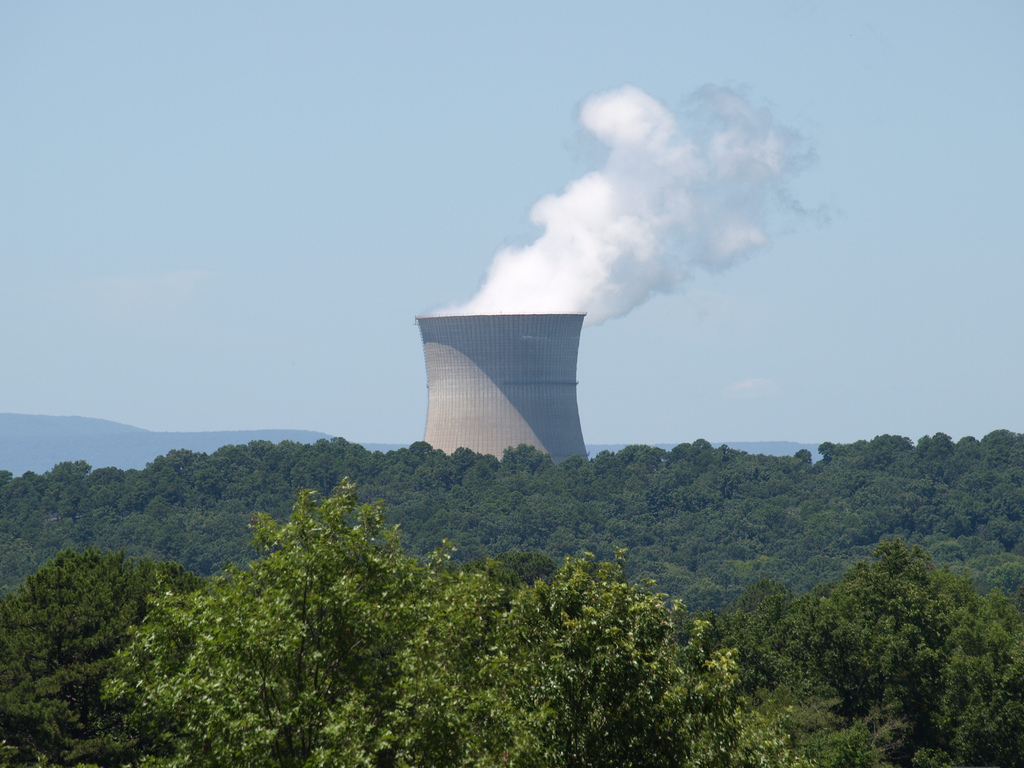
Don’t buy Obama’s greenwashing of nuclear power
On Feb. 16, while President Obama was in Maryland announcing an $8.3 billion taxpayer-backed loan guarantee for Southern Company to build two new nuclear reactors in Georgia, inspectors at the Vermont Yankee reactor were finding dangerously high levels of tritium, a radioactive cancer-causing chemical, in the groundwater near the plant. The next week, the Vermont […]
-
![]()
![]()
Using behavioral science to make smarter energy policy
On Friday, journalist John Fleck made a great point, comparing coverage of two new pieces in Science. One is about the latest potential climate disaster: methane venting from the seafloor in the Arctic. The second is about a promising new climate solution: using behavioral science to influence energy use. Not surprisingly, the disaster got tons […]