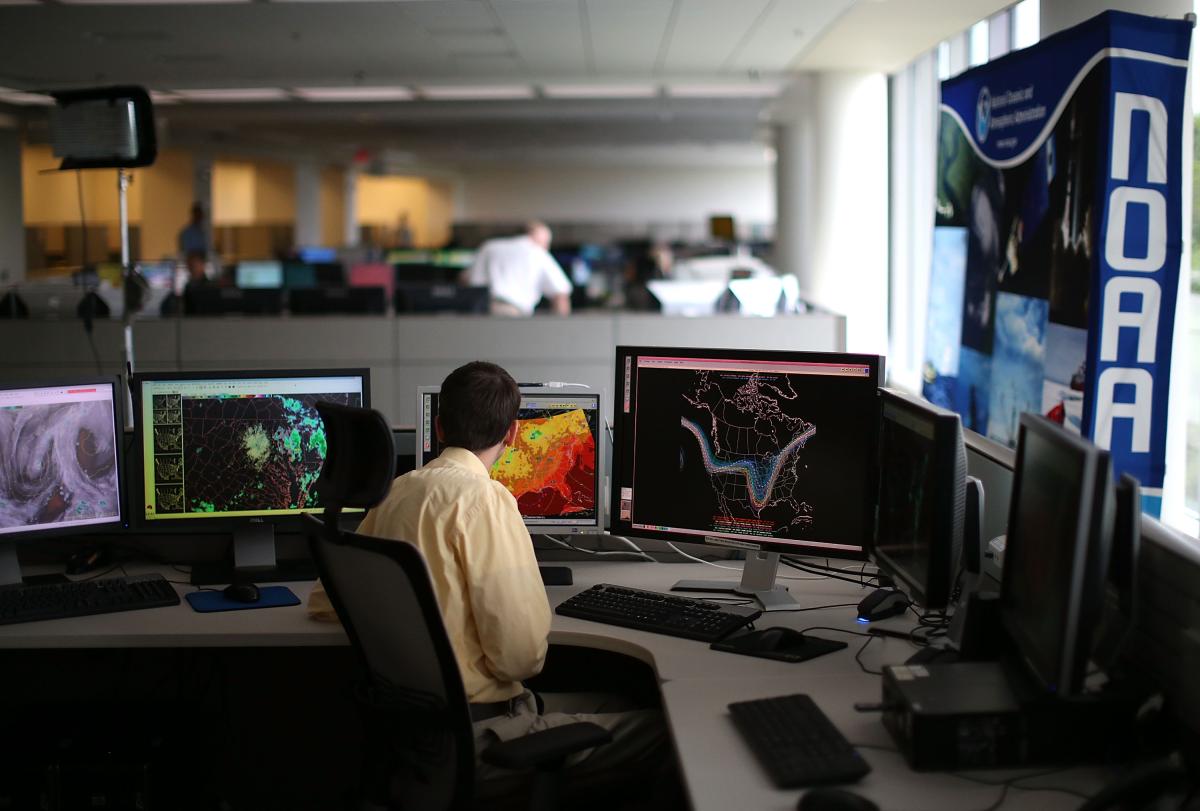
When Rebecca Lindsey was fired from the National Oceanic and Atmospheric Administration last February, the first thing she did was stew. Then she worried about what was going to happen to the website she and her team had built over the last decade and a half. Lindsey had long been the lead writer and editor, and more recently the program manager, of Climate.gov, a site that distilled the agency’s research on climate change into easy-to-understand, free resources for the public.
She was right to be concerned: Within a matter of months, the Trump administration had eliminated the rest of the staff supporting Climate.gov and shut down the website — ironically, to comply with an executive order calling for “restoring gold standard science.”
“I couldn’t stand the thought of it all being thrown away,” Lindsey said of the website, which had been used by teachers, community leaders, and policymakers. It had also given researchers in the government important insight into what everyday Americans needed to know about climate science and how to answer their questions effectively. Members of the former Climate.gov team met periodically to discuss what could be done to preserve the work. By the end of last summer, they’d decided to create an independent version of the site. It launched late last month with a new nongovernmental domain: Climate.us.
The intent behind Climate.us isn’t just to save what was on the Climate.gov website when it died, but to continue to update it with new visuals, explainers, features, and Q&As, making climate science relevant to people with resources that are vetted by scientists. “We just try to constantly take the pulse of what scientists say is valuable and important and needs to be talked about and explained,” Lindsey said.
Since its launch two weeks ago, the new site has gotten about 800,000 page views — an impressive number, considering that the old NOAA site had been getting about a million views a month, according to Lindsey.

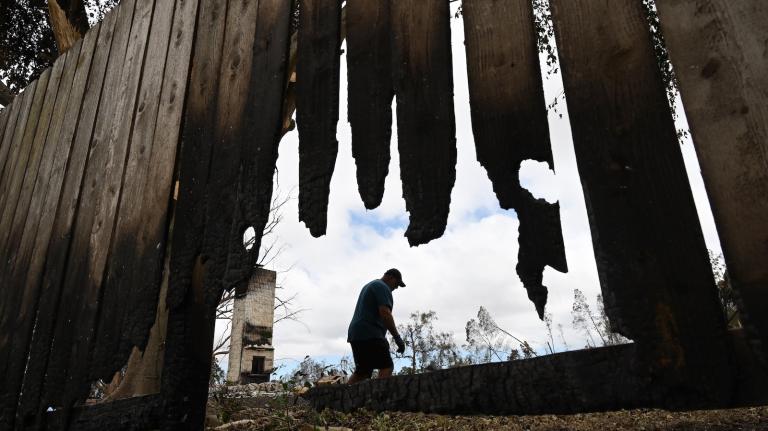
After President Donald Trump took office a second time, some of the most easy-to-understand resources to help people understand the warming planet disappeared. The National Climate Assessments, congressionally mandated reports released every four years that translated the science into warnings for policymakers and the public, vanished last summer. In December, the Environmental Protection Agency removed at least 80 webpages about the causes, indicators, and effects of climate change. The EPA webpage explaining the causes of climate change no longer lists human activity as a direct driver of global warming. It now emphasizes — misleadingly — natural processes.
Izzy Pacenza, who monitors government websites for the Environmental Data and Governance Initiative, called it “an all-out assault on climate information.”
Beyond the federal government
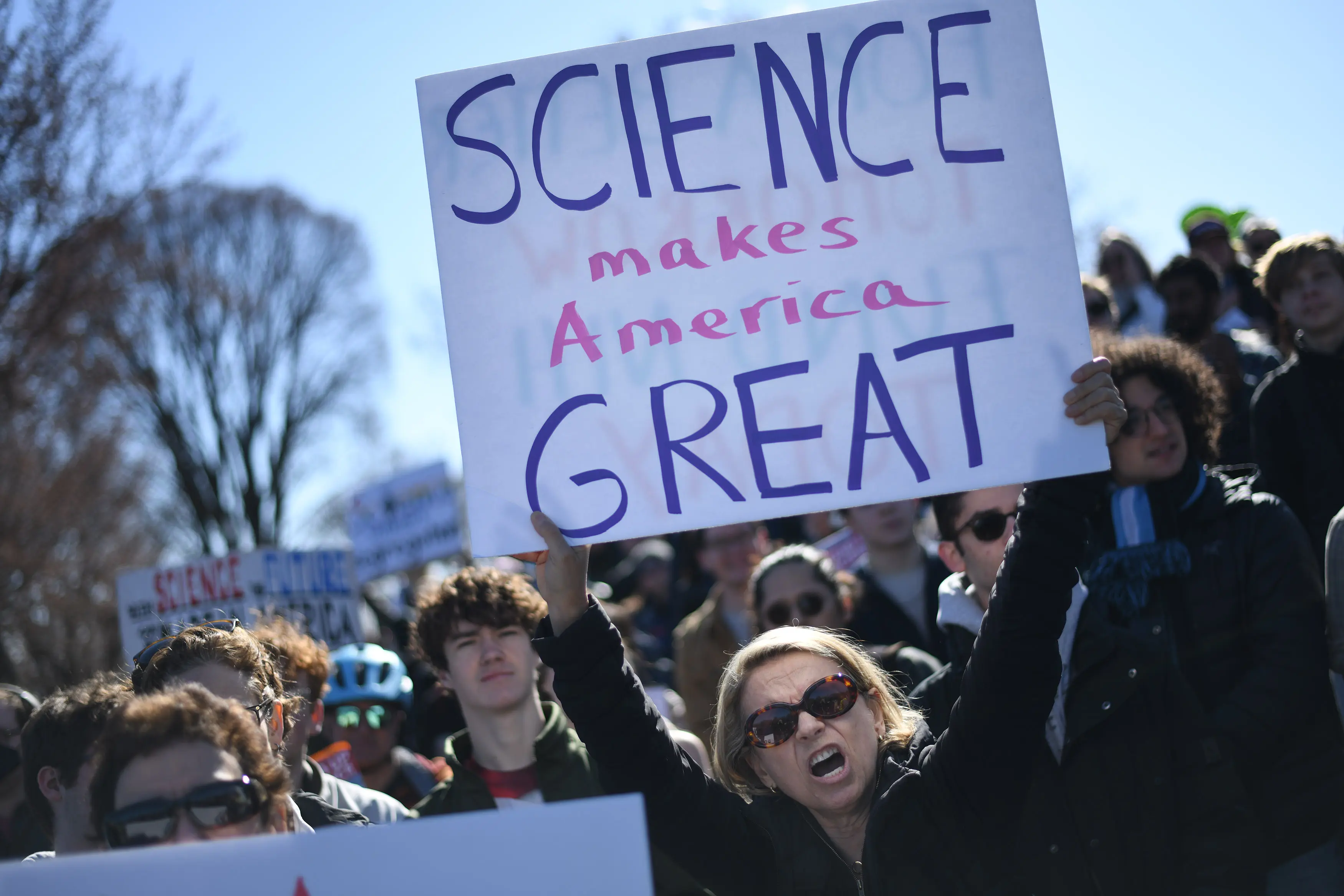
As organizations race to fill the gap left by the United States’ attack on its own scientific knowledge, many experts see an opportunity to shield research and data from the shifting winds of politics. The world’s science has relied on massive support from the U.S. government, but experts see a future that disperses some of its responsibilities, including how data is collected, handled, preserved, and used.
“It can’t just be the federal government anymore,” said Janice Lachance, executive director and CEO of the American Geophysical Union, the largest Earth and space organization in the world. “That’s proven to us that that’s unreliable, that there’s too much control in very few hands. And so how do we distribute this to like-minded organizations, civil society, and [nongovernmental organizations] who care about it?
The American Geophysical Union is trying to fill the void where it can. It has launched a global initiative to ensure that environmental datasets are more resilient against threats such as political interference, pulling together a group of about 100 experts around the world. It’s also working with the Intergovernmental Panel on Climate Change, the world’s leading authority on climate science, hosting an academic network that allows U.S. scientists to participate in key international reports even after the Trump administration withdrew from the group. Along with the American Meteorological Society, it has also released an invitation for climate manuscripts to maintain the research momentum of what would have been the sixth National Climate Assessment, with plans to eventually publish a special climate collection across different peer-reviewed journals.
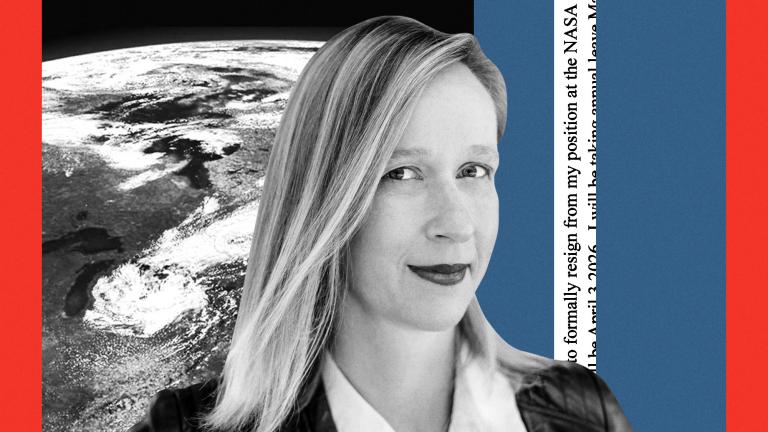
For many former federal researchers like Lindsey, trying to carry on their previous work at nonprofits and through independent initiatives has been challenging.
Adam Smith, who led a project tracking billion-dollar weather and climate disasters at NOAA before the agency ended the program last year, has taken the work over to the nonprofit Climate Central. The project is now up and running with all the same data and methods, but it took almost a year to get it fully where it was back at NOAA. The research is important, Smith said, because it quantifies the economic effects of extreme weather, helping to communicate the real-world consequences of climate change to businesses, policymakers, and the public. He is working to develop the project further, documenting disasters that cost $100 million or more back to 1980.
Creating an independent copy of the Climate.gov site wasn’t easy, either. Researchers who had no experience fundraising had to crowdsource money and court philanthropists to back their work, Lindsey said. Web developers had to update all the old links that directed people to the defunct original site. The Climate.us team wanted independent scientific review for their materials, as they had done at NOAA, but some scientists declined to put their names on a defunded federal project because of unwanted publicity or fear of retaliation.
Lindsey managed to revive the site as one of just three full-time staff, compared to roughly eight people who were running the operation under NOAA full-time.
“In a lot of ways, I feel I’m back in 2010 when we first started building Climate.gov,” she said. “There are days when I think, ‘What am I doing? Do I have it in me to start this all over again?’”
These efforts to save climate information are crucial, experts said, but it’s tough for a patchwork of nonprofits, universities, and independent initiatives to fill the vacuum left by the federal government removing the most accessible resources about climate change. “No nonprofit is going to have the reach of the federal government, and so I think that there’s a massive gap in terms of people learning about where they can find these resources,” said Gretchen Gehrke, an environmental and public information researcher who co-founded the Environmental Data and Governance Initiative. Philanthropic funders can be fickle, too, raising questions about financial sustainability. “Truly, all of us are scrambling for funding and underfunded,” she said.
Nonprofits also don’t have the instant recognition that the government does, which can make it harder to earn public trust. When Smith started running the billion-dollar disaster project at Climate Central, for example, he found that some people didn’t know that anyone from NOAA was still involved. Now, the top of the website makes it clear that Climate Central is continuing NOAA’s dataset, with the same methods and the same lead scientist.
From rescue to reform
For information and data advocates, the current crisis is a wake-up call. “Guess what? We have really terrible and really insufficient data policies,” Gehrke said. As the Trump administration tests those vulnerabilities, it gives these stakeholders insight into what needs to change to protect government information from the political whims of future administrations. That could include writing specific requirements for agencies into law and building up Congress’ oversight capacity and enforcement mechanisms.
When public-facing platforms like Climate.gov disappear, people tend to wonder, How can we bring this product back? without examining the structural failures that led it to be vulnerable in the first place. Sonia Wang, senior director at the Data Foundation’s Center for Climate and Environmental Data, uses the metaphor that people usually focus on the fountain — the shiny map or platform — rather than the plumbing behind it. This invisible infrastructure is much more fragile than people realize, Wang said, sometimes relying on one person who’s been maintaining a dataset for decades, or relationships the federal government has built over time.
“This was always a problem, regardless of administration,” Wang said. “I think we’re just seeing more of the cracks be exposed now with the rapid decline in some of our federal partners being able to actually carry on their work without the staff.”
As organizations work to shore up the plumbing of the data that helps us understand the world, there’s increasingly a sense that they can’t count on government support like they did in the past. “It happened in the United States last year, and it continues this year, but it could happen anywhere,” Lachance said. “And we just don’t think that critical scientific data should be vulnerable to the political winds of the day.”