Grist List
-
![]()
![]()
For the first time ever, renters can get solar incentives, too
There's a reason California is the largest solar market in the country -- I mean, aside from its abundance of sun. Namely, its regulators keep coming up with new ways to allow people to DIY-up their own distributed energy systems. Their latest brainstorm is a measure that allows renters to take advantage of the same solar incentives as people who own their own homes.
-
![]()
![]()
Panasonic capitalizes on earthquake by replacing factories with ‘smart towns’
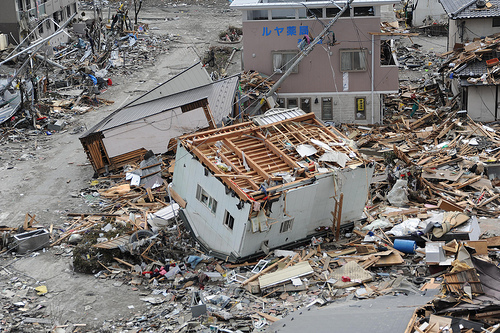
Panasonic, the largest appliance maker in Japan, has announced plans to shutter 20 percent of its 230 factories in order to cut costs. But rather than lose that land, the company is capitalizing on Japan’s post-earthquake need for housing. It’s replacing the factories with “smart towns,” featuring "solar panels, energy-efficient refrigerators and rechargeable batteries," the company tells Bloomberg.
-
![]()
![]()
Most of the U.S. could be energy self-sufficient
With a little development elbow grease, we could be in pretty good shape for the day the energy apocalypse comes and states have to split into small self-reliant compounds. The majority of U.S. states -- 31 of the 50 -- could be completely self-sufficient with locally-produced renewable energy, according to a report from the Institute for Local Self-Reliance. In fact, most states could produce many times more energy than they need. They've got South Dakota down as having the potential to produce 32,431 percent of its energy usage! (There's also a bigger map and an interactive map that is actually not all that interactive as far as I can tell.)
-
![]()
![]()
2011 natural disasters cost a record $265 billion
Politicians might not believe in climate change, but insurance companies do. They track disasters, and it turns out that disasters just in the first six months of this year already cost the world more than any other year of disasters on record.
The price tag for 2011 disasters reached $265 billion. -
Critical List: Carmageddon is a waste of money; Napa winegrowers aren't afraid of climate change
Carmageddon: L.A.'s shutting down a major highway to add a carpool lane, which is probably a waste of $1 billion in transit funding.
Say it ain't so, Sandra Lee! The Food Network star spoke to a petroleum industry group and won't say why. Maybe she just wants to use crude oil as an ingredient -- it’s not edible, but when has that ever stopped her?
Napa Valley can totally take climate change: Wine growers say, "We'll be able to adapt." Bacon panic: Still on. -
![]()
![]()
Jail time for gardening: Now officially a trend
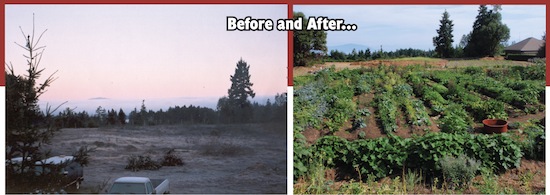
Hey, remember the woman threatened with 93 days in jail for growing a garden in her front yard? She could have a cellmate! Dirk Becker of Lantzville, British Columbia turned his scraped-dry gravel pit of a property into a thriving organic farm, so of course he's facing six months of jail time. Why? Well, the thing is, this farm was full of DIRT. You can't have dirt in a yard! It's unsanitary.
-
![]()
![]()
There are now more green jobs than brown ones, and they pay better
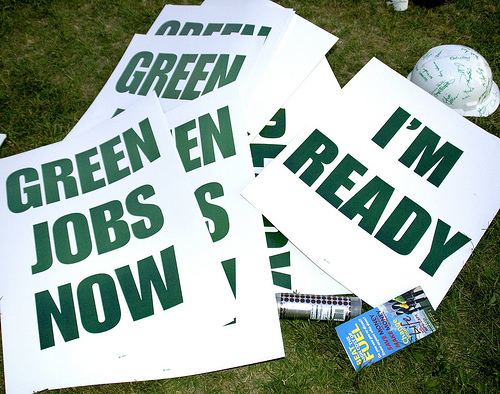
Green technology and clean power are now employing more people than the fossil fuels industries, says the Brookings Institution. A separate analysis of the same data indicates that the cleantech sector of those green jobs offer median wages that are 20 percent better than regular jobs. And the rate of job creation in this sector was twice that of the regular economy from 2003-2010. All this despite the notoriously inconsistent support for green jobs in the U.S.!
-
![]()
![]()
Passive house mini-boom in NYC heralds furnace-free future
New York City and the rest of the tri-state area are getting their first wave of "passive houses," a type of construction in which a building is so well-insulated that it doesn't require heating in the winter.
-
![]()
![]()
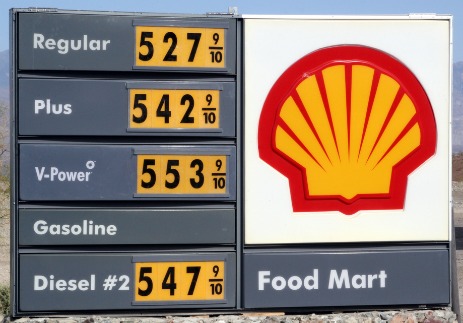
The true cost of gasoline? $13 a gallon
What's the true cost of the emissions from every gallon of gasoline, when you add up all the negative environmental impacts they'll lead to, from poor air quality to catastrophic climate change? Nine dollars a gallon. Add that to what you're typically paying at the pump right now, and it means that the real cost of a gallon of gas to the planet and our future is easily into double digits.