Grist List
-
![]()
![]()
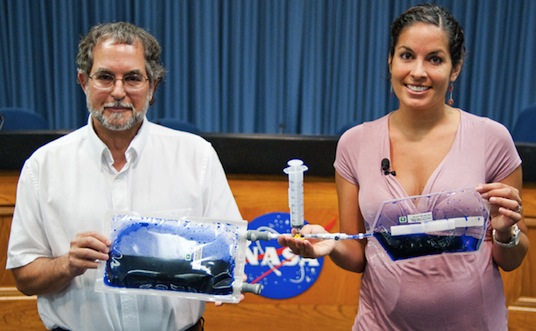
NASA's zero-power gadget turns urine into Capri Sun
Here's the big innovation that will be accompanying the space shuttle on its final launch this Friday: A zero-energy still that converts urine into a sweet, drinkable liquid. Still want to be an astronaut when you grow up?
-
![]()
![]()
Environmental education center built out of recycled materials

An LA-based design think tank called APHIDoIDEA has an idea about how to build an environmental education center that practices what it preaches. The designers imagined an Environmental Center of Regenerative Research & Education -- or eCORRE -- Complex that would teach visitors about green ideas like solar energy and passive cooling techniques. It would have classrooms, offices, an exhibition hall and a public plaza. Here's the cool part: the building would be made of 65 shipping containers.
-
![]()
![]()
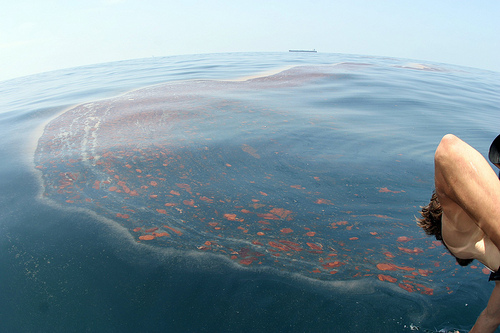
Documents show Exxon downplayed time it took to seal Yellowstone spill
ExxonMobil told federal officials and Montana Gov. Brian Schweitzer that they had sealed the pipeline leaking oil into the Yellowstone River within 30 minutes. But federal documents show that sealing the pipe took 56 minutes -- almost twice as long as the company originally said.
The company told the AP that the error came about because the Exxon representative who briefed officials was providing information without the benefit of notes. In other words, not really intended to be a factual statement. -
![]()
![]()
Get yourself sterilized and win a free car
India has a massive and worsening overpopulation problem -- the country has added 181 million people in the last 10 years. So health officials in the state of Rajasthan are trying to lure people into voluntary sterilization by taking advantage of one of humankind's biggest weaknesses: expensive sh*t. In a three-month program that they hope will attract 30,000 eager non-breeders, officials are offering cars, motorcycles, televisions, cash, and other incentives for people to put their junk under the knife.
-
Critical List: Republicans plan to defund the environment; no one likes the EPA
House Republicans want to defund all kinds of environmental activity -- the EPA, the Department of the Interior, the Forest Service. You know, just anything having to do with the outside.
And the USDA thinks that bioengineered bluegrass doesn't fall within its regulatory sphere, which means companies could grow the stuff without any regulation.
Exposing mice to air pollution makes them dumber and more depressed.
So it's probably good for everyone that the EPA is putting new regulations on coal-fired power plants that should reduced emissions of sulfur dioxide by 73 percent and nitrogen oxides by 54 percent from 2005 levels. Should Republicans succeed in cutting the agency’s budget yet again, this action could be little more than an empty gesture, though. -
![]()
![]()
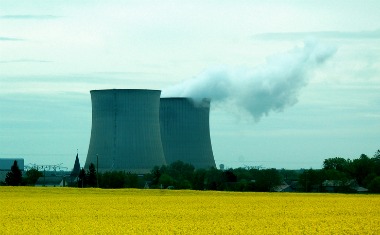
Nuclear power is fine — it's corporate power that's dangerous
In the Guardian, George Monbiot argues that nuclear power was the least of Fukushima's problems. Sure, the nuclear industry is corrupt and regulation-resistant -- but name a power industry that isn't. When it comes to health threats, says Monbiot, the conscienceless scumbags in the nuclear industry are miles ahead of all the other conscienceless scumbags.
-
![]()
![]()
Despite recession, Californians install solar panels at record-breaking pace
While the drill-baby-drill contingent was bitching about reliance on foreign oil, that hacky-sack full of smelly Nancy-Pelosi-electing hippies known as California quietly installed more solar in 2010 than any other state, ever.
-
![]()
![]()
500 MW of distributed solar could have prevented blackout that affected 55 million
The massive blackout of 2003, which affected 45 million people in the northeast United States and 10 million more in Ontario, could have been prevented by just 500 megawatts of distributed solar, says John Farrell of the Institute for Local Self Reliance. For reference, California installed almost 200 megawatts of distributed solar in 2010 alone.
-
![]()
![]()
Limitless supply of rare earth elements found in ocean — if we can get them
The seabed of the Pacific ocean contains 1,000 times as much tonnage of rare earth elements as all the deposits on land, says a new paper published in Nature Geoscience. The elements, which are key to cleantech innovations like solar panels, batteries and electric motors, have been in short supply lately as China, pretty much the world's sole supplier, clamps down on exports.