technology
-
On the verge of revolutionizing the U.S. power grid
Rachel Maddow, a kindred spirit whose heart beats a little faster at the word "infrastructure," has been campaigning recently for more infrastructure spending in the stimulus package. Pointing to the mass blackouts caused by Midwest storms, she asked the other day on her MSNBC show, "Can I put in a request for a grid that works, even in the snow?"
Yes, Rachel, you can! What you want is a smart grid rich in distributed energy resources.
First, it is important to be clear that we have two power grids: a transmission grid, which consists of the big lines carrying power from distant generating stations, and a distribution grid, which carries power in the local area to homes, businesses, etc. Failures on the transmission grid, that's T to us geeks, lead to the really big blackouts like that in the Northeast in August 2003. But most failures -- around 90 percent -- happen on the distribution, or D grid, and they are usually not well publicized.
Electric Power Research Institute estimates that, overall, blackouts and other power disturbances cost the U.S. economy in the range of $119-188 billion (see p. ES-3 [PDF].) By comparison U.S. power customers paid a total of $343.7 billion for electricity in 2007.
The shocking fact is that the costs of an aging and technologically backward power grid adds something like one-third to one-half to our annual electricity costs. Ghost Town Louisville is a poster child, but most power problems do not receive national publicity.
-
Seattle man invents rooftop wind turbine
 Seattle inventor Chad Maglaque has a dream. A dream that he will one day be able to walk into a big-box store and purchase a rooftop wind turbine along with his giant jar of mayonnaise.
And surprisingly, his dream may not be so far off. Maglaque has actually put together just such a wind turbine, which he's named The Jellyfish, and he could soon be cashing a $10 million check to make many, many more. How? Maglaque submitted the design to Google's "Project 10 to the 100th" contest, which honors the company's 10th birthday by offering five innovators $10 million for simple ideas that could change the world. The categories for the contest range from energy and environment to health and education, and even a catch-all category for "everything else."
Of course, hundreds of thousands of other ideas have also been submitted, and Google folks are still narrowing down the top picks. But starting March 17, the public will be able to vote for their favorite idea out of the 20 semi-finalists. You can even ask Google to remind you to vote.
-
Magnetically levitated wind turbines
Some surprisingly cool green tech, brought to you by ... Jay Leno?
(via Jetson Green)
-
Greenpeace grades gadgets unveiled at CES
LAS VEGAS — Consumer electronics manufacturers are making greener products than a year ago but more progress needs to be made before they can claim a truly environmentally friendly product, Greenpeace said Friday. In its second greener products survey, “Green Electronics: The Search Continues,” the environmental activist group assessed the progress made by consumer electronic […]
-
![]()
![]()
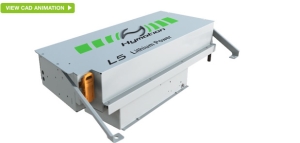
Consumer Reports knocks plug-in hybrid Hymotion L5 conversion kit on efficiency, value
Is a product doomed if the highest praise its evaluators can offer is "viable"?

In the February issue of Consumer Reports, CR editors tested a 2008 Toyota Prius equipped with a Hymotion L5 conversion kit sold by A123 systems of Watertown, Mass. The conversion kit failed to deliver its promised 100 mpg, but did spike the prius' average efficiency of 42-mpg up to 67 mpg for the first 35 miles of driving. But at a $11,000 a pop, CR concluded that the kit "won't save the consumer money overall."
For the truly plugged-in, however, Hymotion's lithium-ion battery conversion kit is only one of the first forays into the world of commercial plug-ins. Here in the states, 3Prong Power of Berkeley, Calif. offers a conversion with old-fashioned lead-acid batteries that promises a 10-mile all-electric range for a more affordable $6,700. And around the Pacific Rim, Chinese automaker BYD Auto presented the world's first mass-produced plug-in hybrid in December of 2008.
(h/t: autobloggreen)
-
VRB's long-life flow battery was a reliable electricity storage alternative for renewable energy
VRB Power applied for insolvency in November [PDF]. A combination of a bad economy and a product that was more suited for future markets than today's electricity generators dealt VRB the final blow. This is bad news for the green energy community.
VRB built flow batteries -- utility scale batteries that could last for over 10,000 full charges and discharges. Cost was from $650 per kWh for small-scale systems to as a little as $300 per kWh for large-scale systems.
Admittedly the latter price was for larger systems than anyone ever ordered. It was the perfect utility-scale battery: too heavy for automobile use, but rugged and tolerant of cold, heat, and shocks. It required minimal operations and maintenance.
Even at current costs, these flow batteries could have played a key role in an energy grid based on variable sources. In today's world, it found a niche market at UPS for remote systems where maintenance was difficult, and for telecom use. Unfortunately its greater reliability could not make up for its higher cost. It was an excellent product, unfortunately mostly suited to a electric system that does not yet exist.
We can only hope the battery does not end up in patent hell -- owned by somebody who neither licenses it nor develops it themselves.
-
With heat pumps, smart cooperation is as important as technology
Commenter Pangolin made a point about the cost of ground source heat pumps, an energy-saving technology, in his comment about Hansen's open letter: "If I cluster installation of my geo-exchange systems (4 homes) I can realize significant savings in the greatest cost of the system, the drilling for the ground loop. If I bundle systems into neighborhood or block thermal-service units unit costs go down again."
Just so. To take an extreme example, a neighbor of mine had a ground source heat pump installed for $15,000 in a single-family residence (her home was ideal for the technology in a number of ways). Normally such systems run $20,000-$40,000. However, that cost can drastically be altered when shared. In 1992, a HUD Oklahoma apartment complex, Park Chase Apartments [PDF], installed heat pumps for 348 units for a cost of around $6,800 per unit -- about $10,000 per unit in 2009 dollars.
Even on the four-unit basis Pangolin mentions, the price could be lowered not only by a shared ground loop, but by shared pumps, and by timing installation to coincide with road repair, and placing the loop under the street. I suspect that done on the block level or even along a single street the length of a block, this could lower costs to $15,000 per unit.
This is not a technological change in the usual sense. But it makes use of smart cooperation to use technology more effectively. And this is only one of many cases where we can use cooperation to drastically lower the cost of the investments we need to make to replace fossil fuels. You can look at it as a form of technology if you want to. Certainly it is innovation -- an innovation in social relations rather than machines.
-
Why the No New Coal Plants movement should be awarded the Virgin Earth Challenge prize
Dear Mr. Branson:
On Feb. 9, 2007, you and Al Gore announced the Virgin Earth Challenge at a London press conference:
The Virgin Earth Challenge is a prize of $25 million for whoever can demonstrate to the judges' satisfaction a commercially viable design which results in the removal of anthropogenic, atmospheric greenhouse gases so as to contribute materially to the stability of Earth's climate.
It was announced that the panel of judges would consist of Richard Branson, Al Gore, Crispin Tickell, James Hansen, James Lovelock, and Tim Flannery.
I'm sure that when you dreamed up the prize, you were probably thinking about how to motivate the proverbial garage inventor or moonlighting chemist to come up with a new planet-rescuing technology in the narrow sense of the term -- perhaps some sort of chemical reagent, gene-tweaked algae, or super-absorbent biochar that could suck carbon dioxide molecules out of the atmosphere.
But it's time to do some out-of-the-box thinking on climate change, starting with what sort of technological solutions we're willing to take seriously. Let's start with the idea of technology itself.
Wikipedia's definition is as good as any:
A strict definition is elusive; "technology" can refer to material objects of use to humanity, such as machines, hardware or utensils, but can also encompass broader themes, including systems, methods of organization, and techniques.
Let me propose a technology that I take very seriously, even if people like Rudolph Giuliani don't: grassroots community organizing.
The "community organizer" that Giuliani and Sarah Palin mocked at the Republican Convention in September is now about to be sworn in as the 44th President of the United States. Indeed, even seasoned politicos admitted to being fairly dazzled by the ground game displayed by Obama in winning the election against far more experienced politicians.
That was community organizing on display. And yes, it really is a technology. In fact, in solving climate change, it may be the only technology that really matters.
Two years ago, at about the time you were announcing your Virgin Earth Challenge, a bureaucrat named Eric Schuster at the U.S. Department of Energy was releasing the latest of his "Tracking New Coal-Fired Power Plants" spreadsheets. The document showed 151 coal plants under development [PDF] across the country.
-
The VC models are to blame, not the green technologies
It’s worth reviewing this great presentation from the folks at @Ventures: [vodpod id=Video.16097730&w=425&h=350&fv=] If they’re right — as I believe they are — we are soon going to see lots of greentech venture capital funds lose money. Given the potential for that loss to be skewed as “green technologies aren’t profitable” rather than “greentech VCs […]