Climate Food and Agriculture

Climate + Food and Agriculture
EDITOR’S NOTE
Grist has acquired the archive and brand assets of The Counter, a decorated nonprofit food and agriculture publication that we long admired, but that sadly ceased publishing in May of 2022.
The Counter had hit on a rich vein to report on, and we’re excited to not only ensure the work of the staffers and contractors of that publication is available for posterity, but to build on it. So we’re relaunching The Counter as a food and agriculture vertical within Grist, continuing their smart and provocative reporting on food systems, specifically where it intersects with climate and environmental issues. We’ve also hired two amazing new reporters to make our plan a reality.
Being back on the food and agriculture beat in a big way is critical to Grist’s mission to lead the conversation, highlight climate solutions, and uncover environmental injustices. What we eat and how it’s produced is one of the easiest entry points into the wider climate conversation. And from this point of view, climate change literally transforms into a kitchen table issue.
Featured
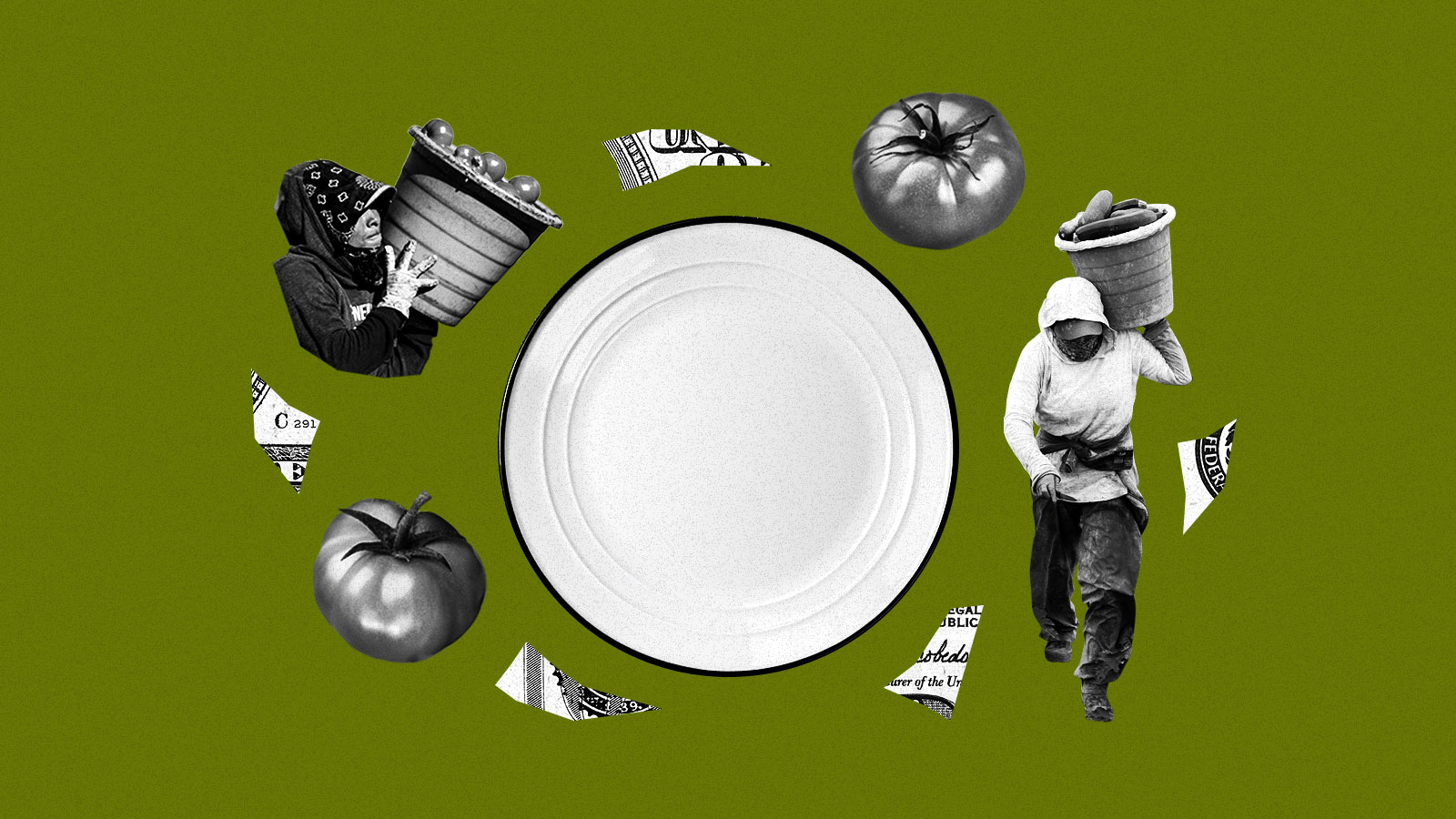
The people who feed America are going hungry
Climate change is escalating a national crisis, leaving farmworkers with empty plates and mounting costs.
Latest Articles
-
Traditional print media and complex issues
On Saturday I received an email with a link to an article by Lisa Stiffler in Friday's Seattle Times. I'm going to use it to demonstrate how newspapers can muddy the water when it comes to complex issues.
First, her article is a perfectly good one -- and a very typical one. You can't put a hyperlink on paper. You can't afford to waste space for footnotes. You are constrained by a word count. You also have to craft a story, keep it local, and do your best not to show whatever bias you may have (and we all have our biases). A quick check by an editor hardly qualifies as peer review. After all, it's a newspaper, not a research article. Finally, there is no commenter feedback to point out errors. Letters to the editor are, statistically speaking, a waste of time.
Here is a quote from The New Yorker that I scrounged off one of Dave's link dumps:
Journalism works well, Lippmann wrote, when "it can report the score of a game or a transatlantic flight, or the death of a monarch." But where the situation is more complicated ... journalism "causes no end of derangement, misunderstanding, and even misrepresentation."
-
The newsweekly uncorks a whopper in defense of crop-based fuels
The massive biofuel mandate embedded in the 2007 Energy Act, signed amid much bipartisan hoopla, is coming under heavy fire. The Wall Street Journal reported recently that two dozen Republican senators have formally asked the EPA to lower the mandate in response to heightened food prices (a power granted to the agency in the Energy […]
-
Indian camels celebrate high oil prices
Rising oil prices have many Homo sapiens in a tizzy, but at least one species is celebrating high fuel costs: the camel. Finding it spendy to fuel their tractors, farmers in India are turning to ungulate power. “It’s excellent for the camel population if the price of oil continues to go up because demand for […]
-
Other conservation tools at stake in the Farm Bill, too
Although recent reports indicate that the new farm bill will provide a $4 billion increase for voluntary farmer conservation programs, there's more to the conservation policies in the bill than just money. Recent attempts by the conference committee to dramatically weaken the new Sodsaver provision are just one example of the one-step-forward, two-steps-backward approach to conservation the farm bill conference seems to be taking.
The Sodsaver provision was designed to help limit the incentive that subsidy and disaster payments create for farmers to bring new, often environmentally fragile, land into production. The House and Senate versions of the farm bill both contained this new provision, which would have prohibited crop insurance and non-insured disaster payments for production losses to producers in any state who plowed up native grasslands in order to plant crops. This would have also prevented these farmers from receiving regular disaster payments, because farmers must first have crop insurance in order to be eligible for disaster payments.
-
I read a letter to the editor, the other day, I opened, and read it, it said they was suckas
A trio of fine letters in The NYT today, taking Richard Cohen to task for his reflexive praise of sugar-cane ethanol.
-
A review of Claire Hope Cummings’ Uncertain Peril
In October 1996, a spokesman for Monsanto told Farm Journal why his company was buying up seed companies left and right: "What you're seeing is not just a consolidation of seed companies, it's really a consolidation of the entire food chain."
 Today, Monsanto is the world's largest seed company -- and makes more money selling seeds than chemicals. The company's biotech seeds and traits accounted for 88 percent of the worldwide area devoted to genetically modified seeds in 2006 -- and Monsanto earns royalties on every single one. No one needed to tell Monsanto: Whoever controls the first link in the food chain -- the seeds -- controls the food supply.
What better way to understand the perilous state of industrial food and farming than by starting with the seed? Claire Hope Cummings' new book, Uncertain Peril: Genetic Engineering and the Future of Seeds is a sharp and elegant analysis of the biotech seed debate.
-
The rhetoric of population in the hunger crisis
Perhaps you saw the recent UNESCO report on the future of agriculture. It calls for a major paradigm shift in agriculture away from fossil fuels toward organic agriculture and greater equity of distribution. Wow, I wonder why no one ever thought of that before?
Seriously, this is the largest single report ever to tell us what we already knew: the status quo is not an option. That is, we cannot go into the future as we are. We all know this on some level.
-
Nitrogen fertilizer is in short supply
Yet another phenomenon tightly tied to soaring food prices: the price and availability of fertilizer. Global consumption of cheap chemical fertilizer has leapt an estimated 31 percent from 1996 to 2008, boosting modern agriculture around the world. But now, fertilizer is pricey and in short supply, leaving farmers scrambling to sufficiently feed their crops. “Putting […]
-
Independent report calls for major reforms to industrial animal farming
Photo: FarmSanctuary.org Industrial animal farming in the United States needs to make many major reforms in order to protect public health and the environment, an independent two-and-a-half-year study by the Pew Charitable Trusts and Johns Hopkins Bloomberg School of Public Health has concluded. The report criticized the widespread use of antibiotics to promote animal growth, […]
-
Let’s raze more Amazon rainforest!
Blairo Maggi is a powerful man in Brazil. He owns a company called Grupo Andre Maggi that runs vast soybean plantations in the state of Matto Grasso, which straddles the Amazon rainforest and what the Nature Conservancy calls “the world’s most biologically rich savanna.” The New York Times has called Maggi “the largest soybean grower […]
