Climate Food and Agriculture

Climate + Food and Agriculture
EDITOR’S NOTE
Grist has acquired the archive and brand assets of The Counter, a decorated nonprofit food and agriculture publication that we long admired, but that sadly ceased publishing in May of 2022.
The Counter had hit on a rich vein to report on, and we’re excited to not only ensure the work of the staffers and contractors of that publication is available for posterity, but to build on it. So we’re relaunching The Counter as a food and agriculture vertical within Grist, continuing their smart and provocative reporting on food systems, specifically where it intersects with climate and environmental issues. We’ve also hired two amazing new reporters to make our plan a reality.
Being back on the food and agriculture beat in a big way is critical to Grist’s mission to lead the conversation, highlight climate solutions, and uncover environmental injustices. What we eat and how it’s produced is one of the easiest entry points into the wider climate conversation. And from this point of view, climate change literally transforms into a kitchen table issue.
Featured
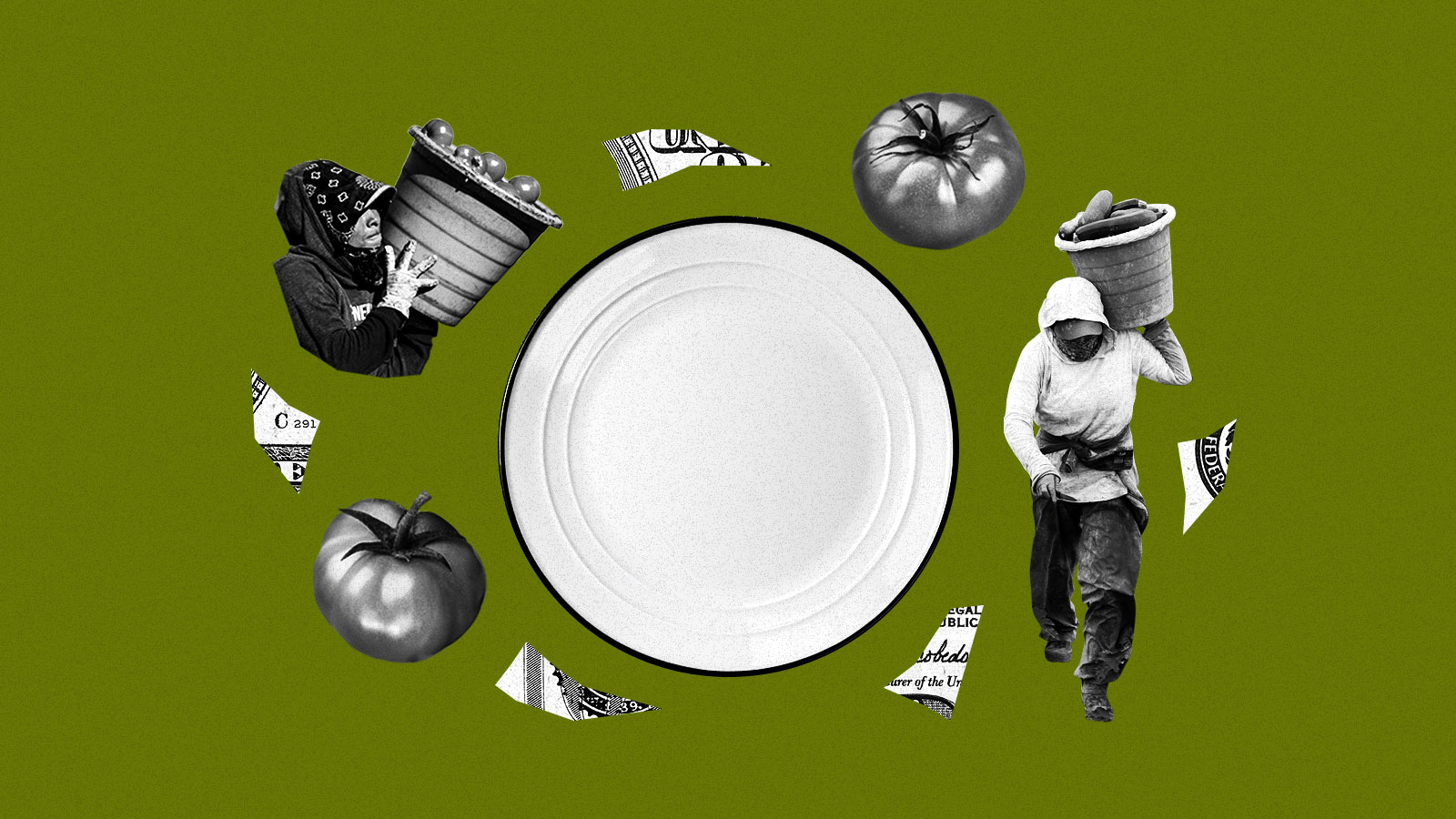
The people who feed America are going hungry
Climate change is escalating a national crisis, leaving farmworkers with empty plates and mounting costs.
Latest Articles
-
It’s happening, reports The New York Sun
Is the U.S. on the brink of food rationing? Possibly. Reports The New York Sun: Major retailers in New York, in areas of New England, and on the West Coast are limiting purchases of flour, rice, and cooking oil as demand outstrips supply. It’s hard to know what to make of the report, though. The […]
-
Monsanto CEO applies for sainthood
I’m watching the CEO of Monsanto, Hugh Grant, talk about how his company is a boon to sustainability. They’re focused on reducing the footprint of agriculture and feeding the world’s hungry — especially poor African women. Oh, and also they’re dedicated to reducing water use. All the farmers that use their seeds love them, and […]
-
Worldwide resistance to GMOs dwindle as food bills rise
For a while now, I’ve been cautioning people that surging prices for industrial food don’t necessarily “level the playing field” for sustainably produced fare. In fact, the few giant companies that dominate the global food system are fattening themselves on higher prices, consolidating their grip over the world’s palate. Last week, new Gristmill blogger Anna […]
-
Food vs. fuel debate, German edition
Defending her country’s biofuel mandates in a time of global food crisis, German Chancellor Angela Merkel recently denied that turning food crops into car fuel affects prices. Those looking for reasons behind the recent spike in food prices shouldn’t blame ethanol and biodiesel makers, she argued. Instead, look at how people are eating in the […]
-
PETA offers $1 million for commercially viable test-tube meat
PETA thinks the idea of test-tube meat looks like a million bucks. Literally. The outspoken animal-rights group is offering a cool one mil to the “first person to come up with a method to produce commercially viable quantities of in vitro meat at competitive prices by 2012.” The idea caused “a near civil war in […]
-
Three million more acres of industrial corn?
According to USDA projections, U.S. farmers will plant 86 million acres of corn in 2008. At any time in the last 50 years, that would be plenty. Since 1958, USDA figures tell us, farmers have broken 80 million acres only ten times. In fact, if farmers meet expectations, 2008 will rank as the second-largest planting […]
-
Notable quotable
"It's a crime against humanity that food should be diverted to biofuels."
-- Palaniappan Chidambaram, India's finance minister
(via)
-
Thirty years ago, high crop prices caused environmental destruction, too
Last week, I wrote about high crop prices that were inspiring people to make all manner of dubious land-use decisions, like plowing up environmentally sensitive land to plant environmentally destructive corn. Then I came across an interesting bit from Merchants of Grain: The Power and Profits of the Five Giant Companies at the Center of […]
-
Meat of the future may be grown in a lab
Problem: Large-scale meat production has environmental problems out the wazoo, but Homo sapiens shows much reluctance to giving up meat. Possible solution: Test-tube sausage! The awkwardly named In Vitro Meat Consortium just wrapped up the first-ever international conference focused on the potential for replacing slaughtered animals with grown-in-a-lab chicken nuggets and ground beef. In theory, […]
-
As food prices rise, policymakers ignore potential of home and community gardens
This originally aired on WSHU Public Radio in Fairfield, Conn.
-----
"Gardens are viewed as 'hobbies' by most politicians/bureaucrats and administrators and are seldom taken seriously as real sources of real food," says a University of Connecticut agricultural extension specialist, speaking of the United States Department of Agriculture. This attitude represents a serious impediment to a healthy, and sustainable food supply and society.
 Photo: Laura Gibb
Feeding a growing population with shrinking resources without polluting the planet is one of the greatest challenges facing us, locally and globally. The USDA is the world's largest agricultural research and extension organization. If it doesn't take gardens seriously as "real sources of real food," we are in real trouble.
Although we know that organic food sales are growing at over 20 percent annually, the USDA hasn't collected statistics on organic farms. In Connecticut, there are about 40 certified organic farms, which, like many of the farms in this country, tend to be small and part-time. They probably produce and sell less than a million dollars worth of produce a year.
But there is also an abundance of vegetables and fruits produced in home and community organic gardens. A skilled home gardener can produce amazing quantities of food using only hand tools, compost from kitchen and yard wastes, and human energy.
The more than 20,000 subscribers to Organic Gardening magazine here in Connecticut provide a rough estimate of the scale of organic food being produced in gardens for home consumption. Although some subscribers may not have gardens, that number is probably offset by organic gardeners who don't purchase the magazine.
