Climate Food and Agriculture

Climate + Food and Agriculture
EDITOR’S NOTE
Grist has acquired the archive and brand assets of The Counter, a decorated nonprofit food and agriculture publication that we long admired, but that sadly ceased publishing in May of 2022.
The Counter had hit on a rich vein to report on, and we’re excited to not only ensure the work of the staffers and contractors of that publication is available for posterity, but to build on it. So we’re relaunching The Counter as a food and agriculture vertical within Grist, continuing their smart and provocative reporting on food systems, specifically where it intersects with climate and environmental issues. We’ve also hired two amazing new reporters to make our plan a reality.
Being back on the food and agriculture beat in a big way is critical to Grist’s mission to lead the conversation, highlight climate solutions, and uncover environmental injustices. What we eat and how it’s produced is one of the easiest entry points into the wider climate conversation. And from this point of view, climate change literally transforms into a kitchen table issue.
Featured
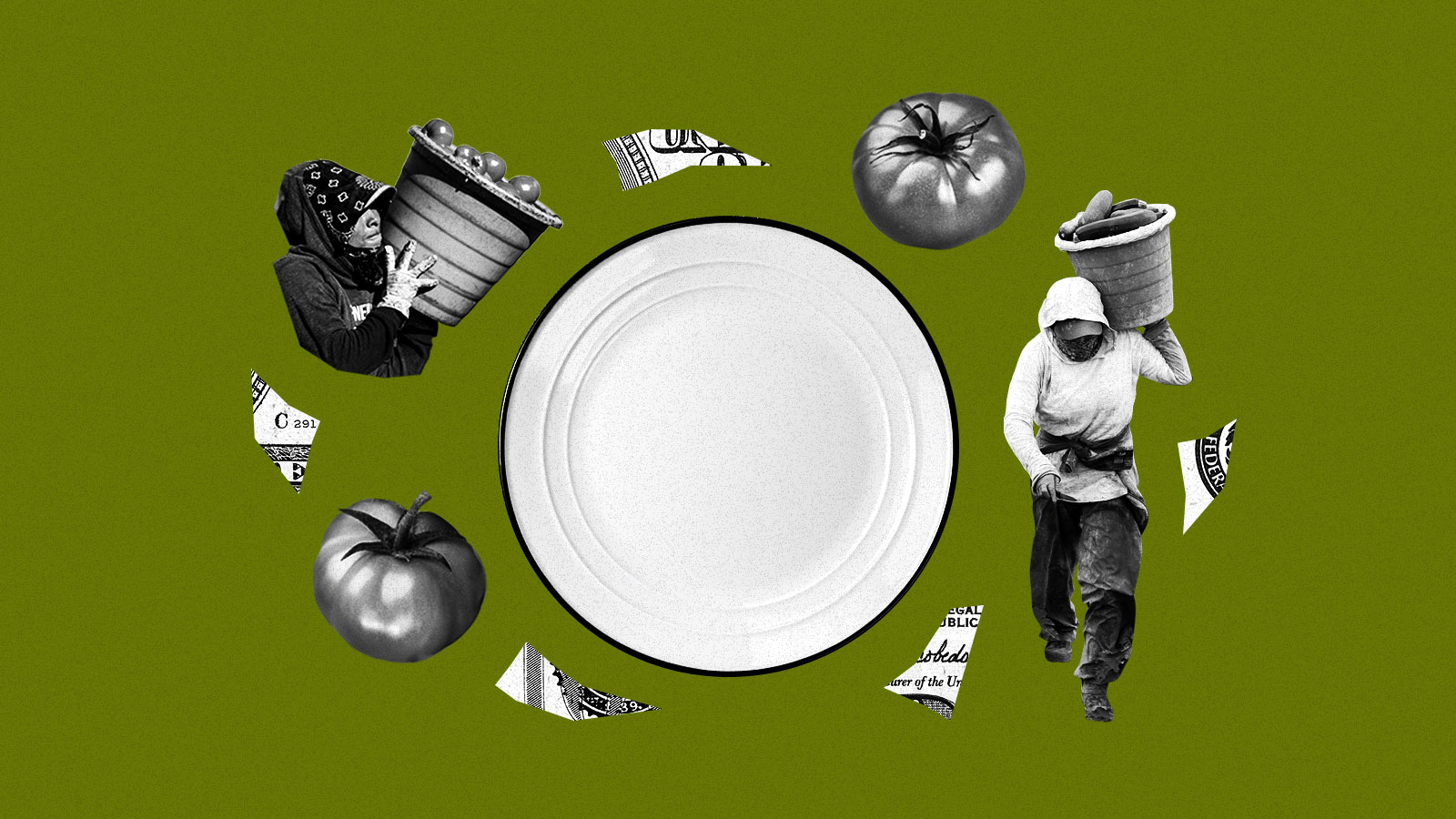
The people who feed America are going hungry
Climate change is escalating a national crisis, leaving farmworkers with empty plates and mounting costs.
Latest Articles
-
Scientists try to reduce methane emissions by tweaking cow diets

Did you know that cows belch every 40 seconds? I did not. A recent article in The Christian Science Monitor states this fun fact, and goes on to explain how scientists are trying to manipulate bovine diets to reduce the amount of methane that they emit:
-
If buying locally isn’t the answer, then what is?
Is long-distance better than local? Photo: Sheila Steele Attention farmers’ market shoppers: Put that heirloom tomato down and rush to the nearest supermarket. By seeking local food, you’re wantonly spewing carbon into the atmosphere. That’s the message of a budding backlash against the eat-local movement. The Economist fired a shotgun-style opening salvo last December, peppering […]
-
In which the author finds his dream neighorhood restaurant
In Mad Flavor, the author describes his occasional forays from the farm in search of exceptional culinary experiences from small artisanal producers. Recently, Mad Flavor was on the ground in Chicago — the author’s ancestral home city — a veritable garden of delightful food. I’ve long dreamed of a very particular neighborhood cafe/restaurant. It would […]
-
Evian Is Just Evil Misspelled
Hatin’ on plastic water bottles is all the rage Forget SUVs and Styrofoam: hip-to-the-times green folk are directing their ire at plastic water bottles. In the last few months, the energy-intensiveness of bottled water — 1.5 million barrels of oil go into making the bottles for the U.S. market each year, and oodles more to […]
-
Umbra on organic pork
Dear Umbra, Commercial pork production is a nasty, polluting operation and inhumane to the animals. What makes organic pork different? Simply what they are fed, or does it involve more humane and less polluting production operations? Related, I have been purchasing free-range, organic chicken for several years now. However, recently the free-range, organic chicken breasts […]
-
High CO2 crops could be low on nutrition
One of the silver linings of climate change, some have argued, is that high carbon dioxide levels will mean increased crop yields, which will, in turn, be good for combating global hunger (the logic, I suppose, being that if we're frying fifty years from now, at least we won't be hot and hungry). But some underpublicized studies, reported this month in Nature, cast a long shadow on this sunny assertion. (Sorry! It looks like the the article is subscription only, so I'll be as descriptive as possible.)
In the 1980s, Bruce Kimball, a soil physicist with the USDA in Arizona, began conducting scientific experiments simulating a high-CO2 environment (using a system called "free air carbon dioxide enrichment," or FACE). He found that crop yields were elevated -- plants imbibing large quantities of CO2 had more starch and more sugar in their leaves than those on a normal carbon diet. But because they also took up less nitrogen from the soil, they made less protein.
-
Yolk, yolk, yolk …
From the NYT: The toy industry had its Tickle Me Elmo, the automakers the Prius and technology its iPhone. Now, the food world has its latest have-to-have-it product: the cage-free egg. What the cluck, you ask? According to the story, dozens of vendors — ranging from universities to hotel chains, Whole Foods to Burger King […]
-
Hope they don’t want any corn
What? A sharply hotter climate and abundant CO2 aren't good for field crops? But, but ... the
coal lobbyGreening Earth Society said they would be!Fitting: the photo accompanying this story in The Detroit News shows a huge trailer of corn being deposited at an ethanol plant.
-
A new series pivots around ethanol
Randomly, last night I caught the debut episode of the new CBS series Cane. It’s about the Duque family, a Cuban-American clan in both the sugar and rum businesses in South Florida. At the outset of the show, the Duque’s long-time rivals, the Samuels — a drawling family of white Southerners — offer to buy […]
-
Umbra on sustainable meat
Dear Umbra, My wife and I recently began changing the way we eat. We located several free-range/pastured farms here in the area, and found that some local restaurants buy meat from these farms. We plan on supporting these establishments. My question is, are there any major food chains that use good meat? Rich Brantner Fair […]
