Climate Food and Agriculture
Climate + Food and Agriculture
EDITOR’S NOTE
Grist has acquired the archive and brand assets of The Counter, a decorated nonprofit food and agriculture publication that we long admired, but that sadly ceased publishing in May of 2022.
The Counter had hit on a rich vein to report on, and we’re excited to not only ensure the work of the staffers and contractors of that publication is available for posterity, but to build on it. So we’re relaunching The Counter as a food and agriculture vertical within Grist, continuing their smart and provocative reporting on food systems, specifically where it intersects with climate and environmental issues. We’ve also hired two amazing new reporters to make our plan a reality.
Being back on the food and agriculture beat in a big way is critical to Grist’s mission to lead the conversation, highlight climate solutions, and uncover environmental injustices. What we eat and how it’s produced is one of the easiest entry points into the wider climate conversation. And from this point of view, climate change literally transforms into a kitchen table issue.
Featured
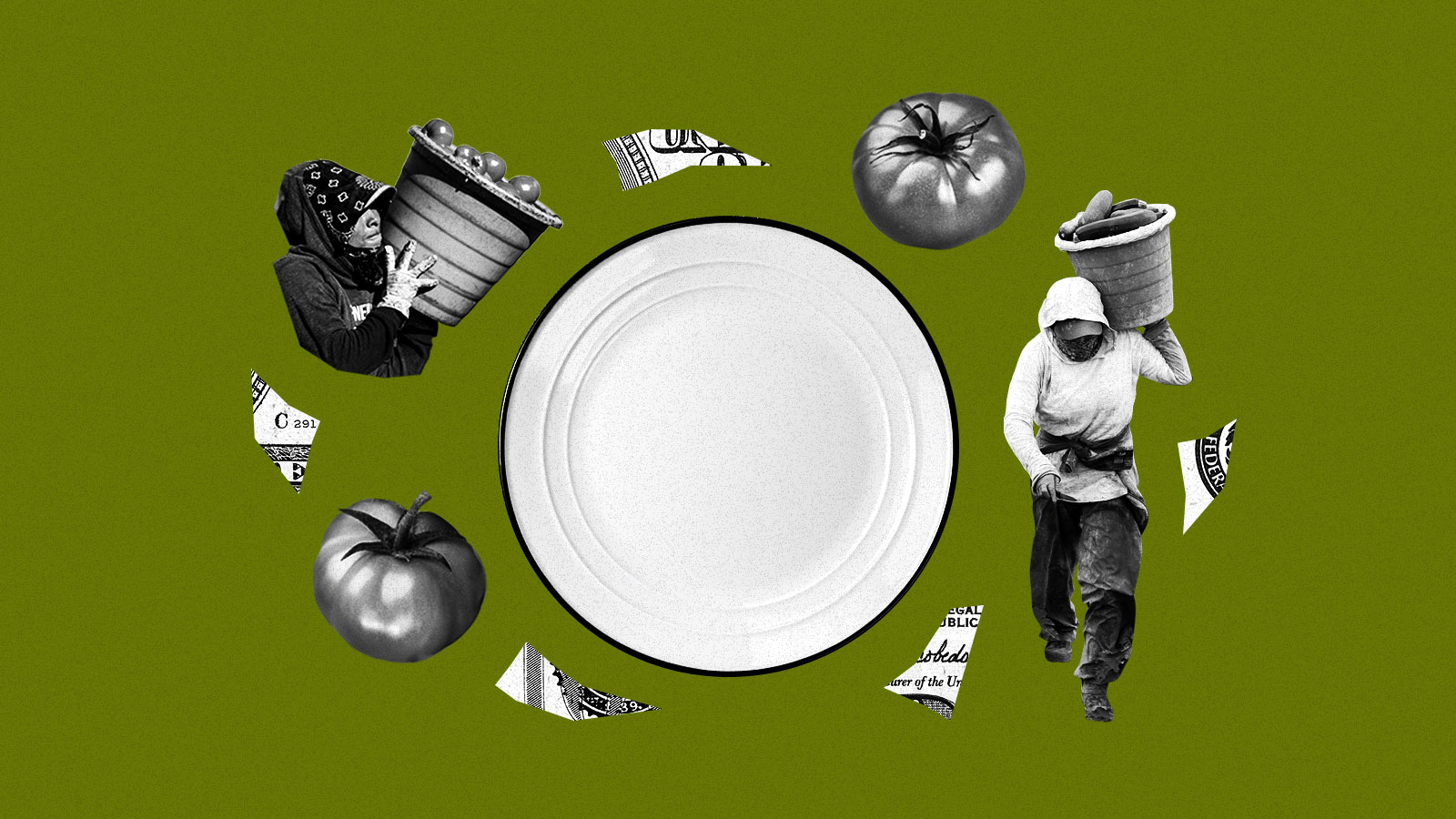
The people who feed America are going hungry
Climate change is escalating a national crisis, leaving farmworkers with empty plates and mounting costs.
Latest Articles
-
Worldwatch releases a hopeful plan for saving the world’s fish.

There's no shortage of reasons it would really suck if present trends continued and the world's oceans stopped supporting a robust fish population.
For one, it would deal a devastating blow to human nutrition and cuisine. The sea provides us with high-quality protein and many other valuable nutrients. Poof? Gone? (Don't be smug, vegans. Fish emulsion -- ground-up fish -- is a common and valuable input for organic vegetable farming.)
As for cuisine, can anyone really bear to contemplate Southeast Asian food without fish? Then there's Italian. No spaghetti alle vongole (clams)? Or that immortal Sicilian dish, pasta con sarde (sardines)? What, the southern French won't get to make bouillabaisse, the Basques will be robbed of their cod, the coastal Mexicans can no longer do hauchinango al mojo de ajo (garlic-crusted red snapper)? What will become of Vera Cruz? Of New Orleans?
No. This is wholly unacceptable. It won't do. Such a world does not interest me. Present trends must not continue; they must end immediately.
-
Adventures in Agriculture
U.S. gets approval for ozone-depleting pesticide, despite international objections Pursuing its goal of world destruction (mwahaha!), the U.S. won approval to continue using and making a pesticide banned under an international ozone treaty. The decision, which countered the recommendation of the treaty’s technical committee, allows a 5,900-ton methyl bromide exemption in 2008 — less than […]
-
Go veggie — a poll
With Science about the collapse of the world's fisheries, I think it's appropriate once again to examine a topic that doesn't get enough attention: our diets. Not only does eating fish exacerbate the collapse of marine ecosystems and lead to the death of millions of other creatures, including turtles, dolphins, and whales, but the energy used to catch deep-sea fish is equivalent to factory-farmed beef.
-
What if the Midwest stopped trying to feed the world and started focusing on itself?
Is the sun setting on Midwest farming, or can it be saved by the dawn of a new model?In Coleridge’s “Rime of the Ancient Mariner,” a sailor contemplates the paradox of thirst amid a literal sea of water. “Water, water everywhere,” he famously laments, “nor any drop to drink.” Rural Midwesterners can likely identify with […]
-
Umbra on Halloween
Dear Umbra, What do you recommend handing out to the trick-or-treaters this Halloween? I would like to avoid the wasteful packaging and additives found in store-bought goodies. I’d bake my own treats, but I doubt parents would let their kids eat anything that’s not individually sealed. How can I have an environmentally friendly Halloween? Robin […]
-
Fast food goes organic and natural
The succulent wares of Whole Foods’ enormous flagship store in Austin are always tempting, but especially so during a harried lunch hour. Everything in the vast prepared-food section looks irresistible. The salad bar features a mountain of fresh, organic toppings. Pricing is mostly by weight, so one can escape with a cup of splendid, coconutty […]
-
The shining promise of ethanol doesn’t add up for farmers
No one can begrudge corn farmers their share of euphoria over the recent ethanol boom. Until very recently, their plight could be summed up by a bit of gallows humor I once heard from a dairy farmer: “I lose money on every gallon, so I try to make up for it on volume.” Hopes are […]
-
Maisie Ganzler of an eco-friendly catering company answers Grist’s questions
Maisie Ganzler. What work do you do? I’m director of communications and strategic initiatives for Bon Appétit Management Company. How does it relate to the environment? Bon Appétit is an onsite restaurant company committed to socially responsible practices. Our café and catering services feed about 200,000 people every day in corporations, colleges and universities, and […]
-
Decades after Silent Spring, pesticides remain a menace — especially to farmworkers
In 1962, Rachel Carson published her landmark Silent Spring, which documented the ravages of agricultural pesticides, particularly DDT, on wildlife. The book inspired wide outrage and helped spark the modern environmental movement. It eventually led to a (now-controversial) ban on DDT. But since then, use of other pesticides has boomed. Sign of the times? Photos: […]
-
Filet of the Land
New studies give conflicting advice about the benefits and risks of eating fish Two studies released yesterday are likely to confuse you even further about the benefits and risks of eating fish. A report from the Harvard School of Public Health claims that fish consumption can reduce the risk of coronary death by 36 percent, […]
