Climate Food and Agriculture
Climate + Food and Agriculture
EDITOR’S NOTE
Grist has acquired the archive and brand assets of The Counter, a decorated nonprofit food and agriculture publication that we long admired, but that sadly ceased publishing in May of 2022.
The Counter had hit on a rich vein to report on, and we’re excited to not only ensure the work of the staffers and contractors of that publication is available for posterity, but to build on it. So we’re relaunching The Counter as a food and agriculture vertical within Grist, continuing their smart and provocative reporting on food systems, specifically where it intersects with climate and environmental issues. We’ve also hired two amazing new reporters to make our plan a reality.
Being back on the food and agriculture beat in a big way is critical to Grist’s mission to lead the conversation, highlight climate solutions, and uncover environmental injustices. What we eat and how it’s produced is one of the easiest entry points into the wider climate conversation. And from this point of view, climate change literally transforms into a kitchen table issue.
Featured
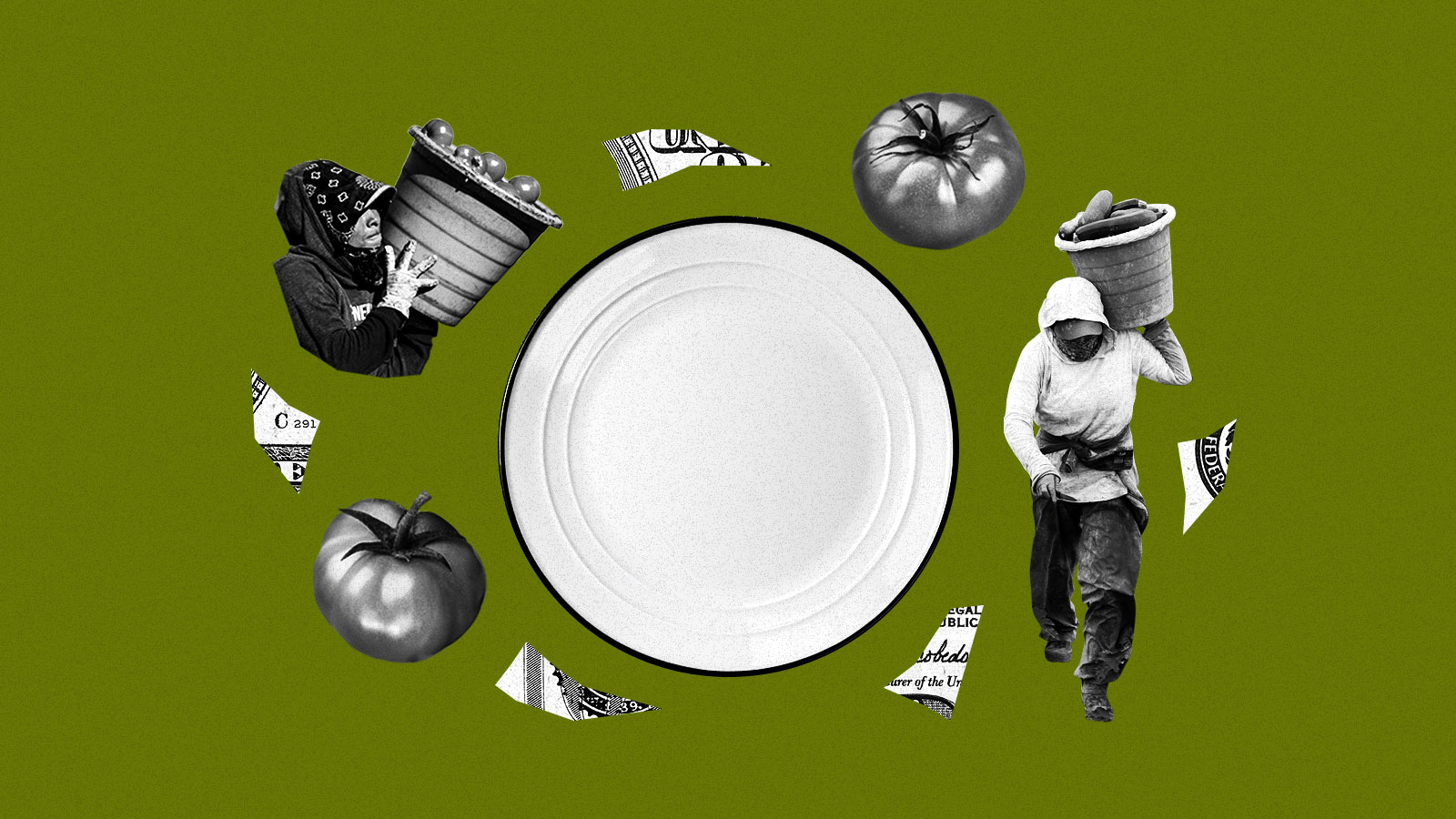
The people who feed America are going hungry
Climate change is escalating a national crisis, leaving farmworkers with empty plates and mounting costs.
Latest Articles
-
Pollan blogs on corn ethanol and local-food resources
Did you know that foodie writer Michael Pollan (look for my interview on Tuesday!) has a blog? Probably not, because it's hidden behind the cursed NYT Select subscription wall. Too bad -- it's a great blog, and deserves wider readership.
The latest entry reviews arguments against corn ethanol that will be familiar to readers of this blog, and concludes with this:
So why the stampede to make ethanol from corn? Because we have so much of it, and such a powerful lobby promoting its consumption. Ethanol is just the latest chapter in a long, sorry history of clever and profitable schemes to dispose of surplus corn: there was corn liquor in the 19th century; feedlot meat starting in the 1950's and, since 1980, high fructose corn syrup. We grow more than 10 billion bushels of corn a year in this country, far more than we can possibly eat -- though God knows we're doing our best, bingeing on corn-based fast food and high fructose corn syrup till we're fat and diabetic. We probably can't eat much more of the stuff without exploding, so the corn lobby is targeting the next unsuspecting beast that might help chomp through the surplus: your car.
In another entry, he pulls together a list of resources to help people find local, sustainable food. It deserves to be freed from the insidious NYT wall, so here it is:
-
South Central Community Farm update
If you haven't been keeping up: The situation at the South Central Community Farm has gotten even more grim. The farmers have received an eviction order. A variety of celebs and quasi-celebs and hippie ex-celebs have taken up direct action, camping out on the farm. Julia Butterfly Hill is even sitting up in a tree. It's not looking good.
(Meanwhile, the same city that can't cough up $10 million for this community farm is contemplating spending $800 million renovating a sports stadium to attract an NFL team. Awesome.)
-
Umbra on canola oil
Dear Umbra, I recently saw “organic canola oil” on a salad dressing bottle. I looked up the origin of canola oil, and it looks like it is a genetic modification of rapeseed. I thought organic certification disallowed genetically modified foods. What’s the scoop? Tom Grundy Nevada City, Calif. Dearest Tom, Have you noticed yet that […]
-
The recipe for twins (sorry, vegans)
Attention female vegans (and no, I'm not soliciting romance, thanks): If you're dreaming of birthing twins, you may want to read this.
Women who eat a vegan diet -- a strict vegetarian diet that excludes all animal products including milk -- are one-fifth as likely as other women to have twins, a U.S. researcher reported on Saturday.
But despite what some headline-writers suggest ("Vegan diet lowers odds of having twins" and "Meat-Eaters More Likely to Have Twins?"), neither meat-eating nor even necessarily veganness seem to be the key.
The reason [for the vegan twin-birth difference] may be hormones given to cattle to boost their milk and meat production, said Dr. Gary Steinman, an obstetrician specializing in multiple-birth pregnancies at Long Island Jewish Medical Center in New Hyde Park, New York.
So if you vegans want to increase the likelihood of twins without disrupting your diet, seems you could maybe skip the dairy and just go right for the growth hormones. Yum.
-
Save South Central Farm
Over at Daryl Hannah's vlog, dh love life, she's posted an "emergency episode" about the plight of the South Central Farm that Dave blogged about recently.
Watch it now. (Damn, those fruits and veggies look good!)
-
![]()
![]()
Local or organic? It’s a false choice
This essay was adapted from the book Organic, Inc.: Natural Foods and How They Grew. A couple of years ago, I visited an organic vegetable farm in southeast Minnesota, not far from the Mississippi River. Nestled in a valley that sloped down from rolling pasture and cropland sat Featherstone Fruits and Vegetables, a 40-acre farm. […]
-
The Labor of the Land
Organic farming creates more jobs, U.K. study finds Organic agriculture has traditionally been linked to health and environmental benefits. Now it can add job creation to its portfolio: A study of nearly 1,200 farms in the United Kingdom and Ireland found that organic farming creates on average 32 percent more jobs than conventional agriculture. The […]
-
Beyond organic: A new label

If you haven't been following the discussion under this post about Wal-Mart selling organic food, I recommend you catch up. It's quite insightful, with a range of views well-expressed.
One note of consensus seems to be this: "Organic," at least as denoted by the USDA label, falls well short of genuinely sustainable agriculture. Tom is better qualified than I to give a comprehensive description of the latter, but one important element is locality. Food that is grown, sold, and eaten within a single regional foodshed is closer to sustainable than organic mega-farms.
So, as a couple of people have suggested, perhaps one step in the right direction is a new label, to supplement "organic." This raises two questions:
-
An innovative Alabama CSA shows the way forward.
When Wal-Mart announced plans to become the world's biggest purveyor of organically grown food last week, the polite applause from the enviro gallery grated on my ears. (Here's a spirited recent debate on Gristmill.) Even the New York Times editorial page could see through this move. While some greens cooed at at Wal-Mart's magnamity, the Grey Lady unleashed an appropriately cynical analysis:
There is no chance that Wal-Mart will be buying from small, local organic farmers. Instead, its market influence will speed up the rate at which organic farming comes to resemble conventional farming in scale, mechanization, processing and transportation. For many people, this is the very antithesis of what organic should be.... For "Wal-Mart" and "organic" to make sense in the same sentence, the company will have to commit itself to protecting the Agriculture Department standard that gives "organic" meaning.
I have no doubt that Wal-Mart's greenie admirers will hold the company's feet to the fire on that one. But the USDA's organic standards are already being drained of meaning. Rather than chide Goliath to behave nicely, enviros should consider helping David get his shit together. Check out what they're getting up to over in Birmingham, Ala.
-
He Who Pays the Piper Calls the Tuna
California loses suit to make tuna companies issue mercury warnings California law requires products containing chemicals that could cause reproductive harm or cancer to have warning labels, but a state Superior Court judge has ruled that the law does not apply to mercury-licious canned tuna. Mercury has been shown to slow neurological development, thus the […]

