Cross-posted from Mother Jones. Many people claim they don't have time to cook fresh meals "from scratch." In Tom's Kitchen, Grist's former food editor discusses some of the quick and easy things he gets up to in ... well, his kitchen. Forgive the lame iPhone photography. Welcome to my occasional cooking column. The idea of Tom's Kitchen isn't to show off my flashy cooking skills (which are actually quite modest), or rub your face in how amazing it is to cook on a small veggie farm. Rather, what I want to do is contribute to a tradition established by much …
Tom Philpott's Posts
Jerry Brown 2.0: friend or foe of farmworkers?
Photo: Randy Bayne Cross-posted from Mother Jones. Back in 1975, a young, newly elected California governor named Jerry Brown signed into law a historic bill recognizing the right of his state's farmworkers to unionize. Nicknamed "Governor Moonbeam" for his new-age tendencies, Brown might have been a bit spacey, but he didn't waver in standing up to his state's powerful agribusiness interests. In the decades since, the protections offered by that law have eroded. Farmworkers say field bosses use intimidation to keep people from voting to form unions. The United Farm Workers have been pushing for years for new protections that …
How the meat industry turned abuse into a business model
The meat industry routinely abuses workers and animals. Cross-posted from Mother Jones. As a long-time student of the meat industry, I read Ted Genoways' extraordinary article on conditions at the "head table" of a factory-scale pig-processing plant with delight. As a human being, my reaction was revulsion. In a single long piece, Genoways lays out the crude history of U.S. meat over the past 80 years. We get the unionization of the kill floor in the wake of Sinclair's The Jungle, the post-war emergence of meatpacking as a proper middle-class job, the fierce anti-union backlash of the '70s, followed by …
There's a Foxx guarding the ag-policy henhouse
Know your farmer, know your food? Oh no, you don't, says Virginia Foxx. Photo: Rep. Virginia FoxxCross-posted from Mother Jones. In my post on the House Republicans' recent assault on progressive ag policy, I mentioned the move to shut down the USDA's Know Your Farmer, Know Your Food initiative. The sponsor of the amendment that did the dirty deed is Rep. Virginia Foxx (R-N.C.) -- who, it turns out, represents my district in Congress. This is the sort of thing she gets up to when she's not defending children from the scourge of gay marriage, or lashing out at undocumented workers (who, incidentally, form …
House Republicans aim pitchfork at food-system reform
Photo: JulussuglaCross-posted from Mother Jones. I've complained once or twice in the past that U.S. farm policy, even under Obama, favors corporate-led, highly dysfunctional agriculture. That's true on balance, but it doesn't tell the whole story. If you dig into the topic, you'll find that sustainable-food activists have been working for decades to place progressive, community-oriented programs into the ag-policy mix. These hard-fought victories, won during once-every-five-years Farm Bill wars, are vastly outweighed by things like the government's corn-ethanol fetish, or its hyperaggressive trade policies. But the food movement's political gains are real, they're fragile, and they need defending. And …
Is the 'Clean 15' just as toxic as the 'Dirty Dozen'?
Photo: Santiago NicolauCross-posted from Mother Jones. Recently, the Environmental Working Group (EWG) released its annual "Dirty Dozen" and "Clean Fifteen" lists of produce with the most and least pesticide residues. My reaction was: Well done, but what about farm workers? The EWG lists provide an invaluable tool to help consumers reduce pesticide exposure, but tell us nothing about the folks who grow and harvest the great bulk of food we consume. Well, over on Pesticide Action Network's Ground Truth blog, researcher Karl Tupper shed some light on the murky question of farm worker exposure to toxic pesticides. Tupper stressed that …
Why the Senate ethanol vote doesn't matter much
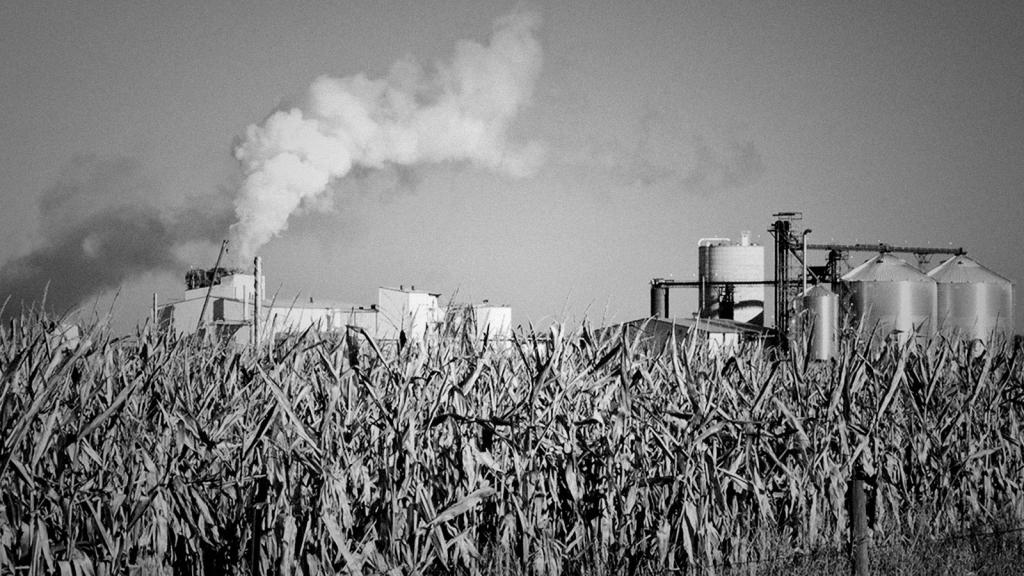
Photo: Daniel LeiningerCross-posted from Mother Jones. I have a really bad idea. Let's push farmers to plant as much as they possibly can of our most ecologically devastating crop. Maybe we'll even get them to plow up some erosion-prone grasslands to do so. Then we'll take a huge portion of the bounty (say, 40 percent) and subject it to a Byzantine, energy-intensive process that will turn it into something (barely) suitable for internal-combustion engines. (Never mind that internal-combustion engines, powering private pods over roads always in need of extravagant maintenance, are a rotten way of converting energy into mass locomotion.) …
Salmon surprise: House opposes FDA Frankenfish approval
Cross-posted from Mother Jones. The eminent fisheries writer Paul Greenberg recently gutted and filleted the rationale for a novel type of farmed salmon genetically altered to grow faster. The "improved" fish, created by a Massachusetts-based company called AquaBounty Technologies, threatens to "escape and contaminate wild populations of salmon," Greenberg wrote. And the business model AquaBounty has in mind is ecologically insane: "the fish requires much wasteful transport since it would be cloned in Canada, grown in Panama, and then flown back to the U.S. for consumption." On top of those obvious drawbacks, the GMO salmon literally offers no benefits to …
Hey, Vilsack: Big Ag won't feed the world or make jobs
Tom Vilsack.Photo: CIAT International CenterTropicalAgricultureCross-posted from Mother Jones. Back in March, USDA secretary Tom Vilsack spoke at an event called the Commodity Classic in Tampa, Fla. Sponsored by agribusiness giants Monsanto, BASF, John Deere, Dow AgroSciences, Dupont, Syngenta, and Archer Daniels Midland, among others, the event hails itself as the "premier national trade show and convention for corn, soy, wheat, and sorghum farmers." According to an account in the trade journal Agri-Pulse, Vilsack spoke "with sometimes evangelistic fervor." He thundered against critics of corn-based ethanol, reiterated the Obama administration's goal of doubling U.S. farm exports by 2014 by ramming open …
Poison apples bad for consumers, Snow White
EWG: Don't resist the temptation to eat apples -- just buy organic when you can. Photo: D. Sharon PruittCross-posted from Mother Jones. Every year, the Environmental Working Group (EWG) sifts through USDA testing data and figures out which "Dirty Dozen" fruits and veggies deliver the largest doses and the widest variety of pesticides. This year's winner, announced Monday: apples. According to EWG, 92 percent of the apples tested by the USDA carried two or more pesticide residues. And even as supermarket shelves feature a pretty narrow range of apple varieties -- Red Delicious, Granny Smith, etc. -- farmers are spraying …

Solar plane crosses U.S., makes green sexy again
Is the sharing economy skidding out?
Amtrak might allow pets to ride with you