Big business has finally realized that there’s lots of money to be made in the transition to a clean-energy economy. Van Jones wants to make sure working-class and minority Americans realize it too.
Van Jones.
Jones, a civil-rights lawyer, is founder and executive director of the Ella Baker Center for Human Rights, an innovative nonprofit that made its name working to prevent youth violence and incarceration. In 2005, the center unveiled an initiative that would put it at the cutting edge of progressive activism: Reclaim the Future, a program aimed at ensuring that low-income and minority youth have access to the coming wave of “green-collar” jobs. It’s an idea that’s gaining traction and support, most notably from House Speaker Nancy Pelosi (D-Calif.), who last month invited Jones to join her at a San Francisco press conference and make the case for a national Clean Energy Jobs Bill.
Though his work is focused on Oakland, Calif. — he successfully fought for a “Green Jobs Corps” youth training program in the city and is pushing to make Oakland a “Green Enterprise Zone” — Jones is seen as a rising national star whose ideas could bridge the gap between movements that have too long regarded each other with wary skepticism. When I reached him by phone, he emphasized the potential for a broad-based green coalition and chided “eco-elites” for failing to reach out.
If you were emperor, what would your clean-energy jobs strategy be?
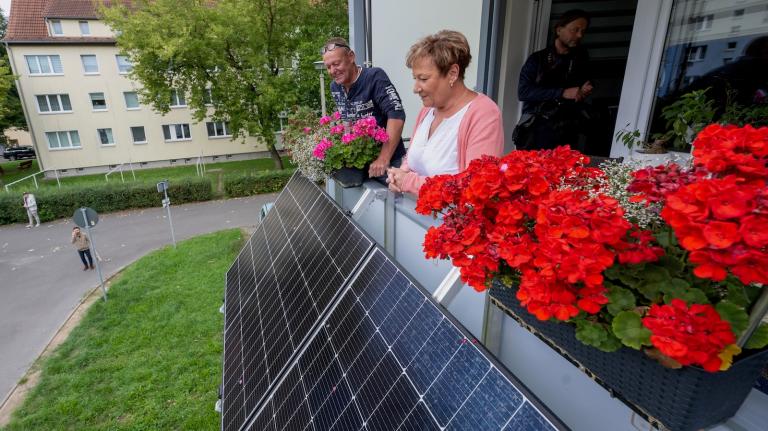
We need to send hundreds of millions of dollars down to our public high schools, vocational colleges, and community colleges to begin training people in the green-collar work of the future — things like solar-panel installation, retrofitting buildings that are leaking energy, wastewater reclamation, organic food, materials reuse and recycling.
All the big ideas for getting us onto a lower carbon trajectory involve a lot of people doing a lot of work, and that’s been missing from the conversation. This is a great time to go to the next step and ask, well, who’s going to do the work? Who’s going to invest in the new technologies? What are ways to get communities wealth, improved health, and expanded job opportunities out of this improved transition?
That’s one component: rather than creating job-training pipelines that put these kids at the back of the line for the last century’s pollution-based jobs, we need to be creating opportunities for them to be at the front of the line for the new clean and green jobs.
Another piece is to go a step beyond job training and begin to think about reviving the old Civilian Conservation Corps that [Franklin D. Roosevelt] created during the environmental challenges of his day. Now we have a new set of environmental challenges. The national Apollo Alliance and the Campus Climate Challenge have been talking with us about creating what we would call an Energy Corps. It would be like the Peace Corps or AmeriCorps, but it would be focused on deploying people to begin retrofitting the U.S. economy, rebooting it based on clean energy.
The moral challenge of the century is this: We need to ensure that there’s equal protection for everyone in the face of the perils of this new period, and equal access to the opportunities of this new period.
The last few economic booms in this country — notably the internet boom — have come and gone without making much of a dent in the problems facing working-class people and minorities. Is there something different about the green economy boom?
Yes. First of all, either we’re not going to be here as a species, or this will be a much more sustained transition. There’s just more work to be done, to get us off this suicidal pathway and onto something more sustainable. So that gives us reason for hope.
Two, there is a vested interest on the side of eco-capitalists to win over as much of the American public to their side as possible. If you’re trying to make money in the green economy, you need government on your side; in order to get government on your side, you need some sector of the electorate to support you. If you are an eco-capitalist, you’re trying to create new jobs — people who need new jobs could probably be good allies.
There’s no way to get changes big enough to solve these problems without creating pathways out of poverty for millions of new green-collar workers. The renewable economy is more labor-intensive, less capital-intensive; therefore, there should be a net increase in jobs.
There will also be lots and lots of money made. So beyond just having African-American kids be the workers in a green economy, we also want them to be inventors and investors and owners and entrepreneurs in the green economy. That’s true for Latinos and other groups too.
A new coalition can be born, and it can be as powerful as the New Deal coalition of the middle of the last century, or the new right coalition that’s been destroying the country, or trying to, at the end of the last century. The green-growth alliance — which would include the best of business and progressive labor and community organizations — could stand up to the military-petroleum complex and take the country forward.
If we create a new set of working-class jobs, how do we prevent them from being subject to the same wage- and union-suppressing forces facing other working-class jobs?
A lot of downward pressure on workers comes from increasingly intense competition with India and China. The good thing about renewable energy is that it’s not going to be Chinese workers putting up solar panels. It’s not going to be workers in India retrofitting buildings so they don’t leak as much energy. Wind that’s blowing in the United States is going to turn those wind turbines, not wind blowing in Asia. There is an opportunity here to do work that can’t be outsourced.
That being said, we have a real problem: the United States is squandering its collective wealth on this phony, tragic war. The Clinton-Gore surplus — which could have been used to reboot and retrofit the country and invest in education and get us ready for a much more competitive global labor market — is gone, probably to the permanent, long-term detriment of the country. But you’ve got to play the hand you’re dealt.
It’s going to be a tough century. I think we’re in for something of a hard landing, some socioeconomic and ecological shocks. That can bring out the best or the worst in the country. We’ve already seen, with Katrina, both. We’ve got to start talking now and creating action that brings us closer together, across these racial lines, across these class lines, so that if things do get rougher, there’s a bit more social connectivity and a bit more of a spirit of cooperation. That will create the shock absorbers we’re going to need.
The environmental community has rightly been taken to task for disregarding some of the concerns of low-income workers and minorities. And to some extent, the disregard has been returned. Are you finding resistance on either side of that gap?
That’s a great question. There are too many white environmentalists who continue to believe they can fix this problem by themselves. To the extent people of color have any role to play, it’s being at the other end of a tutorial about what they should be doing.
That is entirely wrongheaded. A state like California is already well beyond 50 percent people of color, on its way to 60 percent. You can’t effectively green California without engaging people of color. Despite [Gov. Arnold] Schwarzenegger [R] getting all the attention, the true hero of the Global Warming Solutions Act was Fabian Núñez [D], the young Latino speaker of the House, who gets this stuff, and fights for it.
California, in November of this past year, voted down the clean-energy measure on the ballot, Proposition 87. Silicon Valley and Hollywood spent $40 million and had Al Gore and Bill Clinton and everybody else out here [campaigning for it]. It wasn’t just that they were outspent, it was that Big Oil spoke directly to pocketbook issues for working-class Californians. They said that the energy excise tax was going to send gas prices through the roof.
That’s a lie. The global energy market determines the price of your gas, not some little tax on industry. But clean-energy proponents never made that argument. In their world, talking about energy independence and the clean future was enough. For struggling Californians, it wasn’t enough. The leader of the NAACP came out against [Prop. 87]. The only people talking to her were telling her it was going to create disaster at the service station, rather than a boon for the economy and possible jobs for our constituency. When the NAACP comes out and says it’s wrong, you lose a bunch of votes.
[Proponents] wasted $40 million and we missed a huge opportunity. I don’t know people well enough to say if it’s racism or not, but apparently you have a lot of people in leadership who can’t add, who just can’t do basic math.
What’s worse than that is, racial apartheid won’t work. Even if you can get all your policies passed without building a broader coalition, the policies you’re likely to get passed won’t work. You could wind up with a thin layer of eco-elite corporations doing their parts and services differently, but most people don’t give a damn about the issue and are still involved in work and consumption that is undermining your efforts.
You’ve got to engage the majority of people on terms they understand and they’re excited about. If you don’t do that, you get what you’ve got in Northern California right now — Marin is all eco this and enviro that and organic the other, and Oakland is stuck in the pollution-based economy of the last century, with cancer and asthma and everything else. You do that on a national scale and you’ll have a slowdown, on the way to a disaster.
The good news is, a deal could be cut. Organized labor and progressive communities of color are looking for partners, ideas, and opportunities. The eco-elite needs partners and opportunities, short-term and long-term. The formulation is straightforward: a green-growth agenda with shared prosperity and broad opportunities as key values. That’s what it will take.
The other thing to keep in mind is that people who have a lot of opportunity, the affluent, love to hear about this big crisis. Oh my god, global warming, we’re all going to die. For people who have a lot of crisis already, they don’t want to hear about another big crisis. They’ve got sick parents, no health care, all that kind of stuff — they don’t want to hear about it. The rhetoric has to change. For people with a bunch of opportunity, you tell them about the crisis. For people with a bunch of crisis, you tell about the opportunities.
When you start shutting down some of these dirty power plants and move to renewables, you reduce asthma by a certain percentage. That’s important, because if you have one kid with asthma and you don’t have health care, that’s about $10,000 a year between inhalers, lost wages, and emergency room visits. So you’re putting $10,000 per kid per year back into the pockets of poor people when you clean up the air. You save the polar bears and you save the black kids too.
That’s got to be how we come at this: What are the jobs, wealth, and health benefits of being a part of this movement?
I’m arguing for a progressive eco-populism with an appropriate role for government, that rewards and helps the problem-solvers in the U.S. economy but taxes the hell out of the problem-makers. That can be a winning formula to realign U.S. politics and economics.
We have an obligation to recognize that we’ve entered a new period of real limits and real consequences. We need to be part of a conversation about how to limit the harm and spread out the hope.