For years, environmental campaigns have espoused virtuous actions like biking instead of driving, taking shorter showers, and remembering to turn off the lights. But increasingly, Americans’ concern about climate change appears to be directed less at people’s personal choices, and more toward the actions of politicians and corporations.
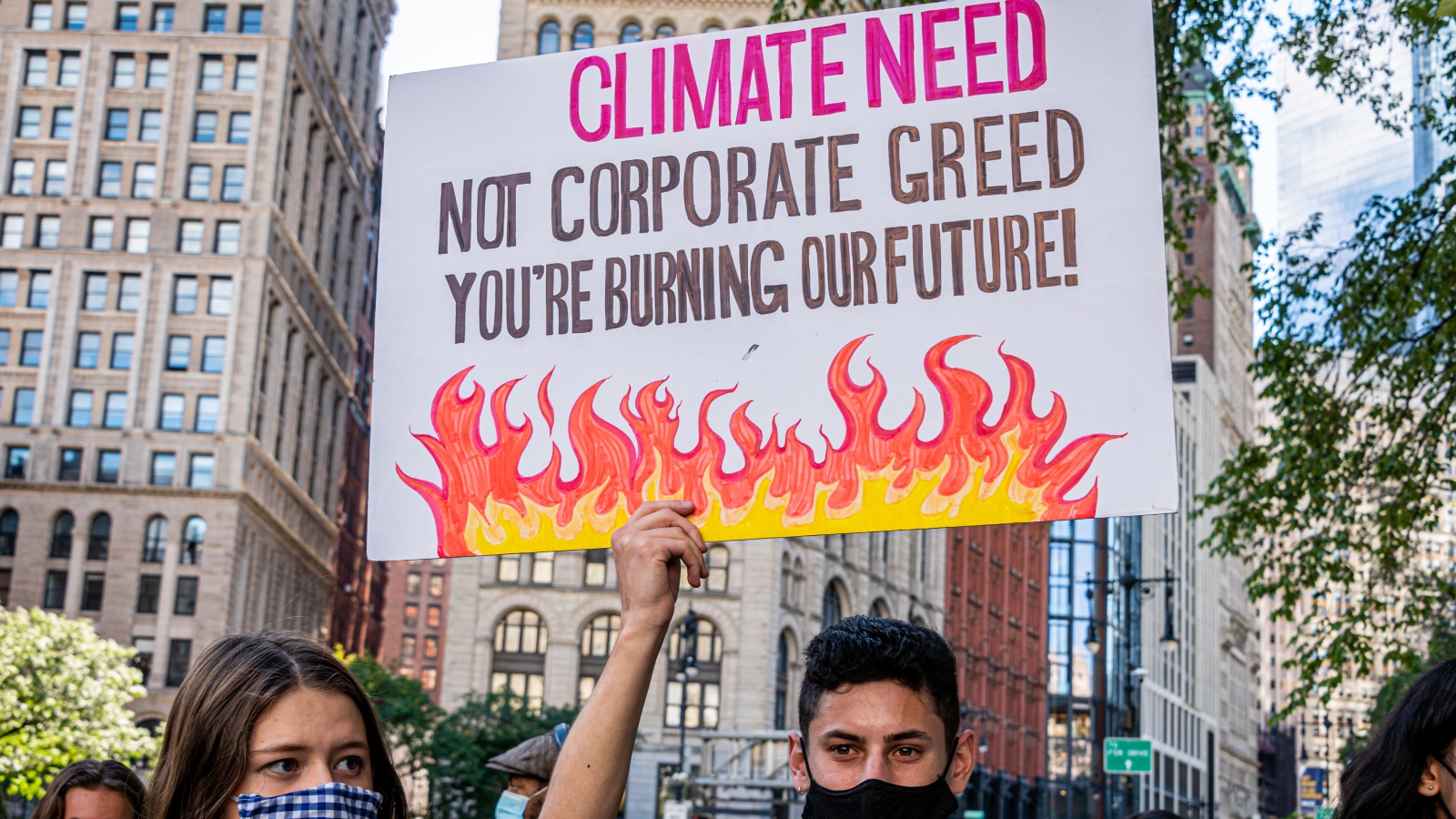
A new poll from the Associated Press and NORC, a public affairs research organization at the University of Chicago, suggests that there’s a shifting understanding of who’s responsible for dealing with our overheating planet. According to polling conducted in June, well over 60 percent of Americans think that governments and companies have a large responsibility to take on climate change. By comparison, only 45 percent think the blame rests with individuals, down from 50 percent in 2019.
Climate advocates have long argued that the movement has been overly focused on individual responsibility when large-scale societal shifts can make a much bigger dent in carbon emissions. They point to evidence that companies like BP promoted the idea of lowering your personal carbon footprint for decades, a public relations strategy to deflect the blame for climate change away from the oil industry.
The new survey could indicate that Americans are growing wise to these distraction tactics. But at the same time, completely abandoning personal responsibility could come with unintended consequences. The new poll, for example, points to a growing sense of powerlessness: Just over half of respondents said they felt their actions could have an effect on climate change, compared to two-thirds of people polled three years ago.
“I think sometimes there’s this really counterproductive narrative of, you know, throwing up my hands and saying, ‘Well, nothing I do can matter,’” said Kimberly Nicholas, a sustainability professor at Lund University in Sweden. Last year, a study found that 58 percent of young people in 10 countries around the world felt that their governments were betraying them and future generations by failing to act, leading to climate anxiety. More than half of those surveyed thought humanity was “doomed.”
The findings are pretty dark, but there could be an upside to people pushing the blame toward corporations and governments instead of shouldering it themselves. Riley Dunlap, an emeritus professor of sociology at Oklahoma State University, says it could be a sign that people are getting more realistic about what it’s going to take to tackle the climate crisis. Watching homes flood and rivers dry up, they might better understand that climate change is already here — and we’ll have to do a lot more than just switch to LED light bulbs.
“In some ways, I don’t see these as necessarily negative trends, because for so long, corporate America, especially fossil fuel companies, pushed this narrative that consumers are responsible,” Dunlap said. “So if more people are starting to resist accepting the blame and the responsibility, to me, that could be good if they turn around and put pressure on government and industry.”
Maybe that pressure is starting to pay off. Just last week, President Biden signed the Inflation Reduction Act into law, the single largest climate package Congress has ever passed. It’s projected to trim greenhouse gas emissions by 40 percent below 2005 levels by 2030. “In general, what an individual does is just absolutely dwarfed” by the actions of the federal government or an oil company like Exxon, Dunlap said.
But Nicholas believes that even if your carbon footprint is tiny in comparison to the government’s, that doesn’t count as a get-out-of-jail-free card. “It can’t just be saying that the government has to take their responsibility, mic drop, I’m done,” she said. “Great, so what are you doing to vote and to get other people to vote?”
She argues that individuals still have a role to play in climate action — not just by purchasing green products at the grocery store, but in the influence they wield as citizens, investors, professionals, and role models. After all, governments and companies are made up of individuals, too — human beings that get elected to office or end up in the CEO chair — and voters and board members have the ability to help sway them. By taking the focus off of personal responsibility, people might underestimate their own influence.
It’s also worth noting that some individuals, especially the rich, do have a large carbon footprint. A recent analysis found that celebrities’ private jet habits meant that they emitted an average of 3,276 metric tons of carbon every year, or about 480 times the average person’s emissions.
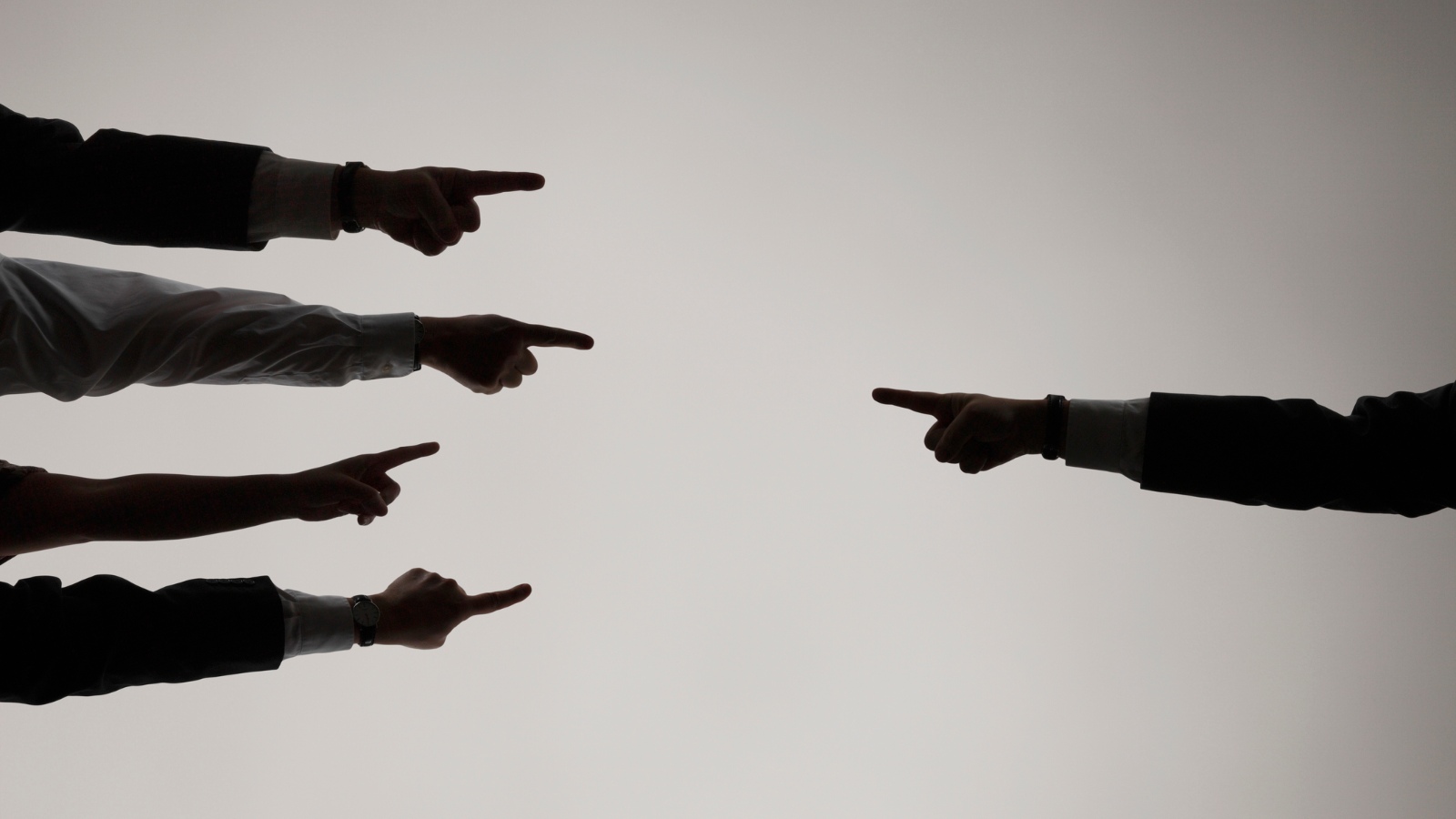
“It feels like a lot of the time, people are looking for ways to kind of justify why their own personal responsibility is as small as possible and someone else should be making a change,” Nicholas said. Oil companies point fingers elsewhere to avoid legal consequences for causing climate change. Rich countries that have historically emitted a lot of carbon keep falling short on funding promises meant to help poor countries adapt to a problem they didn’t create. And Americans shrug their shoulders, saying their actions are too small to matter.
“If everybody is in that mindset,” Nicholas said, “then nothing happens.”
A message from
Your support keeps our climate news free.
Grist is the only award-winning newsroom focused on exploring equitable solutions to climate change. It’s vital reporting made entirely possible by loyal readers like you.
At Grist, we don’t believe in paywalls. Instead, we rely on our readers to pitch in what they can so that we can continue bringing you our solution-based climate news. Donate today to keep our site free.