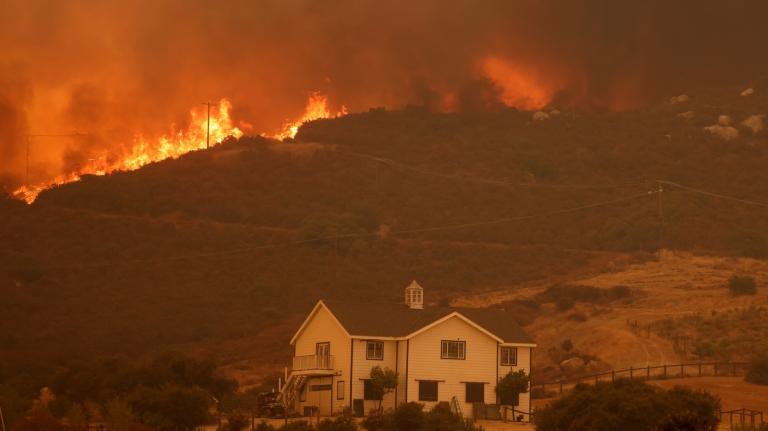
The fabled Northwest and Northeast passages are now open. That makes the North Pole an island for the first time in human history, most likely for the first time “since the beginning of the last Ice Age 125,000 years ago.”
In the last few days, however, Arctic ice melt has slowed, so we might not see a record this year, as the NSIDC daily graph makes clear:
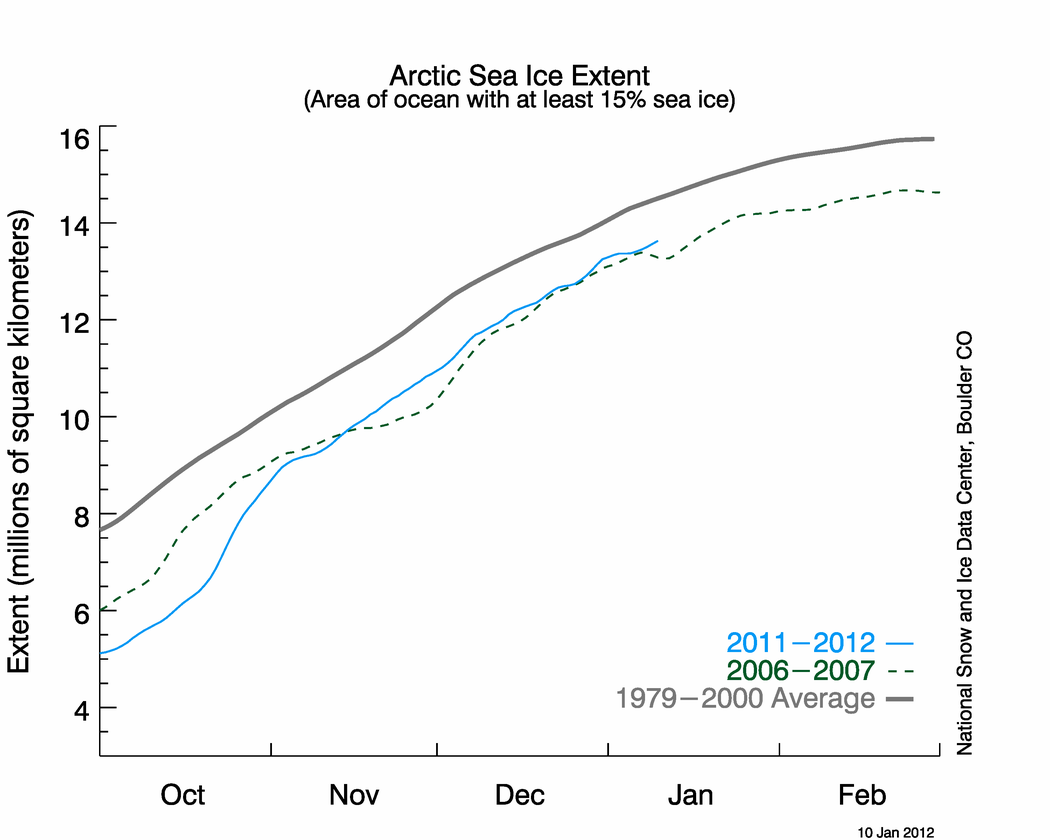
But whether a record is set this year has little bearing on the future of the Arctic. The National Snow and Ice Data Center’s Mark Serreze said last Wednesday, “No matter where we stand at the end of the melt season it’s just reinforcing this notion that Arctic ice is in its death spiral.”
And that, of course, means polar bears populations will also enter a death spiral.
This post was created for ClimateProgress.org, a project of the Center for American Progress Action Fund.
A message from
Your support keeps our climate news free.
Grist is the only award-winning newsroom focused on exploring equitable solutions to climate change. It’s vital reporting made entirely possible by loyal readers like you.
At Grist, we don’t believe in paywalls. Instead, we rely on our readers to pitch in what they can so that we can continue bringing you our solution-based climate news. Donate today to keep our site free.