The Democratic Party won a commanding victory in Tuesday’s midterm elections. As of Wednesday morning, the party had secured control of both the Senate and the House of Representatives, as well as several state governments. The party’s strong performance, driven in part by voters’ anger over inflation and the war in Iran, reached into traditional Republican strongholds like Ohio and South Carolina. The sweep will have profound consequences for climate action in the United States, even with President Donald Trump still in the White House.
Flipping control of Congress will allow the Democrats to hinder Trump’s numerous attempts to roll back federal climate policy. In the first two years of Trump’s term, party leaders could do little more than write strongly worded statements to administration officials. They were powerless to stop the suspension of clean energy funding, the elimination of climate rules for power plants and motor vehicles, and the hollowing out of agencies like the U.S. Forest Service and the Federal Emergency Management Agency.
Now, the party will have a lot more leverage. Democratic senators and members of Congress can issue subpoenas to force administration officials to testify before Congress, and could even impeach Trump administration figures over funding clawbacks and staff reductions that Democrats have called unlawful. Democrats will also have control over must-pass funding bills, and Trump will have to negotiate with them in order to avoid a government shutdown. This could lead to the restoration of some funding for energy and climate resilience programs that Republicans have been trying to whittle down. With majorities in the Senate and the House, the party could even seek to reimpose some of the clean energy tax credits that Republicans rescinded last year.
Turnover at the state level, where officials are still counting votes, may be even more significant. Democrats gained full control of the state government in Wisconsin, Arizona, and Pennsylvania, according to election analysts, ending in some cases decades of Republican or divided government. This could allow the passage of meaningful climate policy in much of the country for the first time. In Pennsylvania, for instance, state House Democrats have said they intend to pass bills making it easier to build community solar, warehouse solar, and battery energy storage, as well as preventing local governments from banning renewables. In Georgia, Democrats flipped both the governor’s mansion and control of the Public Service Commission, which regulates electric utilities.
While Trump’s approval ratings are underwater on almost every major issue, energy prices were among the most salient issues in many races. The gasoline price hike caused by Trump’s invasion of Iran was perhaps the most consequential, but voters in many places were also concerned about their heating bills (Maine) and homeowner’s insurance premiums (Florida). In state races in Texas and Ohio, and in bellwether House districts like one in central Pennsylvania, skepticism over the AI boom may also have driven voters to oust incumbents who supported data centers.
Here are some of the most consequential outcomes for climate change and the environment. We’ll continue to update this post as more results and analysis come in.

Brandon Bell / Getty Images
House Democrats could make the Trump administration spend money on the climate
Upon taking office, the Trump administration attempted to withhold billions of dollars in climate money, much of it from the landmark Inflation Reduction Act signed into law by Joe Biden in 2022. These freezes threw a number of major climate projects into limbo — the Department of Energy halted experimental projects for hydrogen production in Pennsylvania and decarbonized cement in California, while the Environmental Protection Agency froze a $7 billion community solar program.
Those days may soon be over. Chellie Pingree, the lead Democrat who oversees funding for the Environmental Protection Agency and Interior Department on the powerful House Appropriations Committee, says that she has prepared a long list of investigations and subpoenas for Trump administration officials, including EPA chief Lee Zeldin. She also intends to use the power of the purse to force the administration to spend climate money. Funding bills could include provisions that would deny agencies core operational funds or restrict travel money for leading officials unless they doled out solar and energy funding as Congress previously instructed them to.
“We can put a lot more teeth into the next appropriations bill,” she said. “We can say, ‘OK, fine, if you’re not going to spend the money, we have the power to withhold other funding.’”
— Jake Bittle
Texas elects a Democratic senator for the first time in nearly 40 years
Texas joined other Southern states in flipping blue for the first time in decades. Senator-elect James Talarico, a Democrat, supports an all-of-the-above energy strategy, which includes protecting oil and gas jobs while also growing renewable energy. This moderate approach proved important in a state that provides over 40 percent of the nation’s oil and gas.
As a state representative, Talarico authored and introduced the Texas Climate Action Act in 2021. While the bill did not advance, it aimed to establish targets for reducing greenhouse gas emissions and set energy efficiency standards, with an emphasis on local resiliency.
Talarico beat out Republican Ken Paxton, the state’s attorney general, who is widely considered friendly to the oil and gas industry. He’s been embroiled in scandal for years and was impeached in 2023 by the Texas House. Paxton’s track record likely helped Democrats obtain this victory.
— Celeste Guajardo
A wildland firefighter endorsed by AOC wins a House seat in Montana
Montana is on track to send a Democrat to the House of Representatives for the first time in over 30 years. Sam Forstag, a former wildland firefighter and union leader, claimed victory in the state’s competitive western district seat over Republican Aaron Flint, who conceded the race early Wednesday morning. The Associated Press estimates that 13 percent of ballots remain uncounted as of midday Wednesday.
Forstag ran his campaign on the affordability issues facing many Montanans and emphasized rising power bills, the need for data center regulation, and protecting public lands from attacks. The 31-year-old decided to run for office after experiencing Trump’s massive cuts to federal land management agencies, including wildland firefighting. Forstag received early endorsements from Representative Alexandra Ocasio-Cortez of New York and Senator Bernie Sanders of Vermont.
In an interview with Montana Free Press in October, Forstag said he wanted to “invest in transmission” and ensure “next-generation energy projects, wind and solar, have the actual resources that they need to get off the ground.”
— Ellis Juhlin
Bill Clark / CQ-Roll Call, Inc via Getty Images
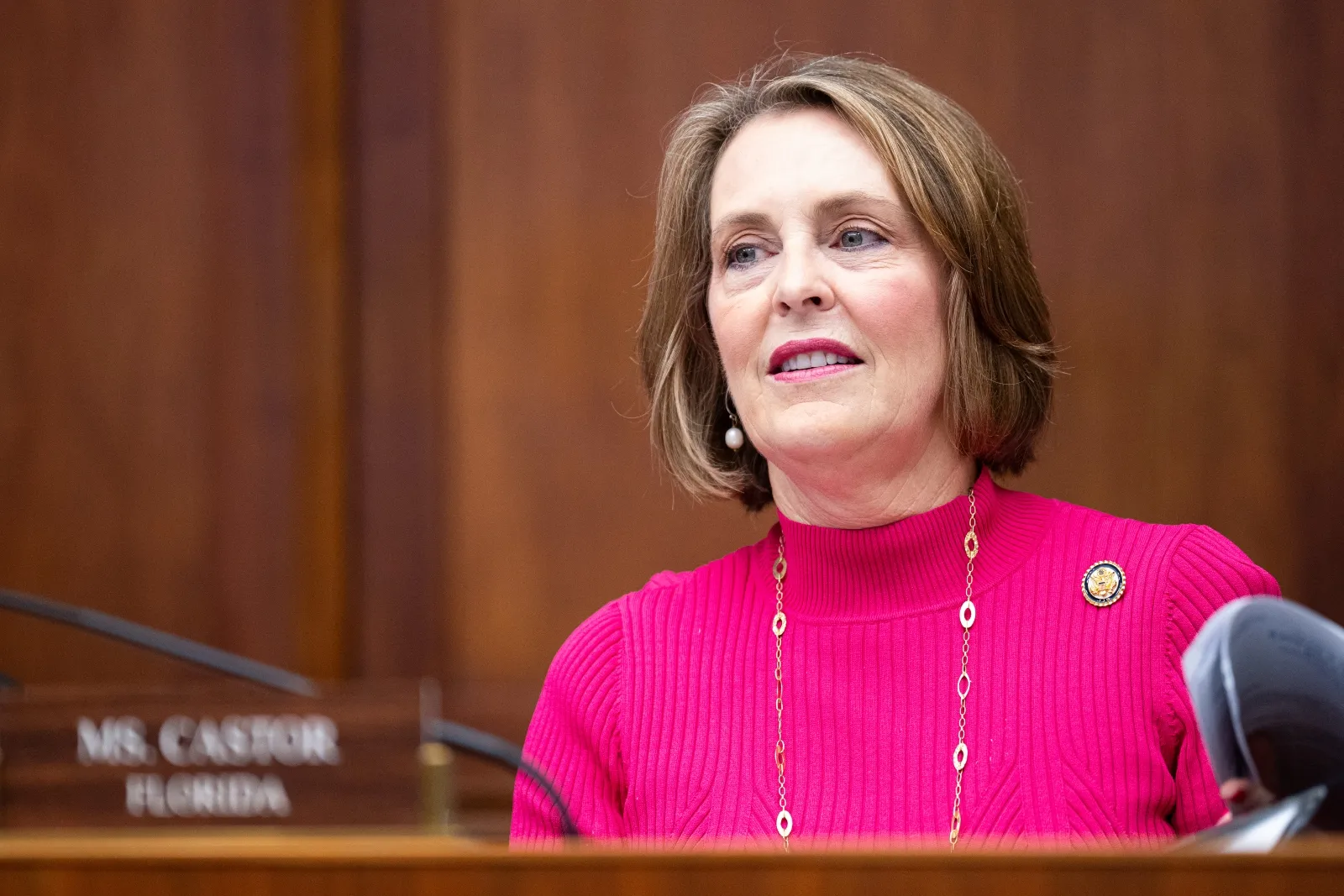
Two climate hawks survive Republican redistricting
Their districts were redrawn to eliminate them, but voters in Florida’s 14th and Ohio’s 9th districts respectively reelected Kathy Castor and Marcy Kaptur anyway.
Castor — referred to as a “climate hawk” by Politico — has spent much of her long career in Congress raising the alarm about climate change. Between 2019 and 2022 she chaired the House Select Committee on the Climate Crisis, and has otherwise made reducing carbon pollution and preparing communities for climate impacts central to her legislative agenda. In March, she backed the Energy Bills Relief Act, which proposed restoring energy upgrade tax credits and connecting more clean energy to the grid. She has also strongly opposed data centers in the Tampa area that she serves, warning that the facilities could drive up her constituents’ utility costs while straining local water supplies.
Kaptur is the longest-serving woman in the House. She has been a leading opponent of the Department of Energy’s efforts to redirect Inflation Reduction Act money away from clean energy and toward fossil fuels. She has alleged that these redirections violate federal law, and would likely lead investigations into the Energy Department’s actions in a Democratic-controlled Congress. The Ohio state Legislature redrew her district to encompass more conservative areas along Lake Erie, but she held on to her seat comfortably.
— Jake Bittle and Sachi Kitajima Mulkey
A Democrat will become a Texas oil and gas regulator
Stunning results are still coming in from the Lone Star State. For the first time in over 30 years, a Democrat has won a seat on the Texas Railroad Commission, the regulatory agency that oversees the state’s oil and gas industry. Jon Rosenthal defeated Republican candidate Bo French, who made a racist social media post about South Asian students celebrating at a University of Texas football game that drew national bipartisan backlash.
“To the dude that posted the online poll last summer, asking who’s a bigger threat to America and the only two choices were Muslims and Jews — tonight this Jewish engineer sent that motherf*cker home,” said Rosenthal in his victory speech, referring to another racist post by French.
Rosenthal asserts that good jobs and clean air can — and must — coexist. He supports an all-of-the-above energy strategy and capturing natural gas. He also wants to “turbocharge” the plugging of inactive oil and gas wells, which leak methane. The Railroad Commission is currently considering rules on that, spurred by state legislation passed last year.
Rosenthal will join two Republican commissioners, meaning it’s likely he will be outvoted on many issues.
— Celeste Guajardo
Democrats flip control of Georgia utility commission for the first time in decades
Democrats secured both Public Service Commission seats on the Georgia ballot, giving the party majority control of the powerful utility regulation board for the first time in 30 years.
Democrat Peter Hubbard successfully defended his District 3 seat against a challenge from former commissioner Fitz Johnson, while Democrat Shelia Edwards defeated Republican Josh Tolbert to take the District 5 seat.
The commission regulates utilities, including the behemoth Georgia Power, meaning commissioners have final say over how the state’s largest utility makes energy and how much customers pay for it. The board has drawn increased scrutiny in recent years because of a series of rate hikes and the scramble to produce enough energy for the massive spike in demand that Georgia Power predicts will result from the data center boom. The utility’s plans to meet that demand rely heavily on fossil fuels.
Georgia is one of 10 states where utility regulators are elected rather than appointed.
— Emily Jones

Public transit wins in multiple states
After years of financial woes and operating deficits, some residents of the California Bay Area were concerned that this year’s midterms might signal the downfall of public rail options in the region, leaving them stuck in its infamous traffic. But the Regional Transit Measure, which sought to enact a sales tax to fund local transit agencies for another 14 years, easily won a majority vote. It is expected to raise $1 billion each year to keep trains up and running.
Colorado rail supporters have also claimed victory for Measure 7A, which will establish a permanent sales tax to extend Colorado Connector passenger trains between Pueblo and Fort Collins. The coalition that campaigned for the measure argued that the expanded railway would reduce emissions equivalent to 29,000 cars in the area.
Other states had transit wins, too: More than 70 percent of voters said yes to Seattle’s Proposition 1, which would double the dedicated transit tax and support more frequent bus service. And Lawrence, Kansas, increased its transit sale tax to fund service for another 10 years.
— Sachi Kitajima Mulkey
Voters reject adding a ‘right to natural gas’ to the Colorado Constitution
Colorado voters roundly rejected an effort to enshrine a right to natural gas in the state Constitution, which would have been a first in the country. Amendment 82 proposed giving homes and businesses a right to use gas stoves for cooking and heating, as well as giving distributors and utilities a right to sell the fossil fuel. Since the Constitution trumps all else, the ballot measure’s approval could have jeopardized local and state efforts to shift away from fossil fuels and electrify buildings, prompting court challenges to climate policies. The measure also raised concerns that it could protect access to natural gas for power-hungry data centers.
Only 46 percent of voters supported Amendment 82 as of late Wednesday morning, far beneath the 55 percent a constitutional amendment needs to pass. That protects the Colorado Public Utilities Commission’s Clean Heat Plan, which requires utilities to cut natural gas emissions by 41 percent by 2035.
— Kate Yoder
A flip in an area devastated by Helene
In western North Carolina, where Hurricane Helene caused billions of dollars of damage two years ago, Democrat Jamie Ager defeated Republican Jennifer Balkcom for an open seat in the House of Representatives. Ager, a longtime farmer, made the area’s slow hurricane recovery a centerpiece of his campaign. He criticized Representative Chuck Edwards, who dropped out of the race after a sexual harassment scandal, for doing too little to deliver aid for Asheville and its surrounding counties. Grist reported last month that at least some voters blamed Republicans for the slow recovery. In a rally held on the eve of the election, President Trump promised to deliver more hurricane aid money, but only if North Carolina elected Republicans. The district around Asheville did not take the bait — not only did Ager win the state’s 11th House District, but Democrat Roy Cooper, the state’s former governor, easily won a Senate race, flipping a seat that had been held by Republicans.
— Jake Bittle

An ex-Sunrise activist wins in Michigan
William Lawrence, a co-founder of the climate activism group Sunrise Movement, has prevailed in a razor’s-edge House of Representatives race in central Michigan. Lawrence, a 36-year-old progressive, ousted freshman Republican Tom Barrett in Michigan’s 7th Congressional District, a bellwether area encompassing Lansing and its suburbs. He made opposition to data centers a focal point of his campaign, calling for a national moratorium on data center development. He also aligned himself with activists and residents who have opposed large-scale renewable energy projects in the Lansing area. In an interview with Grist last month, Lawrence said that many utility-scale solar projects don’t benefit the communities around them.
— Jake Bittle

Democrats win after attacking Republicans on data centers
In one of the night’s biggest upsets, Texas state Representative Gina Hinojosa ousted incumbent Governor Greg Abbott after campaigning on a data center moratorium and accusing Abbott of selling out to the tech industry.
And at least three legislative seats flipped blue after Democrats aggressively criticized Republican incumbents for being too friendly to data centers. Democrat Sherrod Brown defeated Republican Jon Husted in Ohio’s special Senate election after state Democrats put up billboards stating: “See that data center? Jon Husted did that.” Likewise, Democrat Paige Cognetti beat Republican Rob Bresnahan in Pennsylvania’s 8th Congressional District after she ran television ads associating Bresnahan with data centers and comparing tech companies to polluting mining corporations. (Bresnahan has owned stock in data center companies.) And in South Carolina’s Senate race, voters pushed Annie Andrews to a surprise win over incumbent Darline Graham after Andrews highlighted that a new pro-data center super PAC spent $1.5 million dollars on ads for her opponent, whom she nicknamed “Data Center Darline.”
Both Husted and Bresnahan had previously welcomed data centers to their regions, but later attempted unsuccessfully to pass regulations constraining them once the facilities became a hot-button issue. Data centers are massively unpopular with voters across the political spectrum, polls have shown. The facilities have become a growing source of demand for electricity from fossil fuels.
— Austin Corona, Sachi Kitajima Mulkey, and Jake Bittle
Data centers upend municipal politics
Further down the ballot, it’s hard to find a place where data centers didn’t lose. In addition to the marquee congressional and governor’s races where voter sentiment about the AI boom may have helped oust Republican incumbents, dozens of towns and cities passed pauses or bans on data center development, according to The Washington Post. In many cases, these restrictions passed by enormous margins — in Sunbury, Ohio, where Amazon proposed a $2 billion project, voters rejected the facilities by an almost 60-point margin.
The AI issue also upended local elections, and perhaps the best example is in Pine Island, Minnesota. Google has proposed building a large new data center there, one that would be powered exclusively by clean energy and would include big subsidies for electric ratepayers. But voter outrage over the project caused a previous mayor to resign and led a first-time politician to mount a campaign against the interim replacement. That challenger, Mark Lang, won with well over 60 percent of the vote.
— Jake Bittle
A FEMA defender sails to victory in Florida
Representative Jared Moskowitz, a Democrat, easily hung onto his seat in Congress, surviving a challenge from Scott Singer, a Trump-backed Republican, in Florida’s redrawn 25th Congressional District. His third-term victory defies the right-wing effort to make his district significantly redder with new boundaries and keeps one of America’s most vocal FEMA reformers in Congress.
Moskowitz, once appointed Florida’s emergency management director by Governor Ron DeSantis, championed bipartisan legislation to pull FEMA out of the Department of Homeland Security and make it an independent, Cabinet-level agency — just as the Trump administration seeks to cut its funding and shift more responsibility onto states. He has also introduced bills that would let states voluntarily administer federal disaster housing and public assistance, and proposed a reinsurance backstop that would help cover catastrophic losses after disasters like hurricanes.
— Sachi Kitajima Mulkey
Jim West/ UCG / Universal Images Group via Getty Images
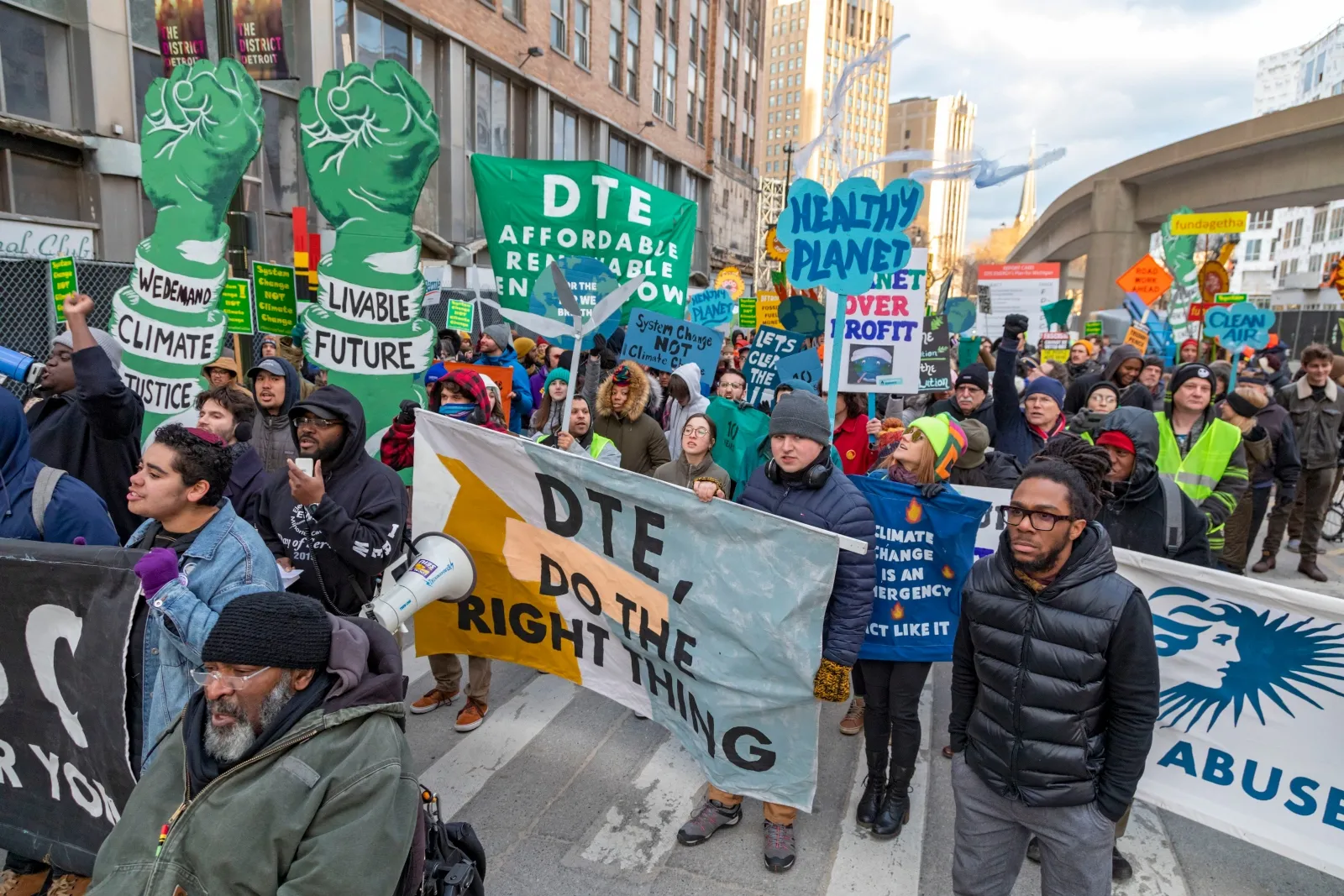
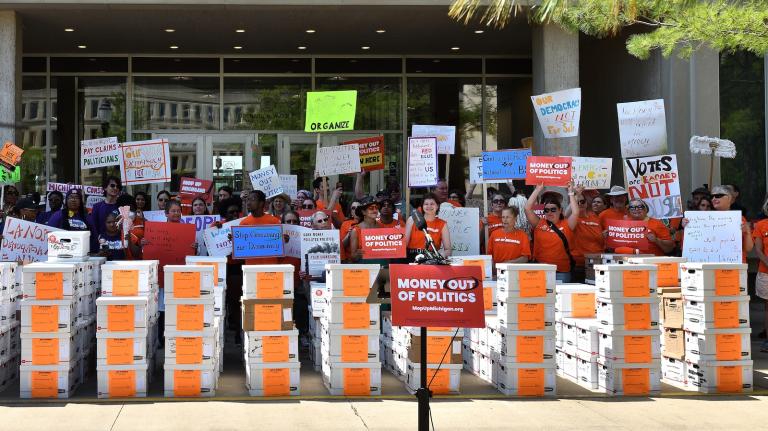
Michigan gets utility money out of politics
Voters in Michigan passed a measure to limit corporate spending in elections, and in a nationwide first, successfully went after the state’s electric and gas utilities. Supporters of Proposal 2 leveraged ratepayers’ growing dissatisfaction with utilities around power bills, unreliable service, and data centers. The measure is one of the most ambitious attempts in the country to limit corporate influence in politics, which it aims to do by preventing utility-funded political action groups and utility executives from contributing to state political campaigns. Groups that oppose the measure have contended that Prop 2 will stifle corporations’ speech protections under the Supreme Court’s Citizens United decision in 2010. Shortly before midnight on Tuesday, a conservative policy group sued the state in federal court, saying that everyone from journalists to nonprofit organizations could lose speech and privacy rights under the new measure. And while experts said the measure likely won’t get all utility money out of politics, Prop 2 advocates maintain it’s a step toward accountability.
— Vivian La
A governor who at least acknowledges climate change in Florida
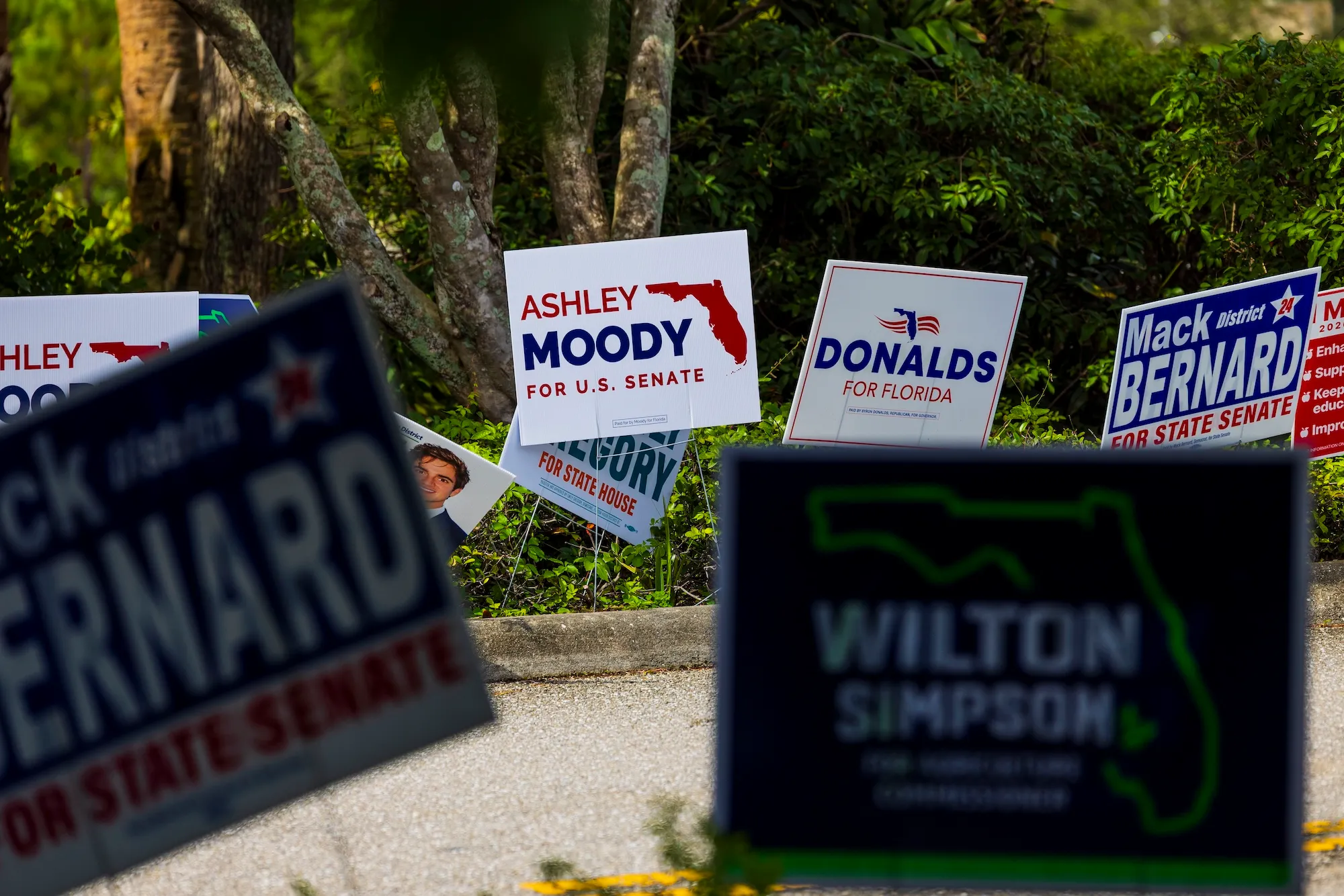
Republican Byron Donalds has defeated Democrat David Jolly for occupancy of Florida’s governor’s mansion. Donalds, who currently represents Florida’s 19th Congressional District, will be the state’s first Black governor. He doesn’t believe humans play any role in global warming, but he’s more willing to discuss the issue than the current governor, Ron DeSantis, who signed the state’s infamous “don’t say climate change” law.
That matters in a state especially battered by sea level rise, coastal erosion, and storms. The skyrocketing costs of home insurance were a central issue in this race, and Donalds promised to bring them down by increasing competition in the state’s private market. In 2025, Donalds notably co-introduced bipartisan legislation with Democrat Jared Moskowitz to reform federal disaster aid by making FEMA an independent Cabinet-level agency. In the weeks before voters went to the polls, he also pledged investment in restoring coastal habitats. Donalds seems likely to carry on DeSantis’ other environmental policies, such as supporting data center development and attacking wind and solar projects.
— Sachi Kitajima Mulkey
Saul Martinez / Getty Images
A MAGA loyalist who says no to drilling in Florida
Republican Senator Ashley Moody defeated the progressive Democrat Angie Nixon to retain her seat, which Florida Governor Ron DeSantis appointed her to last year. Moody’s brief stint in Washington hints at what’s to come: She introduced a resolution to overturn Biden-era efficiency standards and supported the so-called One Big Beautiful Bill Act, which ended federal tax credits for clean energy installations like rooftop solar and batteries. Previously, as Florida’s attorney general, she joined a lawsuit challenging emissions reduction targets on highways.
But in Florida, a state grappling with coastal erosion and rising sea levels, some environmental protections are popular across party lines: Last year, even as Trump pushed to open offshore drilling in other states, Moody introduced the American Shores Protection Act to ban the practice off Florida’s coast through 2032.
— Sachi Kitajima Mulkey
This story has been updated with analysis of additional races and trends.