The war with Iran has brought shipping traffic to a virtual standstill in the Strait of Hormuz, the narrow Persian Gulf channel through which roughly one-fifth of the world’s oil and gas flows. That has sent fossil fuel prices surging — and with them, the potential for profit.
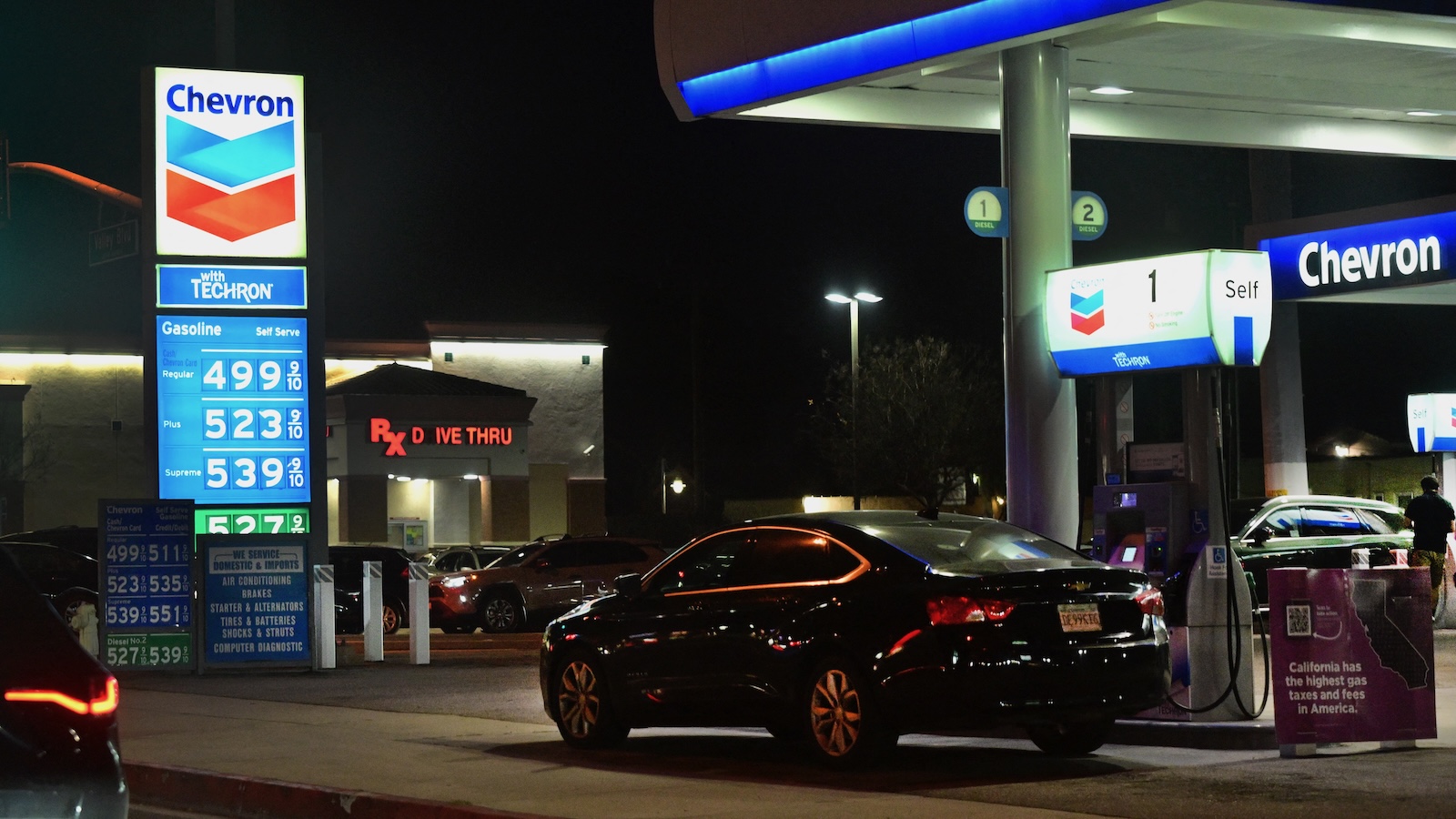
The price of Brent crude, the global oil benchmark, is up more than 10 percent since the conflict started almost a week ago, and natural gas prices in some places, especially Europe, have doubled. U.S. consumers are already feeling the effects, with gasoline around 27 cents per gallon higher than before the war. But industry analysts say that, at least in the short-term, higher prices could be a windfall for producers that aren’t dependent on Persian Gulf supplies, such as Exxon Mobil, Chevron, Shell, and the French company Total.
“If you are operating, if you’re producing, and you’re going to enjoy higher prices for your product, you are going to benefit,” said Abhi Rajendran, who leads oil market research at the analysis firm Energy Intelligence and is a fellow at Rice University’s Baker Institute for Public Policy. “These high prices are going to be good for energy companies in general.”
Energy stocks are to some degree reflecting those price jumps, with firms like Venture Global and Cheniere Energy seeing notable gains this week. An analysis by the EnergyFlux newsletter, for example, found exporters and traders of American liquefied natural gas are set to earn nearly $1 billion more per week based on higher prices. Refineries in the region have sustained damage that will make that business more profitable for companies located elsewhere, too.
The stock gains aren’t ubiquitous. Exxon Mobil, for example, is down slightly and Chevron has been hovering around its pre-war price. Those more tepid responses could be due to a range of factors, such as geopolitical uncertainty or increased refining costs that come with high prices, but even those companies are probably selling their product for more than they were last week.
“You are opportunistic in a sense. You see a price spike and you want to capture that upside,” said Vincent Piazza, senior equity analyst at Bloomberg Intelligence. At the same time, he said, “I don’t think anyone is happy with volatility.”
Shell declined to comment, and none of the other companies named in this article responded to requests for comment. But Piazza said long-term oil and gas futures show that investors expect stabilization, meaning that the gains companies are seeing now may not last. “It provides them with a modest short-term windfall,” he said. In the 12-month futures market, “prices in the latter months haven’t changed.”
Both Piazza and Rajendran made comparisons to the war between Russia and Ukraine. Energy prices skyrocketed at first — far more than they have during the Iran conflict — but eventually moderated. That also implies, of course, that there is still plenty of room for the current situation to continue to escalate before it improves.
President Trump has said U.S. and Israeli strikes could continue for four to five weeks. More than a thousand people have died in Iran since the United States and Israel launched their attack Saturday. Iran’s retaliatory strikes throughout the region have killed more than a dozen civilians and six American troops.
The energy impacts have so far been relatively temporary, said Piazza, and confined mostly to delays in delivery. Prices are already coming down off their initial spikes. But if, say, a major gas port in Qatar or oil infrastructure in Saudi Arabia is severely damaged or destroyed, that would drastically change the outlook. A prolonged war could also cause countries like Iraq to shutter production that couldn’t easily reopen. EnergyFlux says that if Qatari gas remains offline into the summer, companies could see as much as $20 billion more in profit each week compared to before the war.
“What’s delayed, what’s disturbed, and what’s destroyed, I think that’s the whole key,” Piazza said of the benchmarks he’s watching as the conflict continues. “Think of it as a massive storm hitting the Gulf Coast as opposed to a tsunami that wipes out entire sections of infrastructure.”
Rajendran also warned that prices could rise high enough that demand slumps, and it backfires on producers. “Once you start getting to $100 or $100-plus range, then it starts becoming economically disruptive even for the oil companies,” he said. But for now, he added, “as long as oil prices remain where it doesn’t become disruptive and destructive, oil companies are going to benefit.”
A message from
Your support keeps our climate news free.
Grist is the only award-winning newsroom focused on exploring equitable solutions to climate change. It’s vital reporting made entirely possible by loyal readers like you.
At Grist, we don’t believe in paywalls. Instead, we rely on our readers to pitch in what they can so that we can continue bringing you our solution-based climate news. Donate today to keep our site free.